My kind friends in Latvia have sent some more exciting biscuits. These Mandeļu-šokolādes trijstūrīši cepumi have the distinction of being the first triangular biscuits to be featured in the Bestiary. Funnily enough, it was the Selga biscuit – another great Latvian creation – which first alerted me to the fact that there were biscuits in the world that were not oblong nor round, the default shapes for all British biscuits, at least the industrially produced kind, with the possible exception of shortbread petticoat tails (if you know what they are). As part of researching this entry, I happened on this short film on YouTube illustrating the difference between British and Latvian biscuits from the British half of a British-Latvian couple in Latvia. It is worth a watch if you’re interested in the flora and fauna of the Latvian biscuit world and sets the scene nicely for these cepumi (the Latvian word for biscuits).
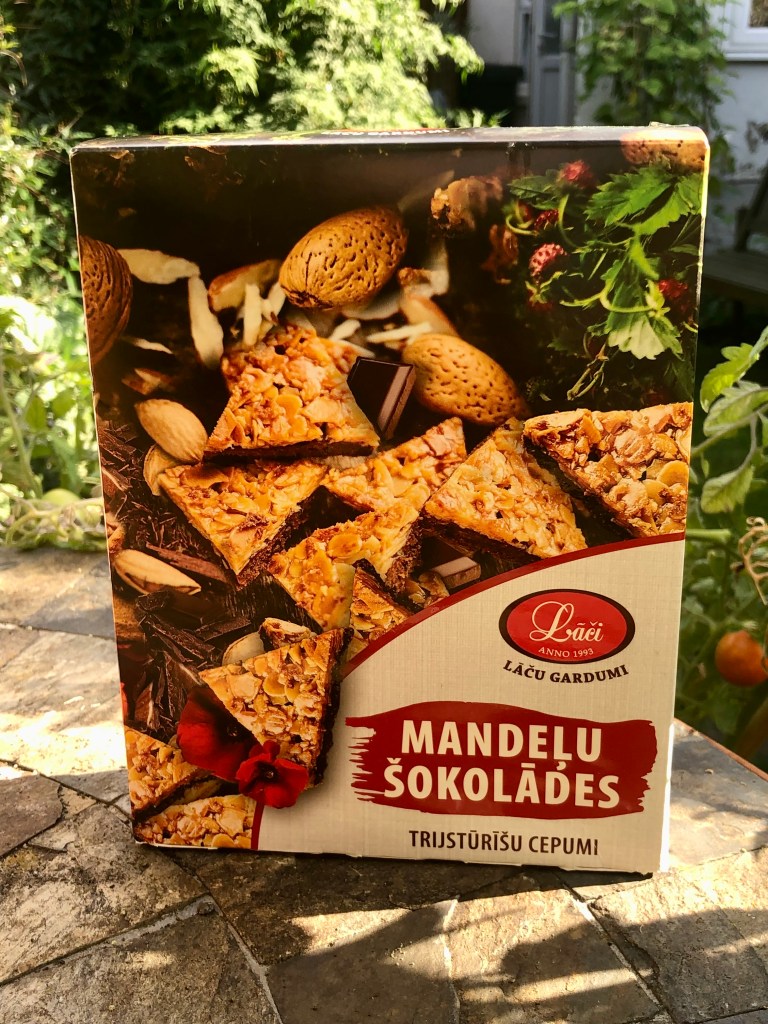
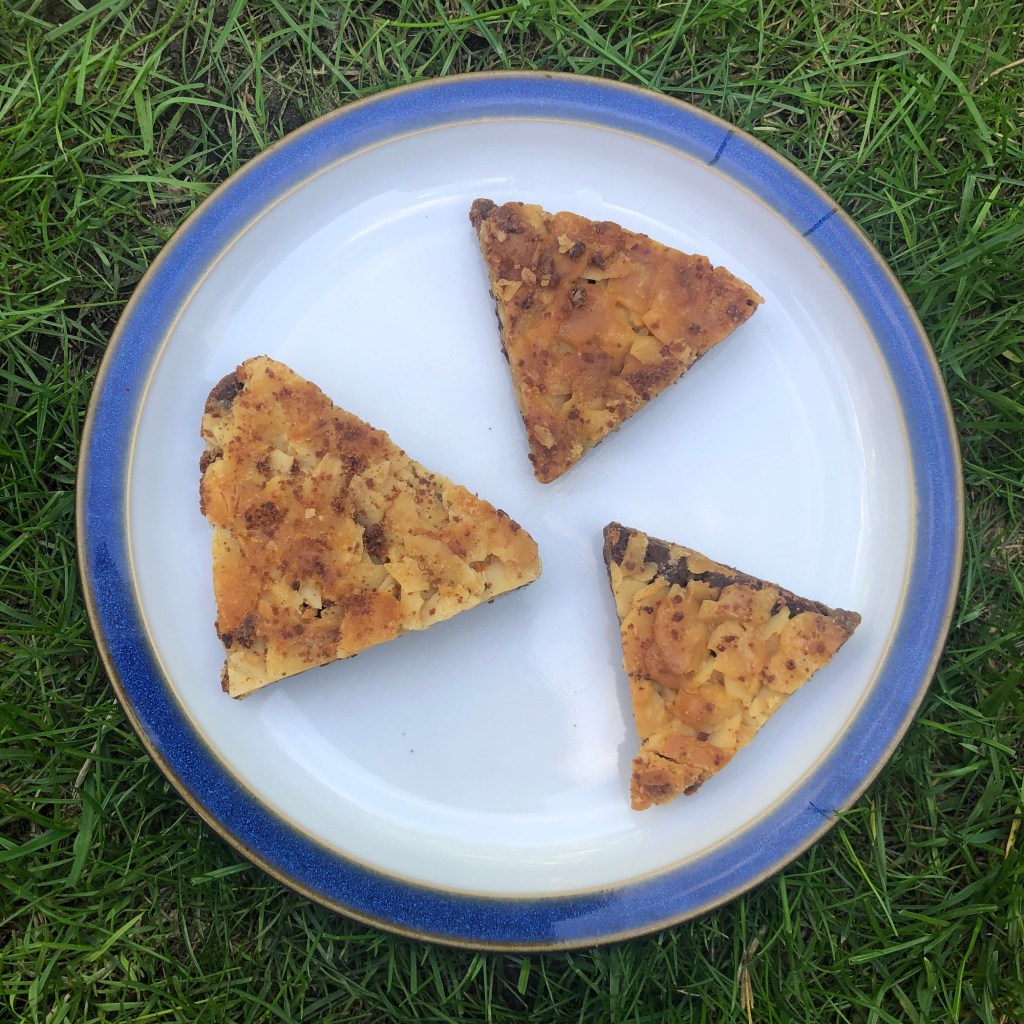
These Triangles are produced by Lāči, a bakery based in Riga. Here’s a picture of the box they came in photographed back in September when the weather was still warm. They are built in two layers: a heavy lower layer of chocolate-flavoured shortbread and a crumblier, tightly packed layer of almond flakes on top. They do look a bit like Florentines (a favourite of mine) but the solidity of the shortbread balances the flakiness of the almonds. The result is considerably sweeter and denser than any factory-produced biscuit in Britain and as you can see from the photo below they’re not all the same size, which gives more of a home-baking feel to them. Their weight gives them a solidity that is comforting and filling. Cold weather biscuits par excellence, I can imagine several packets would see you nicely through a cold Baltic winter.
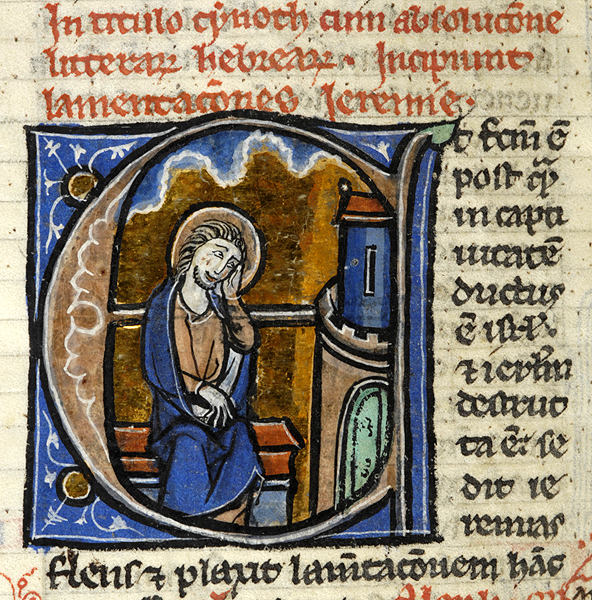
As for the Triangles’ theological weightiness, there are some very interesting mentions of almonds in the Bible. One of the most intriguing of these is the branch of almond the “weeping prophet” Jeremiah sees in a vision, the Hebrew word for which, שָׁקֵד (shaqed), allows for a pun on the word ‘watching’. (Did you know God speaks in puns sometimes? It is details like this that remind us that, like humans, God has a personality of his own, if he is a specially unique kind of person.) Almond trees also feature in the design of the lamp stand that God commanded the Israelites to make as part of the holy objects crafted for the Tabernacle that housed the Ark of the Covenant in the wilderness. These instructions exhibit the care of an artist in their attention to the detail of the golden branches hammered into the shape of almond flowers, which tells us something else: God cares about beauty.
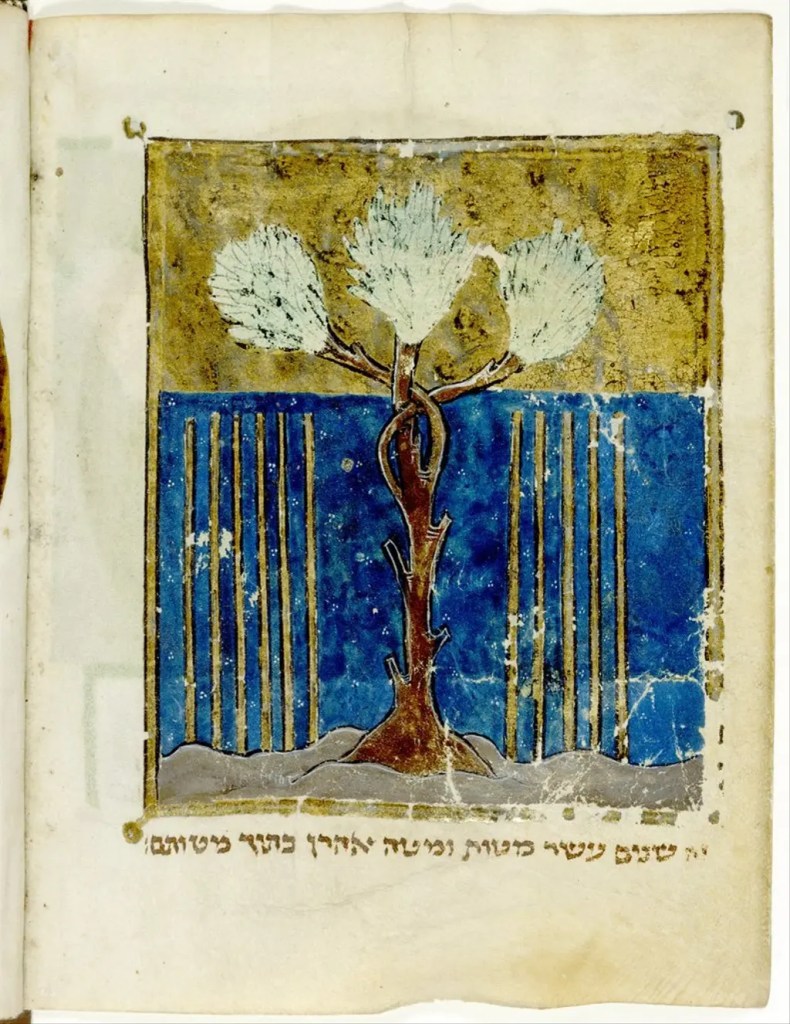
But perhaps the most memorable mention of almonds in the Bible comes as part of another story from these years in the wilderness: the flowering of Aaron’s staff. After the rebellion of those who resented Moses’s and his brother Aaron’s leadership, God made it clear Aaron was his choice of High Priest by asking the heads of the twelve tribes to lay their staffs on the altar (here functioning as symbols of their authority) and leave them overnight. In a development which reads like a fairy tale, the heads of the families returned the next morning to find that Aaron’s almond staff had flowered. You can see why the story was such a favourite for medieval illustrators. In fact, in the bible’s account, Aaron’s staff not only bursts into flower but also produces almonds, transformed from a dead dry piece of wood to a vibrant living one.
The learned man said
To the almond tree:
Speak to me of God.
And the almond tree blossomed.
The Dominican preacher Timothy Radcliffe quotes this little poem when writing of the challenge of trying to convey something of the endlessly life-giving nature of God’s presence. British sculptor Henry Moore famously said that to be an artist is to believe in life. If this is true, then God is the supreme artist for who could believe in life more than the one who made it?
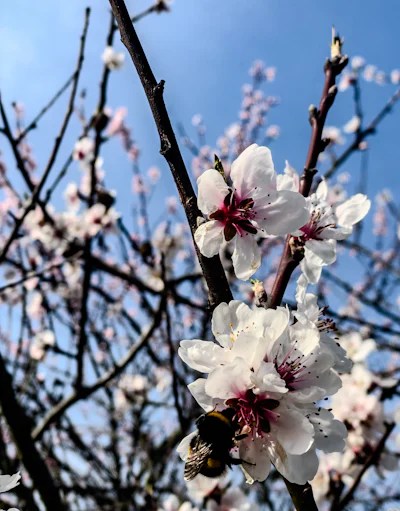
Perhaps there is a wider application of the Almond-Chocolate Triangles here that is also helpful: even if God’s choice may not make perfect sense to us, we know it is his because of the fruit (and nuts?) it brings, results we could never produce by our own efforts. For me, there is also an echo of Jesus’s words to his disciples: “You did not choose me but I chose you and appointed you to go and bear fruit – fruit that will last.”
Further Delectation
More on Baltic Homesteading from Gary and Gita in Latvia.
Explore some medieval illustrations of Aaron’s Rod, and a thoughtful commentary on them here.
Finally, art and almonds come together in beautiful ways in Frameless’s immersive journey into Vincent Van Gogh’s painting:
If you would like to keep this bestiary free of ads and see more entries more regularly you are welcome to donate to the Biscuit Jar.

