Jacoba’s Biscuits

Sometime in the early autumn of 1226, a young noblewoman named Jacoba de Settesoli had a strange prompting to bake some almond biscuits for a friend of hers, the ‘poor little man’ (il poverello) and monk from Umbria who had often stayed at her house when he was in Rome. At the same time as she was setting out on the long journey to his friary, he was in the act of sending for her to say he was gravely ill — was dying, in fact — and would she come and visit him, bringing some of those sweet almond biscuits he liked?
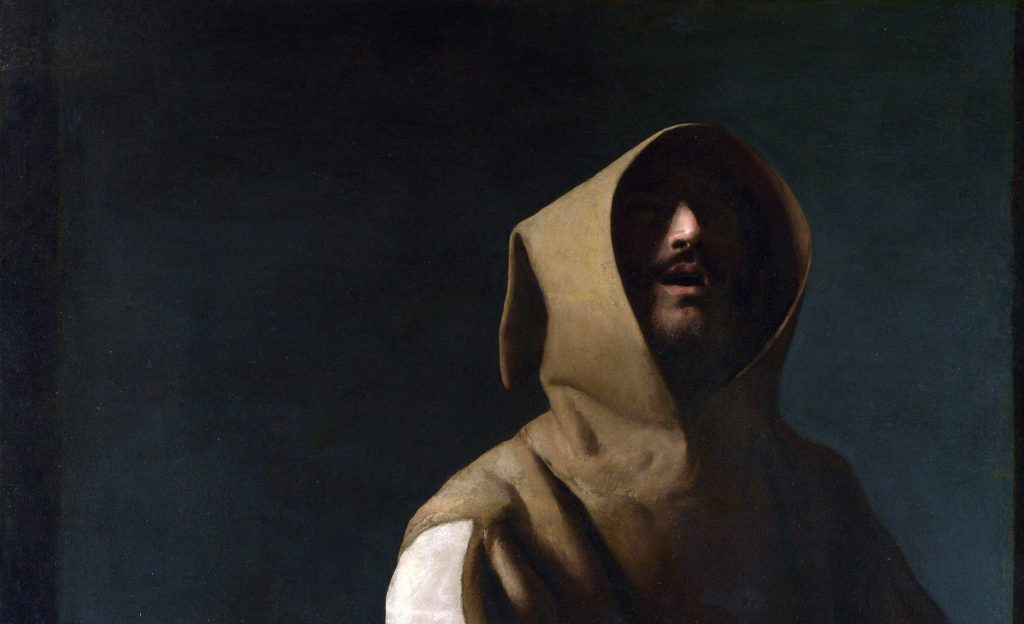
Detail from Francisco de Zurbaran’s St Francis in Meditation

It made me smile to think that as he drew close to the end of his life, the man known to future generations as St Francis of Assisi felt the need of such a friend and such a biscuit. And I had no clue biscuits featured so memorably in the biography of Francis until a few weeks ago, when I got to visit a landmark exhibition on him at the National Gallery. From facsimiles of Francis’s own letters to Antony Gormley’s untitled sculpture conveying a moving openness and vulnerability, we were lucky to have a perfect guide in Angelo, a secular Franciscan and art historian. “I try to listen for the Holy Spirit while I’m doing the tour,” he confided in me as we were leaving the gallery, which seemed like a good explanation for his sudden mention of Jacoba’s biscuits…

Image from the Basilica of St Francis in Assisi, which some believe is Jacoba due to the Seven Suns in her halo.

Jacoba would have been in her mid-thirties when Francis died. We know she had a family but was a young widow when Francis met her. His affectionate name for her was Brother Jacoba and he encouraged her to work out her vocation within secular life rather than joining holy orders. Sadly, the original recipe for Jacoba’s biscuits has not been preserved, but a variety of almond confections are made for St Francis’s Feast Day in the saint’s honour. This one from a modern Franciscan monastery seemed a good one to try but it’s fair to say it didn’t turn out exactly as I had envisaged. The first round soon spread out enough to fill their entire baking tray in the oven, creating what I could only describe as a cookie pizza…
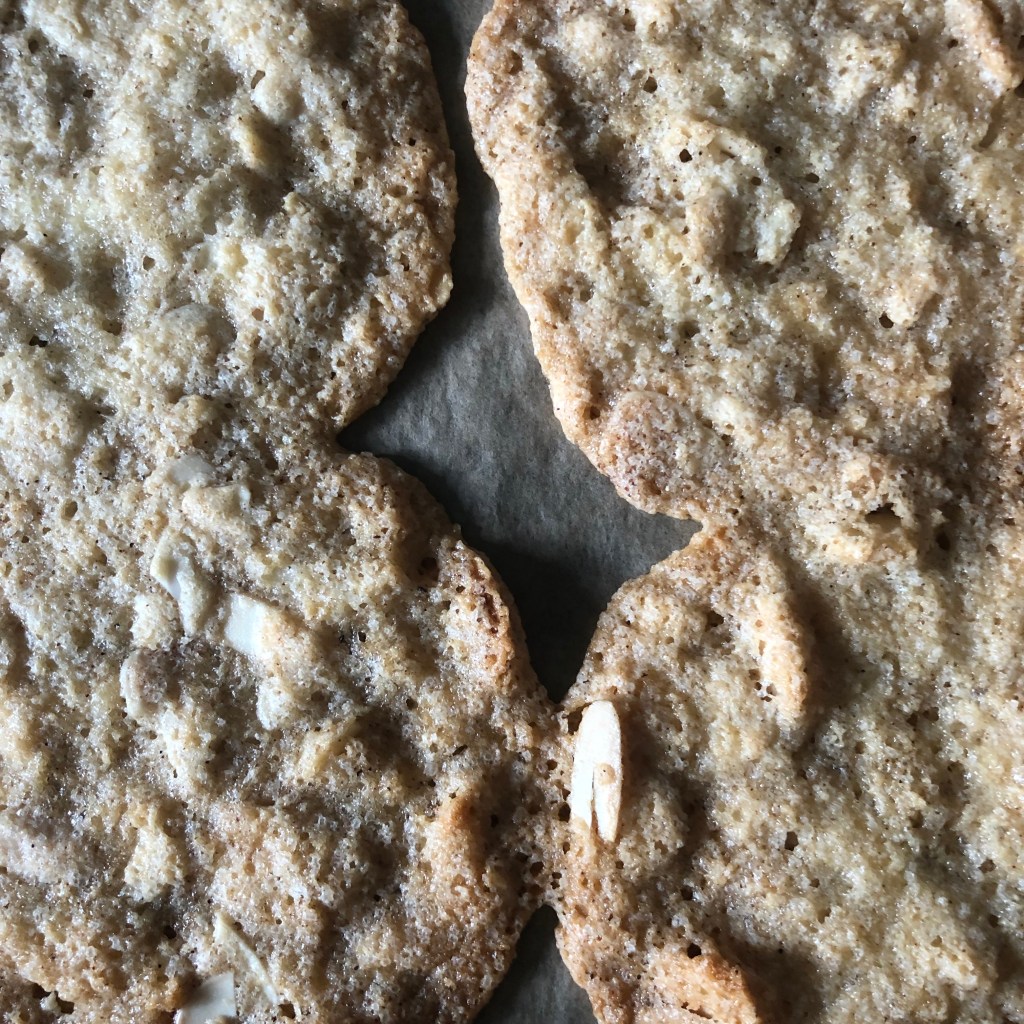
I tried a second tray with smaller dollops placed further apart but the result was much the same. It’s the first time I’ve cut biscuits with a pizza wheel but they certainly tasted amazing fresh from the oven. What they lacked in shapeliness they more than made up for in tastiness however, as the generous amounts of chopped almond and half spoon of its essence brought out the almond flavour. Perhaps because I added a little extra vegetable oil, it was also pleasantly chewy. A sort of cross between a cookie and a Florentine.

For the moral, I got to thinking of that extraordinary paradox at the heart of the order that Francis founded expressed by Christ in the gospels when he says: whoever gives up his life for my sake will find it. Few people have given up so much or so gladly as Francis himself: in giving away his wealth to marry Lady Poverty and loving the misfits, outcasts and lepers of society, he came to identify less with the upwardly mobile goals of his merchant-class peers and more with the joys and pains of his divine master.

Untitled (“To Francis”) by Antony Gormley

The story of Francis as a young man divesting himself of his luxury clothes and handing them back to his astonished father is well known but in a challenge which feels topical for our own day Angelo stressed Francis’s readiness to divest himself of his natural opinions, shrugging off the weary tribalism of labels or factions that could hinder him from seeing the worth in others and relating to them in a spirit of openness and friendship. This took him into some unlikely friendships from the outlaw of Gubbio to the Sultan of Egypt, again in the footsteps of his divine master who ate with characters shunned by most of the religious leaders of his day and shocked his disciples by talking theology with a Samaritan woman.

Reflecting on Francis’s life in the visual journey of the exhibition certainly challenged me to live more simply and more generously. Sometimes that will call us to a place of radical alms-giving and sometimes a place of radical self-giving (or both in the story of Jacoba). This can feel costly at times but there’s also a freedom in it, a whisper that in the end the loss will be turned to gain in the upside down Kingdom of God. I don’t fully understand it myself, but all I know is, like the biscuits that expanded to fill every inch of the tray, the more space we give to God in our lives, the more he can fill it.
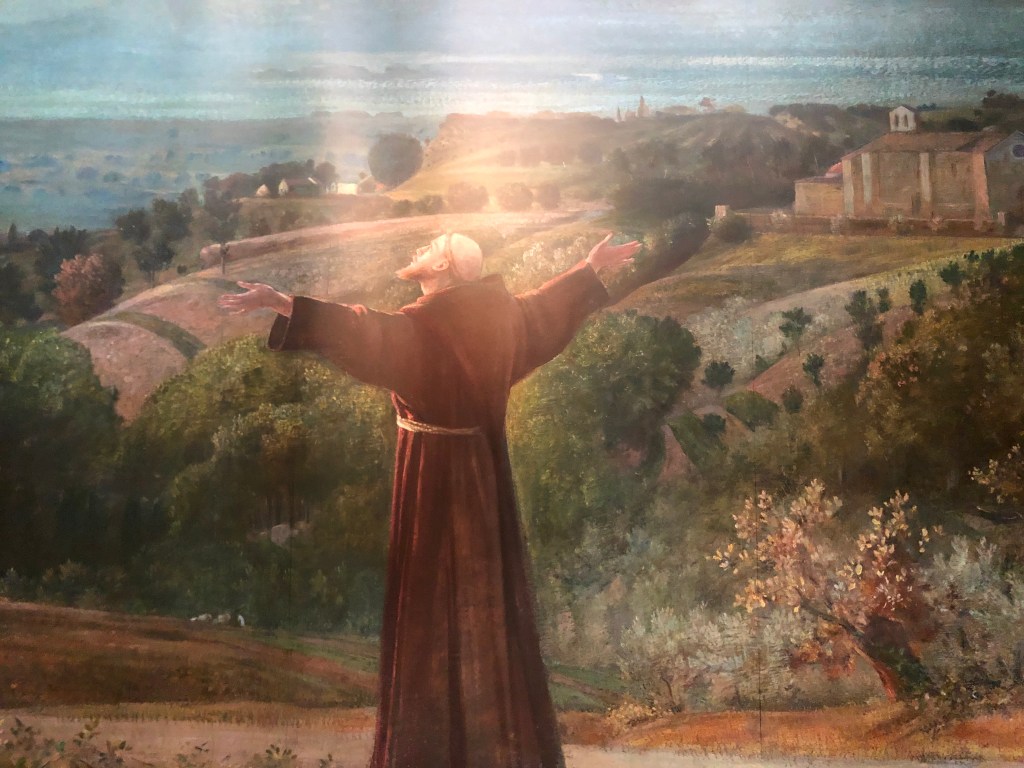
Detail from Giovanni Costa’s Brother Francis and Brother Sun (c. 1880)
Further Delectation

More on the St Francis Exhibition in London and a touching reflection on Jacoba’s story.

A beautiful interpretation of Francis’s Canticle of the Sun (in English translation) by artist Tony Wright:

If you enjoyed this bestiary article and have donated or are considering donating to this project, I invite you to give to a charity of your choice instead this month in the spirit of St Francis. The Franciscans International, Leprosy Mission, and animal welfare charities (quick shoutout here for Hedgehog Cabin) all spring to mind as causes dear to Francis’s heart, or you may have your own charity you wish to give to.

Croquants aux Amandes et Miel

Ash Wednesday. A cross like a kiss on the forehead and the season of Lent has begun: that 40 day journey of reflection starting in the wilderness and ending at the empty tomb. In the Middle Ages, Lent was a big deal for both devout and nominal Christians if only because of the strictness of the Lenten fast. As well as fasting from meat, the list of forbidden foods included traditionally biscuity ingredients like eggs and butter, hence the wild flurry of pancake-making on Shrove Tuesday. (For those interested, the British Library’s Great Medieval Bake Off: Lent Edition has some fun recipes to get you through a medieval fast!)

It may surprise a reader familiar with the modern custom of giving up of sweet foods for Lent but nuts and sugar (and wine) were allowed. I hadn’t intended to write about another Provencal biscuit so soon after the Navettes but on finding these deliciously crunchy Croquants Aux Amandes et Miel (Crisped Biscuits with Almonds and Honey) in my room the other day, I realised providence had led me to the perfect biscuit for Ash Wednesday. These Croquants, a present from my sister and brother-in-law, hail from the Abbey of Sénanque –a Cistercian monastery dating back to the twelfth-century. The place is famous for its lavender and the monks who tend it are also skilled at bee-keeping, making honey another Sénanque specialty.

The Croquants look like miniature biscotti, leading me to suspect they would go particularly well with strong black coffee and as my usual coffee haunt was closing early yesterday, I decided to decamp to a quiet pub and see if I could get a coffee there instead. The friendly bar staff looked on in some amusement as I whipped out my phone for an attempt at an arty shot of the candle, coffee and biscuit! Dipping it in coffee was exactly the right thing to do as it softened up at once but kept its shape, which was impressive. Without the coffee, they would be incredibly dry, but also very sweet and almond-y.

The adjective ‘Croquant’ which gives these biscuits their name is usually translated ‘crisp’ or ‘crunchy’, calling to mind the ashes of Ash Wednesday. In the ancient world to cover yourself in ashes was a sign of profound grief and distress. Today the ashen cross of Lent is a mark of penitence – of sorrow for our sins and a desire to return to God, as well as an acknowledgment of how short our little lives are, to paraphrase wise Master Shakespeare, and how much we need his mercy. Through the Lord’s great mercy we are not consumed (Lamentations 3:22)

From a human perspective, the place of ashes speaks of emptiness and endings, but in God’s it can become a crucible that transforms and transcends even the deadest of ends. If there is a promise we could take from the Croquant, it might be Isaiah 61 where those who mourn are promised a crown of beauty for ashes. I learnt recently the Hebrew here suggests working in and through the devastation to bring both beauty and holiness: a priestly head-covering or bridal decoration drawn up and out of the very places that seem most desolate to us. This year, as we start out again on the long road to Easter, may it be an encouragement to give God our ashes and see what he does.

If you would like to see more entries more regularly and help keep this bestiary free of ads, you are welcome to contribute to the Biscuit Jar

Almond Thins

I first realised all this panic-buying was getting serious when I got a phone call from the biscuit aisle of our local Sainsbury’s. The shelves weren’t completely empty, my housemate told me, but it was slim pickings. We both laughed incredulously as she listed the few types of biscuit the other shoppers had left us. In the end I went with these Almond Thins:

IMG_1478.JPG

C. was shopping for me because like many people in our part of South London, I’d had to self-isolate with coronavirus symptoms. I still can’t be sure what I experienced was the virus but several days of odd fiery fevers and chest issues make it likely, and poor Southwark has been hit very hard. Both the sickness and isolation have felt like a battle at times and I was lucky my symptoms were relatively mild. We’re not really used to sweating it out through long periods of feverishness, which would have been a much commoner feature of life in medieval times. The night the worst of the fevers broke I woke to blessed stillness to hear a bird singing outside my window and just at that moment it was the loveliest sound in the world.

Another milestone of recovery was the return to coffee and biscuits. I might never have discovered the all-buttery consolations of the Almond Thins were it not for the present crisis, just as I might never have discovered the goodness and faithfulness of so many people in my life if I hadn’t been ill. From both far and near, friends and family have prayed for me, messaged me, cooked for me, brought me food or paracetamol and just generally cheered me on through the days I’ve felt anxious or vulnerable. The last few weeks may have been short on biscuits but they have been very rich in love.

IMG_1482.jpg

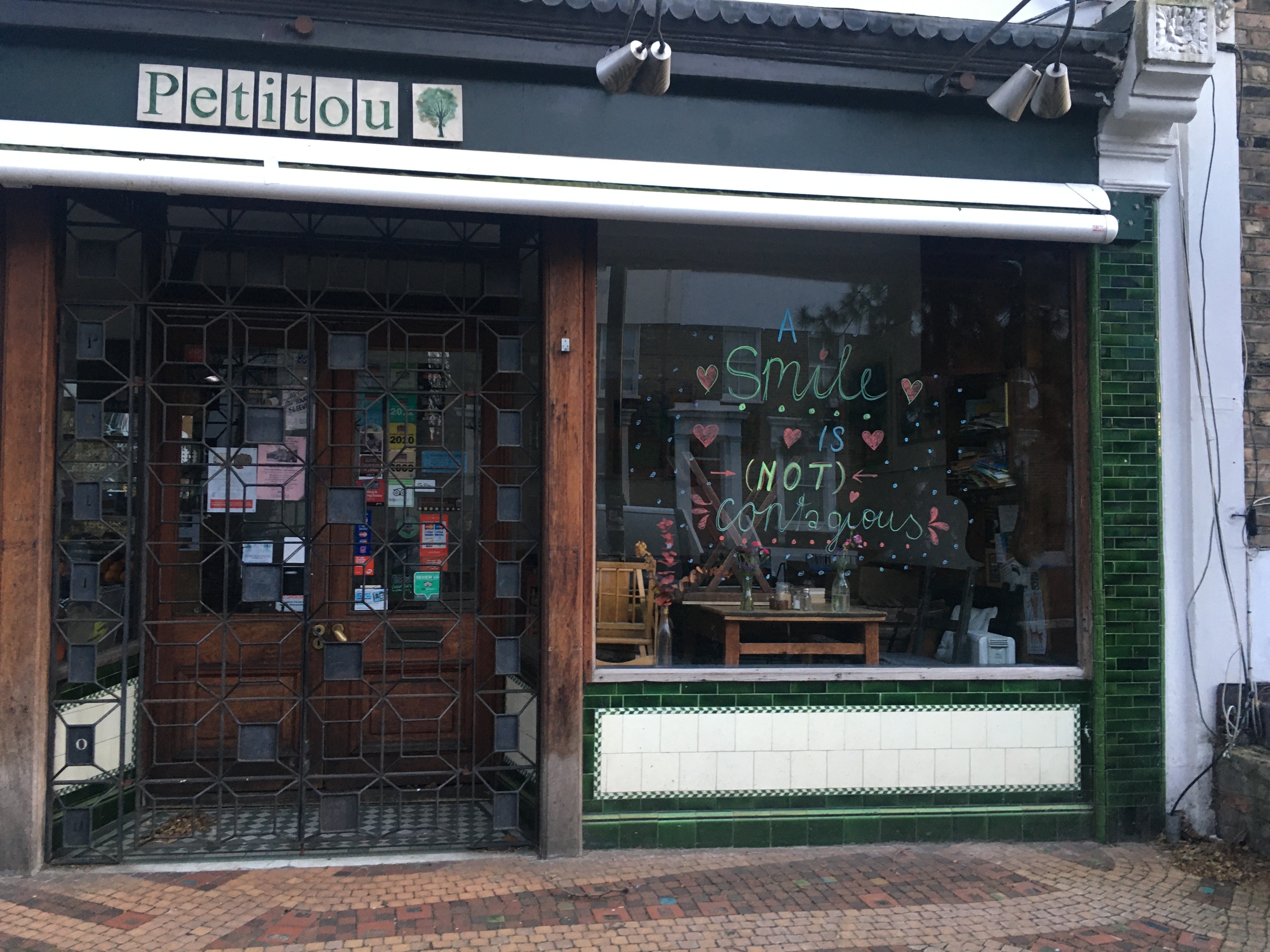
Walking round the neighbourhood on my daily constitutionals it’s good to see signs of hope and solidarity, from the cheery messages on local businesses to the brightly painted rainbows in children’s houses inspired by the andrà tutto bene pictures in Italy (a motto Julian of Norwich would have loved). Yes, we’re all still reeling from the disruption to our old patterns of life, but it helps that we’re in this together and so many people are finding creative ways of reaching out to one another even when we’re physically apart.

K055222
From BL Royal 20 C V

Plague is one experience no sane person would ever want to share with the Middle Ages yet here we are exposed to what would have seemed a very medieval anxiety once. Familiar works like Everyman, the Danse Macabre and even the Divine Comedy were all shaped by the necessity of navigating death someday, though to Christians it was never an end but a doorway. The whole Memento Mori tradition, often seen as morbid in our own time, was meant to help people live more purposefully in the here and now. 

Part of this hard-won wisdom is learning to separate the things that matter from the things that don’t matter. Saving lives matters more than leaving the house whenever we want to and we’ve a new appreciation of the value of many ‘low-skilled’ jobs. Many of the things that preoccupied us a few weeks ago have come to seem trivial, old grudges not worth holding on to. Minor irritations and inconveniences are put in their proper place. ‘Stay safe’ is the new ‘Kind regards’.

Souls are like athletes writes Thomas Merton, and this Lent it feels like we’ve all been given our own marathons to run. Yes, our lives will never be the same again, and for a time they may feel thinner and more constricted, but at the end of this I pray we’ll emerge richer in ways we can’t see right now. “I pray that in all respects you may prosper and be in good health, even as your soul prospers,” the apostle John wrote in one of his letters and this is my prayer for us all in the coming months.

Further Reflection

So many medieval writers offer comfort in times of trouble and sickness. These last weeks I’ve been drawing from Julian of Norwich (Malcolm Guite’s post on her work might be a good way in if you haven’t read her) and, in a later age, John Donne. Texts available free with other out-of-copyright works from Project Gutenberg.

Has the plague closed your theatre? Many wonderful institutions have been releasing content to help us keep our spirits up through the lockdown. Thursday night is now theatre night thanks to the National Theatre. You can also visit a museum from your living room, listen to beautiful music from the Berliner Philharmoniker or watch an opera streamed from the Met in New York.

Make a call. Write a letter. Don’t be afraid to ask for help if you need it. There’s so much we can do to support each other even from a distance, so keep on reaching up and out.

iu-1
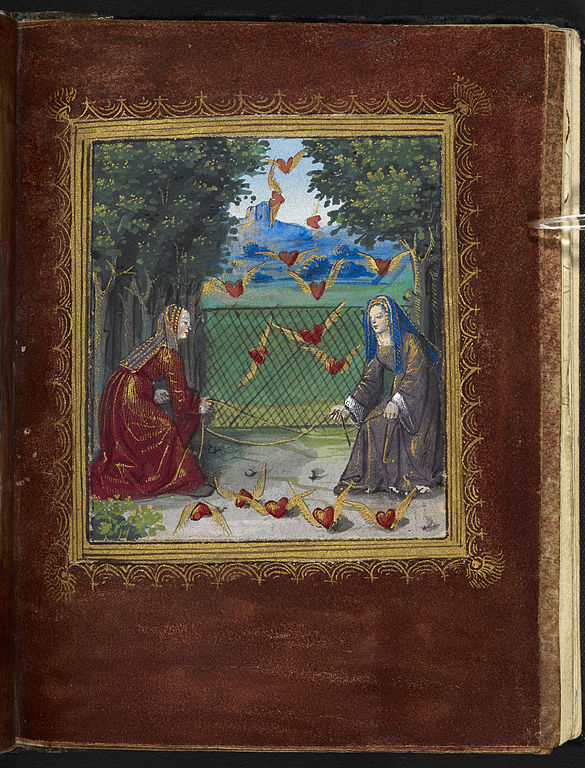
From BL Stowe MS 955, Le Petit Livre d’Amour

If you would like to see more entries more regularly and help keep this bestiary free of ads, you are welcome to contribute to the Biscuit Jar