Simnel Biscuits

Simnel Cake is traditional in Britain and Ireland for both Easter and Mother’s Day, but it was only recently I discovered that a number of bakers have transmuted its classic flavours into Simnel biscuits. The easiest recipe I could find was this five-ingredient one by Silvana Franco. My dough produced more than a dozen biscuits and though I hadn’t intended it they do look uncommonly like fried eggs. I opted for a handful of chocolate drops and currants in mine as well as a dab of marzipan on top but if you prefer a healthier option you could stick to mixed spice with chopped almonds.
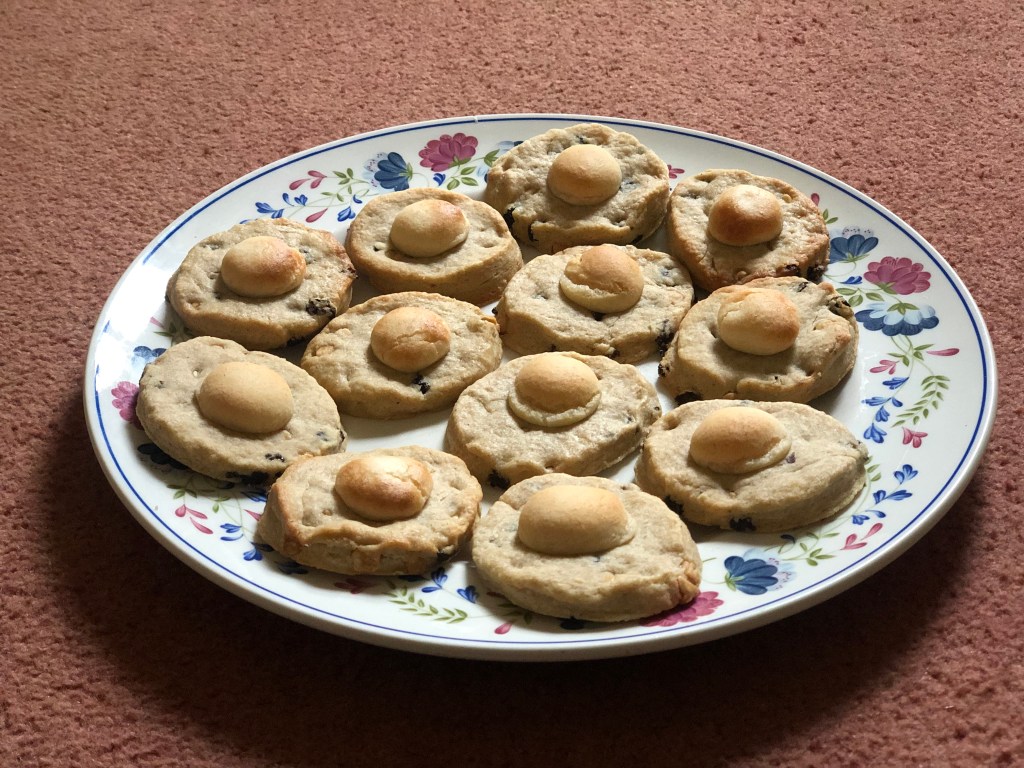
Simnel sounds like a medieval word and it is. Its earliest attested use in the OED is in Havelok the Dane in c. 1300 to mean a high-class cake or bun. The true history of the cake is harder to come by but time-honoured traditional recipes are linked to Bury, Shropshire and Devizes. I took inspiration from another baking blog in adding marzipan to each biscuit as a nod to the Simnel Cake’s decoration with eleven marzipan balls representing the twelve apostles minus Judas (or twelve if you add one in the middle for Jesus).

The Last Supper by Ugolino da Siena (c.1325) from the Met Museum. With just 12 marzipan halos…

Tonight’s the night we mark Maundy Thursday in the Western Church’s Calendar: the story of Jesus’s celebration of the Last Supper with his disciples followed by his vigil, betrayal, and arrest in the Garden of Gethsemane. The fullest account of that meal – which was no ordinary meal but the Jewish festival of Passover – and everything that followed it, can be found in the Book of John but it’s mentioned in all four of the gospels. At home I have a print of a beautiful painting by Charlotte Ashenden of the moment that Jesus offers a piece of bread to Judas (and in so doing identifies his betrayer) with verses from Matthew and John curled beneath it. It’s one of the most dramatic moments in the story before Judas departs into the night.
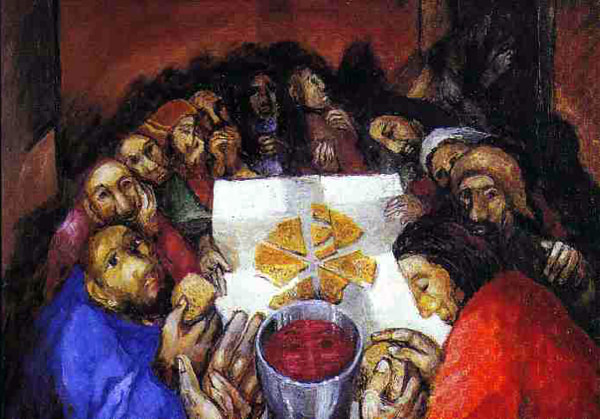
The Last Supper, by Sieger Koder (1925-2015)

As the story of the evening unfolds, John tells us that Jesus knew that the hour had come for him to leave this world and go to the Father. Having loved his own who were in the world, he loved them to the end. It’s that quality of loving to the end that was shown so abundantly in every act of his life and never more so than in Holy Week, the week of his Passion. He loved John, the beloved disciple, but he also loved Judas. Through disappointment, betrayal, rejection, condemnation, torture and death he loved unwaveringly, whether they showed themselves to be his enemies or his friends.

All are Welcome, by Sieger Koder

As Christians we’re called to love like Christ and yet without his life in us it is impossible. It humbles us – and it should humble us – that anyone could love like that in the face of every human provocation not to. “A new commandment I give to you,” Jesus taught them that evening, that you love one another as I have loved you. By this shall all men know you are my disciples.

Further Reflection

Fernando Ortega’s moving meditation on Jesus’ vigil in the Garden of Gethsemane:

If you would like to see more entries more regularly and help keep this bestiary free of ads, you are welcome to contribute to the Biscuit Jar.
The American Biscuit

Biscuits for breakfast: OK or not OK? In Britain I don’t know a single soul who eats those Belvita biscuits although at weekends a biscuit or two might be the prelude to the Breakfast Proper. But in America a dish called Biscuits and Gravy is regularly eaten for breakfast and here we come to one of the great culinary divides between the two nations, a chasm so vast confused biscuit lovers on both sides of the pond find themselves in the position of Inigo Montoya in the cult film The Princess Bride, when he says: You keep using that word. I do not think it means what you think it means…

So what does it mean? I’ve tried before to answer the question here. To summarise: in Britain, a biscuit is what most Americans call a cookie and is (generally) sweet and (generally) smaller, flatter and tougher to bite into than a cake, but emphatically not a cake although it may at times be confused with one. To make things even more complicated in Britain a cookie is thought of as a subtype of a biscuit which means all cookies are biscuits but not all biscuits are cookies… In America, a biscuit is much closer to what we Brits call a savoury scone but (generally) lighter and fluffier and made to be eaten with a white sausagey gravy we would think of more as a sauce. As you can see the meaning is quite different, which begs the question how did such a semantic divergence come about? English Language and Usage Stack Exchange concludes:

At various times before 1800, dictionaries have used [words such as bisket, biscuit and bisquet for] a confection made with flour, eggs, sand sugar (among other ingredients). But at other times before 1800, dictionaries have applied the words bisket, biscuit, and bisquet to tiny rounds of hard-baked bread. Under the circumstances — especially in view of the equivocal treatment of the word in Samuel Johnson's tremendously influential 1755 dictionary, it is hardly surprising that British English went one way with the word biscuit and North American English went the other...

Like Robert Frost, the latter opted for the path less travelled semantically speaking. Or as one wit on the internet put it:

This image has an empty alt attribute; its file name is biscuit-usa-v-rest-of-the-world-768x576-186255308.jpeg

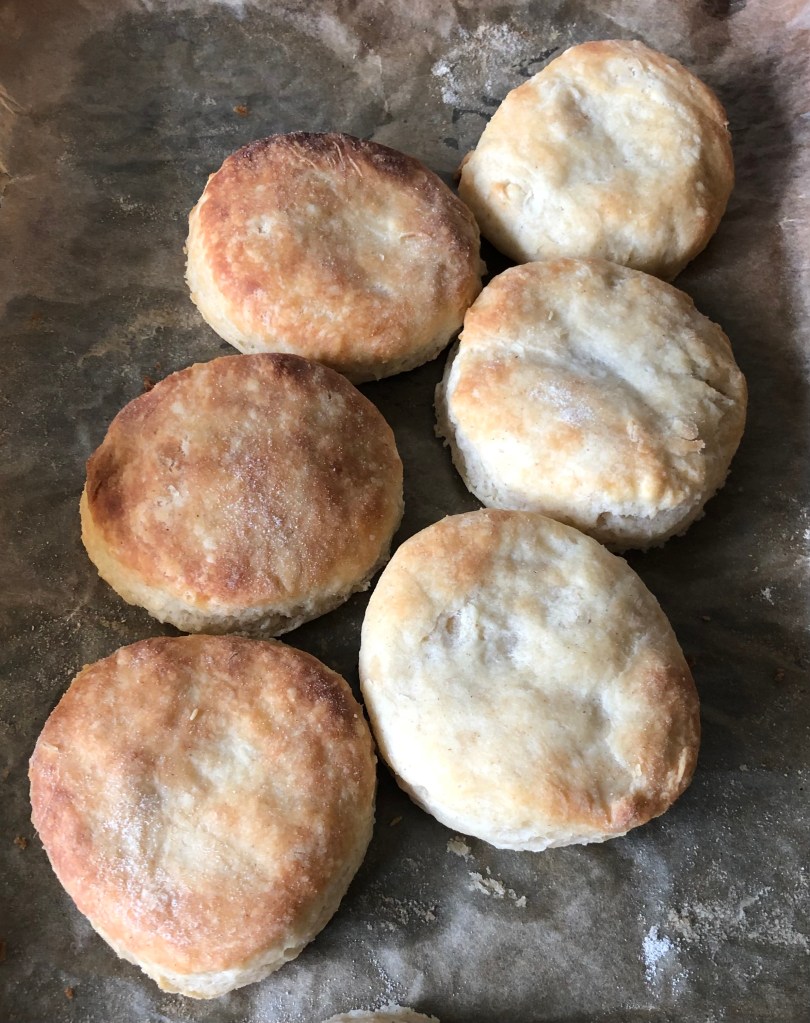
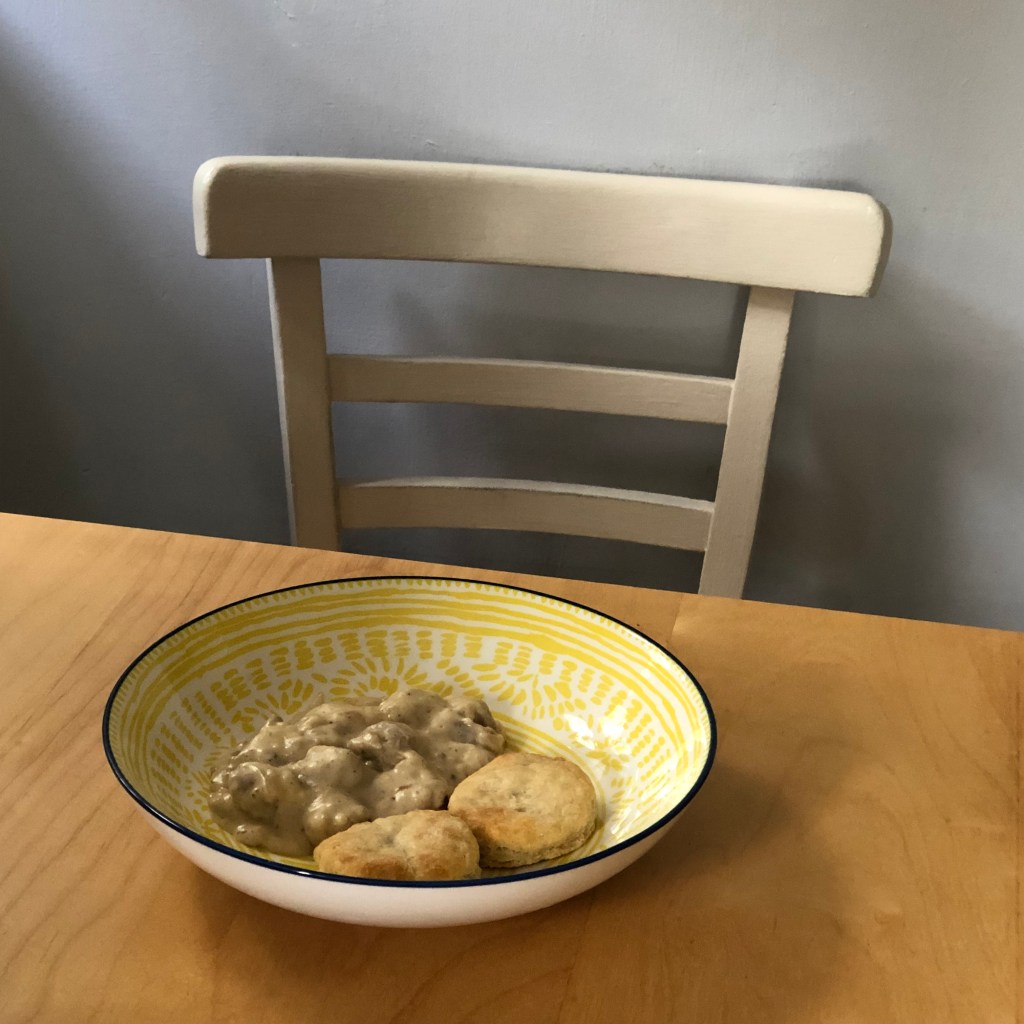
American biscuits are often thought of as a Southern staple but are now eaten everywhere in the States, where, like French onion soup, they’ve made the unexpected journey from low-cost peasants or workers’ fare to general comfort food. I’d never tried American biscuits before so wasn’t quite sure what they were meant to taste like but decided I’d have a go at making some. I think these biscuits turned out better than the gravy although to be fair I veered off the beaten track of the recipe several times, overdoing it on the buttermilk and underestimating the amount of whole milk that I needed, partly as a result of struggling to convert the measurements accurately.

There’s no doubt the biscuits were at their best fresh and I followed the advice to split them and fill them with gravy to make a delicious, if slightly gloopy, sandwich. All in all this tasted a bit like a cross between a sausage McMuffin and a plain flour dumpling, while fulfilling the same function as the wedges of thick farmhouse bread you’d use to mop up a hearty stew. While it felt odd as a breakfast option, I did enjoy it.

And the moral of the American biscuit? In the same way as this unusual experience (for us in England) explodes our idea of what a biscuit is, are we ready to welcome the risen Jesus if he shows up in a different way to the one we expected? In this Easter-tide it’s good to remember that those first days after his resurrection some of his closest friends didn’t recognise him to begin with and that there were aspects of his resurrected life that were very different to the one they had known before. He could meet them inside locked rooms still bearing the marks of the nails on his body. He could walk with friends who took him for a stranger until a word or touch brought the revelation of his presence, long after they had felt their hearts burning within them in their conversation on the road. He could show up on the shores of Galilee to cook his disciples breakfast (fish, not biscuits). He could appear and disappear out of nowhere (or everywhere?) There was a divine mystery in it all that they could not understand, much less control.

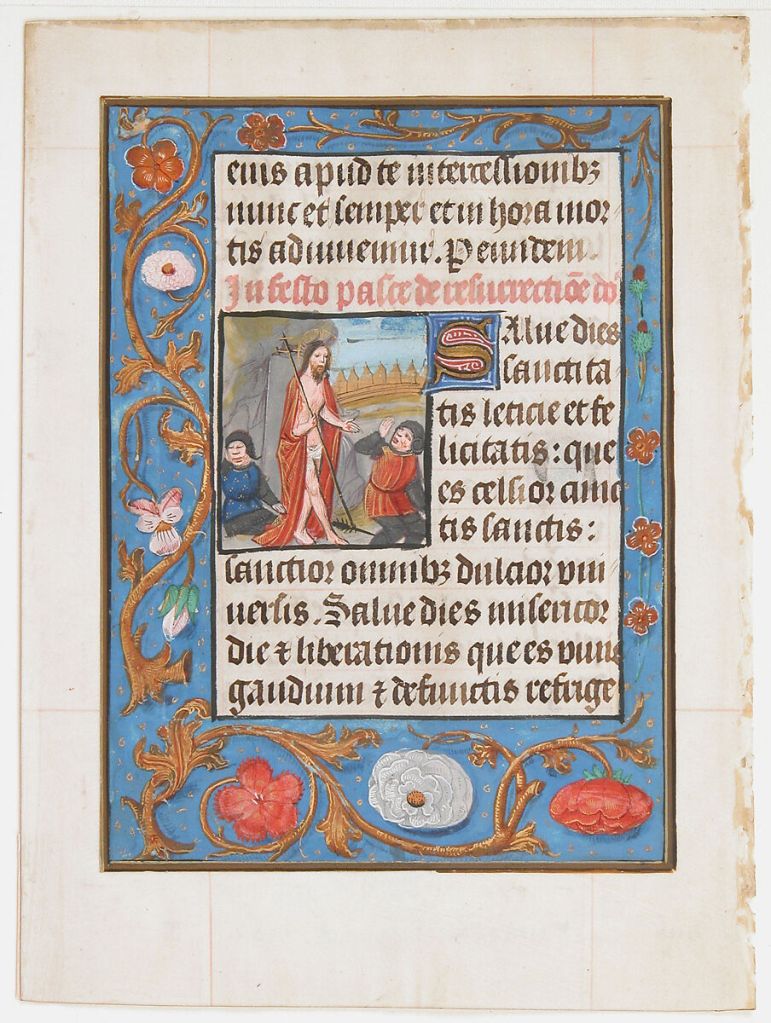
Incipit illustration of the Resurrection from a Dutch Book of Hours, c.1500 from www.metmuseum.org

The story of Christ’s return from the dead is exciting but it is also challenging. Are we willing to have our understanding of everything challenged, in the way that resurrection life always challenges us? In those strange, thrilling days between Easter and Pentecost, the astonished disciples hadn’t much of a clue what their risen Lord was doing (some of us still don’t) but they were learning to trust him and to recognise him whenever he appeared in their midst.

Further Delectation

Biscuits and Gravy: A Little Bit of History.

Watch this fun film experiment introducing American biscuits and gravy to British teenagers (and their headmaster).

From darkness to light: a lovely article on Easter Exultet rolls from the BL’s Medieval Manuscripts blog.

And lastly, that exchange from The Princess Bride:

If you would like to see more entries more regularly and help keep this bestiary free of ads, you are welcome to contribute to the Biscuit Jar

Easter Biscuits

While Christmas often feels like the bigger feast – quite literally – Easter has always been the highest Holy Day in the Christian calendar. The week preceding it is a time of solemn reflection in which we’re invited to accompany Jesus on his journey to the cross from his entry to Jerusalem and last Passover meal to his betrayal, trial and crucifixion, reading again the four gospel accounts of the events leading up to his death in all their vivid, painful detail. Together and alone, we meditate at the foot of the cross and wait in the quiet of Holy Saturday for the resurrection we know is coming. As we do we keep company with Christians through the ages, especially the Middle Ages with its emphasis on retelling and responding to the story of Christ’s sacrifice, dwelling on its full significance and meaning.

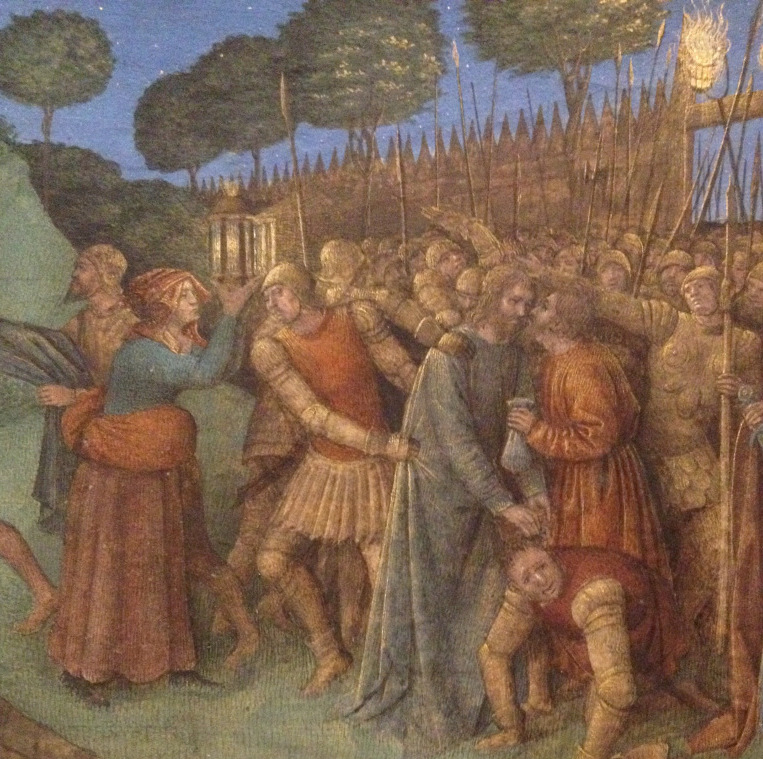
Jesus’s arrest in the Garden of Gethsemane from Jean Fouquet’s Book of Hours of Etienne Chevalier (c.1450)

Biscuits don’t feature all that much in Holy Week, which in England at least is the natural habitat of the Hot Cross Bun, but there is a type of spiced biscuit traditionally made to celebrate Easter Sunday here, particularly in the West Country although my Mum recalls my grandmother making them years ago in South London. Frankly I’d no idea these biscuits existed until recently so this year I was quite excited to have a go at making some. I was even more intrigued by the special ingredient used for them in Somerset and which is hard to find outside it without the aid of the internet: Cassia Oil.

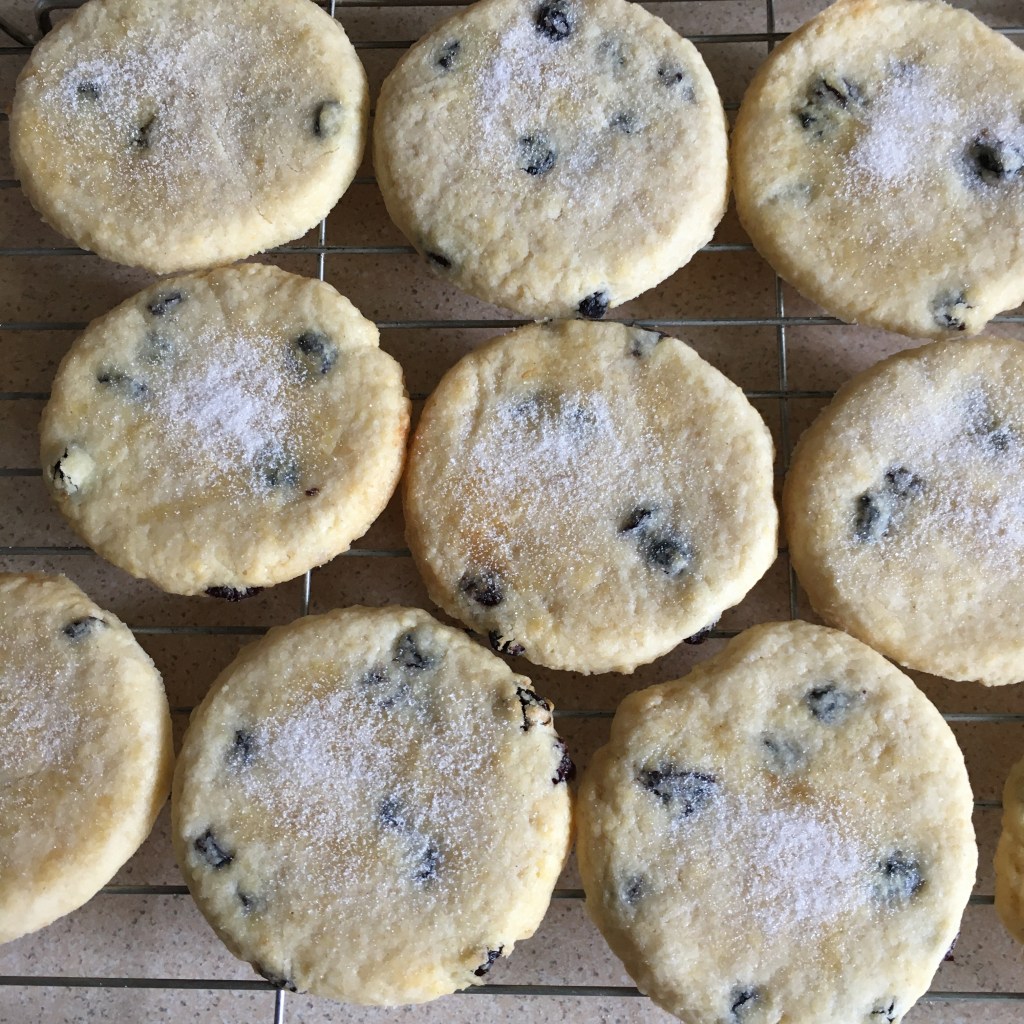
I found a number of recipes for Easter biscuits online and there were two included with my order of Cassia oil. The one I used was very similar to this one though I added a little grated lemon rind to the mix. Resisting the urge to use bunny-shaped cutters, I went with a more traditional round shape and was pleased that they turned out well enough to distribute them as Easter gifts. They do look quite shortbread-y but the texture feels lighter, the taste buttery with a pleasant hit of currants. The flavouring from the Cassia Oil is subtle, even with the maximum dose of 10 drops.

Cassia is from the same tree from which we get cinnamon and it’s a rather important spice in the bible. It’s one of five ingredients blended to make the special anointing oil for the priests in the temple and one of the perfumes of the warrior-king’s garments in Psalm 45, the justice-loving ruler who has the oil of joy poured out on him. Such oils and precious spices were also used to prepare a body for burial, which is thought to be the reason Cassia oil is used to make the Easter biscuits. Mary Magdalene and the other women who visited the garden tomb that first Easter Sunday morning came bearing spices to anoint Jesus’s body. It was the last service they could do for him.

On the first day of the week, very early in the morning, the women took the spices they had prepared and went to the tomb. They found the stone rolled away from the tomb, but when they entered they did not find the body of the Lord Jesus. While they were wondering about this, suddenly two men in clothes that gleamed like lightning stood beside them. In their fright the women bowed down with their faces to the ground, but the men said to them, “Why do you look for the living among the dead? He is not here; he is risen!”

(Luke 24)
From Mileševa Monastery, Serbia. In Eastern Orthodox tradition, the women are known as the myrrh bearers.

It took his followers a while to believe Jesus really had returned from the dead, and still more to understand all that that meant for them. But when they did, it turned them from scared men and women trembling behind locked doors to people willing to risk death to share what had happened with the world. This was the good news (or as the Greek has it, gospel). Not a dead Lord but a risen Lord. Not a dead story but a living one.

I started today with a cup of tea and an Easter biscuit to celebrate. This morning the sentence that keeps ringing in my ears when I think of the Easter biscuits and the Cassia oil is God’s promise to give those who grieve the oil of joy instead of mourning (Isaiah 61). Perhaps it’s a promise with especial resonance for us this year. Hallelujah. Christ is risen.

Further Delectation

A little piece on these biscuits on Gabriella’s blog – it seems the Easter biscuit is alive and well in Bristol.

Keith Green’s arresting Easter Song is as fresh as it’s ever been and full of the joy of Easter.

A powerful piece by Esau McCaulley on the women at the tomb, especially in the wake of 2020.

Got time to burrow into a bit of medieval art and book history? For an Easter treat, the BL’s Medieval Manuscripts blog today links to BBC Radio’s Moving Pictures programme, homing in on the Easter page of the Sherborne Missal (reproduced below, from BL Add MS 74236).

If you would like to see more entries more regularly and help keep this bestiary free of ads, you are welcome to contribute to the Biscuit Jar.