My friend Katka appeared on the doorstep early in Advent with a tub of homemade cookies and these rather impressive looking gift biscuits. I saw the tin and thought you might like it for your biscuit blog she texted me with a winking emoji 😉 and she was right. The makers of this particular brand, Amaretti Virginia, have been baking biscuits since the 1860s and are now a household name in Italy and all over the world. Virginia are famous for their soft Amaretti, ‘morbidi’ in Italian, although they also make the crunchier, drier ‘secchi’ too. Both types of classic Amaretti are included in this selection along with Baci di Dama and mini Cantucci.

I’ve always thought of Amaretti as sweet coffee or dessert biscuits so it was a surprise to find that the name means ‘little bitter things’ and derives from amaro, the Italian word for bitter. This is apparently because of the bitter almonds or apricot kernels originally used as a base but if you sampled them without knowing what the name means you’d never guess. The sugar and almond content is so high the soft Amaretti in particular taste like marzipan which gives them a distinctly Christmassy vibe.
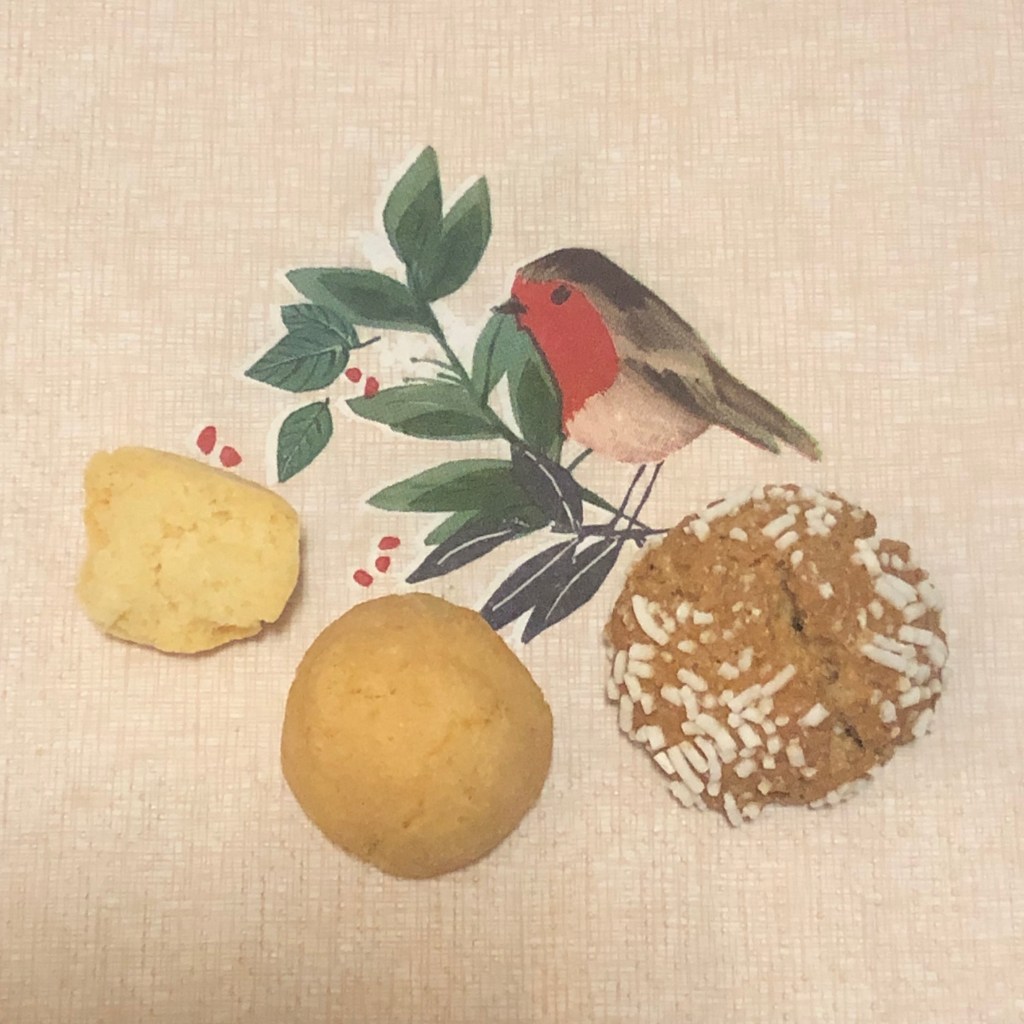
I certainly appreciated the Amaretti travelling to North Yorkshire this Thursday when the train service was subject to cancellations and delays as a result of Storm Pia. After a number of unplanned dramas at Kings Cross (including managing to lose one bag of presents in the crowded station for twenty minutes before recovering it), I eventually arrived in Leeds on a jam-packed service three hours later than planned and without a cup of tea or anything substantial in the way of lunch. But I can honestly say that I spent the journey contentedly, listening to Jonathan Ogden’s music and nibbling on the Amaretti I had stowed away in my hand luggage. Here they are arranged to best advantage on one of the Christmas napkins I’d also brought with me (morbidi on the left and crunchier secchi to the right).
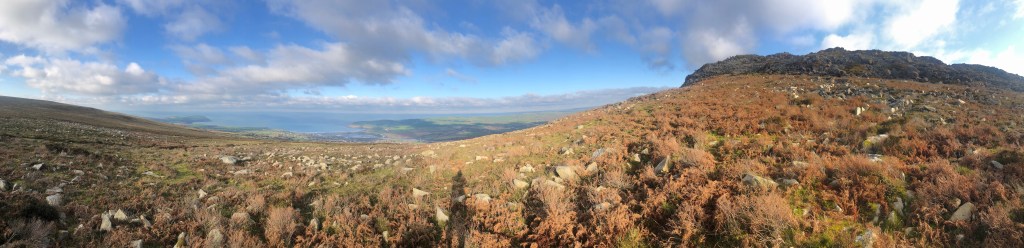
One of my happiest memories of 2023 was making a retreat to a remote part of South Wales, what the old Celtic Christians would have called a thin place due to the amount of prayer that’s gone up here. I went looking for God in the stillness and found him in conversations with various people who crossed my path in the course of the week. One particular chat I keep coming back to was with a lovely Christian father from the Antipodes visiting with his family. Unbeknown to him, he was offering a masterclass in how to deal with disruptions and re-routings. I had heard that their car had developed serious problems on the journey to the retreat place which had left them all stranded in the middle of nowhere for several hours but when he talked about the experience he was full of thankfulness to God for having got them safely to their destination in spite of all the difficulties. “We didn’t even think to pray,” he told me, “but at every point we needed it help just… appeared. We were looked after every step of the way.”
He kept returning again and again to this theme of the goodness of God as the bedrock of the universe, not denying the pain that is also part of the human experience but focusing on the one who comes to bring us life in all its fullness – the God who is not the author of evil and is always working to bless, heal, encourage and restore. I knew this in my head, of course, but hearing this young Australian father speak so warmly about that goodness made me wonder how much I had allowed that knowledge to permeate my heart.
“Give thanks to the Lord for he is good
Psalm 136
His love endures forever…”







 The Biscuit Bestiary