‘Mpanatigghi

‘Mpanatigghi are… unusual in the biscuit world. Ancestry wise, you can trace them back to early modern Sicily. If they resemble a cross between a Cornish Pasty and Spanish empanada that’s because they are far more like either of these things than a traditional (British) biscuit. Sicilian Meat Cookies is a common English translation. Dolce di carne is another Italian name for them because they’re crafted from light pastry dough, dark chocolate, winter spices, nuts and… meat. Most of the pictures of them in the wild show them folded into half-moon shapes with the chocolatey filling bursting out of a hole at the top like so:

Image from: saveur.com

The ‘Mpanatigghi give a whole new meaning to the word ‘sweetmeat’ (a medieval term) and if you’re thinking the dark chocolate-beef combo sounds rather Mexican I’m with you. Modica, the town associated with them, is famous for its Aztec-inspired chocolate and Sicily’s hispanic culinary influences – hinted at in the semantic roots of the ‘Mpanatigghi being so similar to the empanada – are a throwback to the days the island was under Spanish control. I found a recipe online that seemed easy so decided to have a go myself, mixing up ground beef, ground almonds, grated dark chocolate, sugar and cinnamon for the filling (I left out the ground cloves as these were hard to find). A new adventure for me and this was the funnest part:

The end results were more like sedate mini English pasties with a weirdly chewy chocolatey centre. They’re not unpleasant and you could get used to them as a picnic item, but it’s fair to say they were more an oddity than a triumph and as I was too shy to offer them to my lunch guests on Sunday I’ve spent the week eating them up. I suspect I could find better recipes online (the proportions of dough to filling in this one were a little suspect) but I won’t be making them twice. If I ever visit Modica I’d love to try some authentic ones.

As for the moral, well, one story has it that a community of nuns in Modica first came up with the idea for ‘Mpanatigghi, slipping small amounts of ground beef or veal into their biscotti to hide among the sweet filling of nuts and dark chocolate. The point was to break the Lenten rules without observers knowing by smuggling meat into an innocent-looking, sweet-tasting biscuit. (Before modern times, chocolate, sugar and nuts could be eaten freely during Lent for those who could afford them; it was butter, eggs and meat that were frowned on.) The most sympathetic defence I’ve seen of this culinary sleight of hand is that the nuns were worried that six weeks without any red meat would have a deleterious effect on the monks and a little boost of protein would help them fulfil their preaching duties as they travelled from place to place during the fasting season!

Detail from the Maastricht Hours: Stowe MS 17, f. 38r

With Ash Wednesday upon us and the dubious example of the ‘Mpanatigghi before us, it begs the question of how we should fast as much as what we should fast from. Is there a right and a wrong way to do it? The answer from the Bible seems to be yes. Jesus had strong words to say about those who made a religious show of fasting, calling them hypocrites who had already received their reward from men (impressing others) and so shouldn’t hope to receive any reward from God. He also didn’t have much time for those who in their religious practices sacrificed as little as they thought they could decently get away with, knowing that such sacrifices, like the innocent-looking ‘Mpanatigghi, were more about the appearance than reality, of conforming outwardly, and little to do with the heart.

God is all about the heart, and in Lent the discipline of fasting becomes a means of purifying and softening it. Whether as a private or corporate undertaking, it can involve giving up all food or just luxury foods (as in the medieval fast) or some other act of self-denial like fasting from social media. Along with delayed gratification, self-denial is not something our culture is all that good at and the long Lent fasts were traditionally meant as a reflection of, and aid towards, cultivating humility before God. But as Jesus’s words showed, it’s definitely possible to fast in the wrong spirit and in one surprising passage in Isaiah God gets very irritated with those whose fasting hasn’t improved the condition of their hearts at all:

Is not this the kind of fasting I have chosen:
to loose the chains of injustice
and untie the cords of the yoke,
to set the oppressed free
and break every yoke?

Sharing your resources with the needy, standing with those who are oppressed and afflicted, not stirring up strife or constantly accusing others, or exploiting your employees or turning away from family who need you… This is the kind of fasting that moves God most apparently, and without it any outward acts of self-humbling fail to impress him.

For those who do try to fast in Lent in some way, these words are challenging and liberating in equal measure. Challenging because, if we’re honest, most of us identify real gaps between our ideals and actual behaviour when it comes to practising our faith; we don’t always live up to own standards let alone God’s. But liberating because the God who is so tough on religious hypocrisy continually shows himself soft on those who admit the gaps and come to him humbly with them, asking his help to change.

Further Reflection

More on the history of the ‘Mpanatigghi and a recipe if you fancy having a go at making them (there are simpler versions out there but this looks a bit better than mine!)

’40’ a short animated film by Si Smith imagining Jesus’s forty day fast in the Judean desert:

If you would like to see more entries more regularly and help keep this bestiary free of ads, you are welcome to contribute to the Biscuit Jar.
Florentines

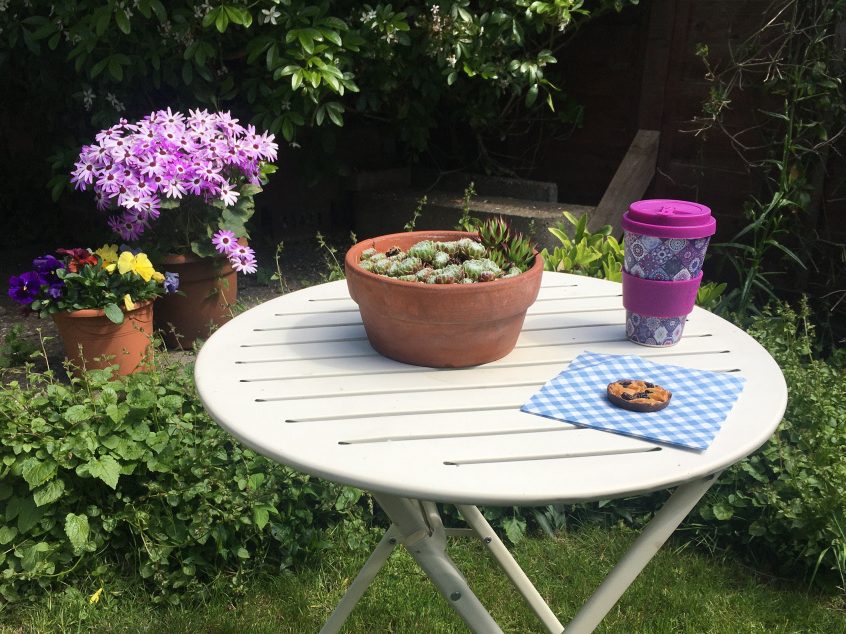
I’m writing this post on the rattling train from Kings Cross to Edinburgh. It’s the first time I’ve been out of London since September so I’m very much looking forward to Narnia and the North (or Northallerton, anyway). It’s also National Biscuit Day, which I’d forgotten about until this morning when this wonderful thread of biscuity homages to history reminded me. This week felt like we had the first day in a hundred years in which it was sunny enough to sit in the garden without a coat on for more than two minutes, and what better biscuit to celebrate that little glimpse of summer than one of these excellent dark chocolate Florentines my friend Katka gave me?

Although I don’t often get the opportunity to sample them these days, Florentines are one of my favourite biscuits so I was pleased to discover no less a personage than Delia Smith arguing that they’re the best biscuits in the world. I love Felicity Cloake’s description of them as ‘delicate webs of nut and candied fruit’. These specimens are particularly nice with coffee, although a bit sticky to eat because of the caramel. Like macarons, they’re notoriously difficult to make well – I had a go myself a few years ago and they came out looking like flapjacks that had lost their way.

From the name you might be forgiven for thinking the Florentine’s origin is Italian when in fact most experts agree it was likelier to have been cooked up in France by the chefs at Louis XII or Louis XIV’s court when the Medici family came to visit. To make things even more complicated, this particular recipe is an English tribute from Thomas Fudge’s bakery and has been in use for more than a hundred years in Dorset.

Perhaps this particular Florentine is the nearest thing you’ll get to fusion-cooking in the biscuit world. In the medieval world, it’s the nearest thing you’ll get to a florilegium, a collection of literary extracts selected like choice blooms for the reader (the word itself means a gathering of flowers, the same as an anthology). Both derive from the Latin florens with its connotations of blooming and flourishing. This makes it a good choice of biscuit for “the joly tyme of May,” as Chaucer’s narrator in the Legend of Good Women puts it, the favourite month of the medieval love poets.

“Look, the winter is past,
and the rains are over and gone.
The flowers are springing up,
the season of singing birds has come,
and the cooing of turtledoves fills the air.
The fig trees are forming young fruit,
and the fragrant grapevines are blossoming…”

That sounds a lot like a fourteenth-century dream vision, but in fact it’s straight from the pages of The Song of Songs: a love song, first and foremost, but the church fathers always liked to read it as a picture of Christ and the church or the individual soul. A poem about love and loss, waking and dreaming, finding and searching. Because the God of the bible is not some remote figure approached through set formulas, but a person we can seek and who seeks us in our own desert places and gardens. In finding him – or perhaps in allowing ourselves to be found – there’s a perennial invitation to bloom.

Further Delectation

Eat your Florentines with The Florentine, another great fusion of Anglo-Italian culture in Firenze.

School’s out, you say? (For the yes argument, see Chaucer’s Legend of Good Women; for no, this learned little essay on a thirteenth-century florilegium).

Enjoy this beautiful May miscellany from the Clerk of Oxford or this lovely illustration for Maying in late medieval France from the Très Riches Heures du Duc de Berry

If you would like to keep this bestiary free from ads and see more entries more regularly you are welcome to contribute to the Biscuit Jar.
Grisbi Extreme Chocolate Cookies

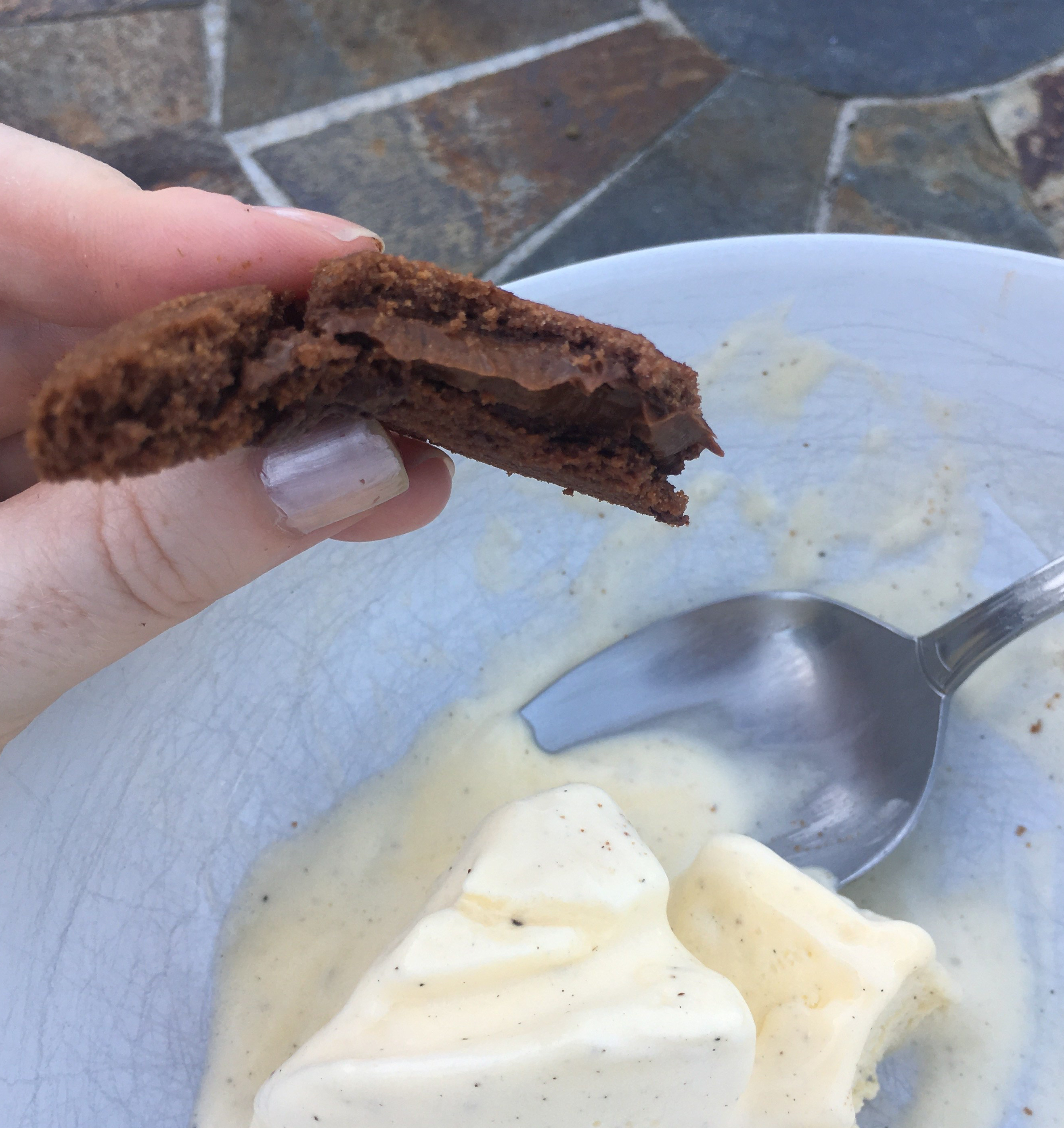
Biscuits can be a lot like buses – after a dearth of specimens to sample I suddenly got three through at once. The first is from a new friend of mine called Dāvis, a fan of the bestiary in Latvia. I posted him some biscuits a few months ago to help him through his medical exams and he kindly returned the favour with these Grisbi Extreme Chocolate cookies from Matilde Vicenzi. These chunky flat Italian creations certainly live up to their name as they really are very chocolatey. The weather was so hot when I opened the packet I opted to try them out on the terrace with tea and ice cream…

IMG_0951While I don’t like ranking biscuits any more than people, I have to say this is chocolate of a high order and so rich it makes for the perfect dessert biscuit (more on that elusive genre at a later date). The gooeyness of the centre was an unexpected surprise, especially for an Italian biscuit as these tend to be dryer than the British sort. Anyone eyeing it from the outside could be forgiven for imagining it was the same texture all the way through and I must say I’m intrigued by the combination of outer crumbliness and inner creaminess its makers have managed to pull off.
IMG_0956For the moral I couldn’t help but think of the prophet Samuel’s words when choosing a new king for Israel: ‘People judge by outward appearances but the Lord looks at the heart.’ Leaving aside the fact that the Lord’s choice, David, was apparently good-looking as well as goodhearted (some kings get all the luck), Samuel’s words are a sober reminder that what impresses on the surface does not necessarily make the best criteria for judging an individual’s worthiness or fitness for office.
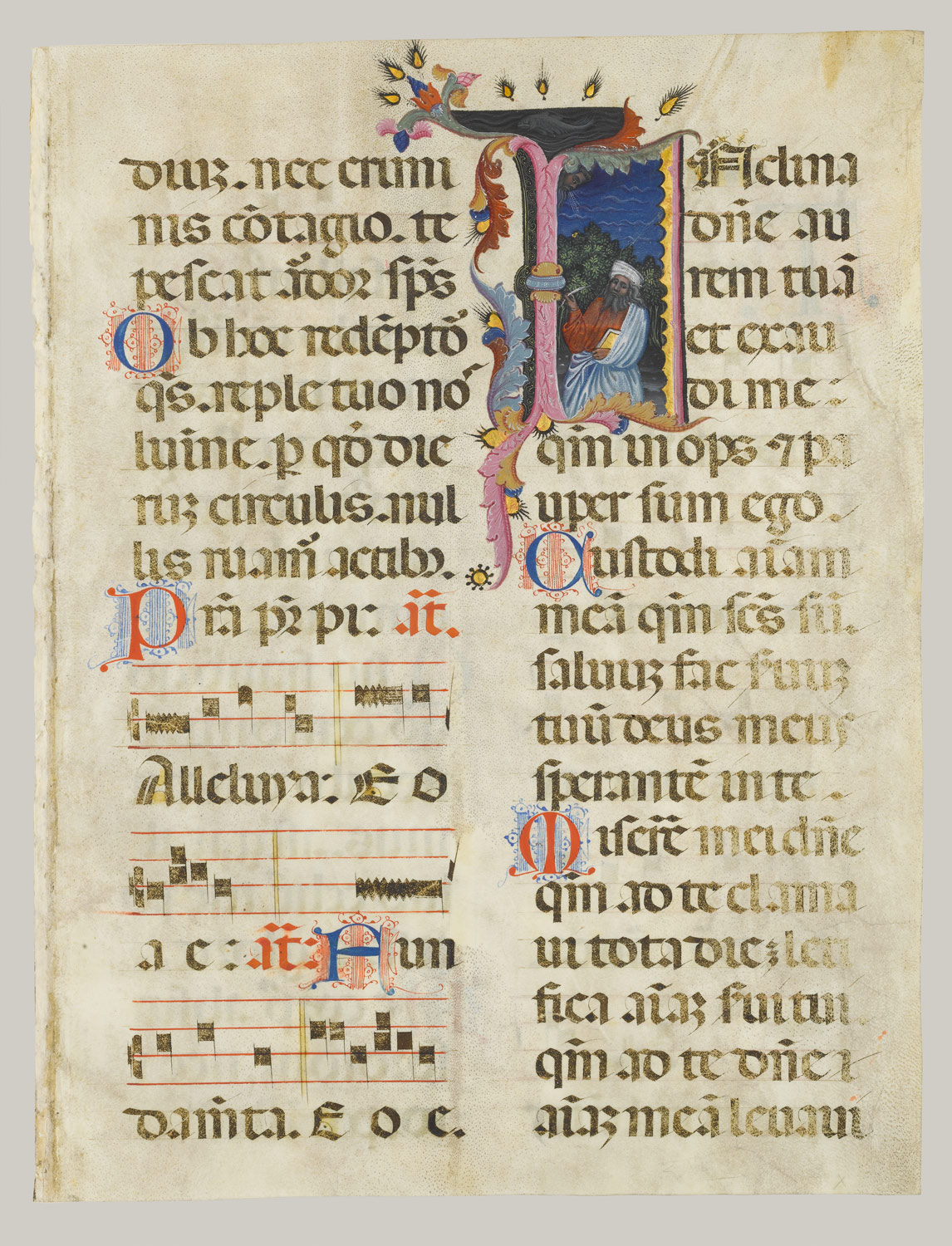
I expect it’s almost as rare for a people to find a true leader as it is for God to find a man after his own heart, yet that is the astonishing epithet applied to David in the Bible. And as far as we can tell the forging of this extraordinary heart came about long before anyone but God knew who David was, in the long conversations they had together with no-one but the sheep to overhear them. We can eavesdrop a little on some of those conversations in the Book of Psalms, many of which are believed to have been written by the king over the course of his lifetime. Here’s an image of him in the throes of composition from an early 15th century Italian manuscript:

hb_28.225.65.jpg
Image from New York’s Met Museum

What’s refreshing about the David of the Psalms is his no-holds-barred abandon in expressing himself to God: every joy and confidence, every doubt and fear and angry thought let out into the wild and starry open. ‘Slap all my enemies in the face!’ he prays in Psalm 3, something we don’t sing in churches very much. We can admire a great soul like Gandhi for his commitment to non-violence, but David’s radical honesty about the state of his soul shows us something of what it means to have a great heart. Despite all his faults and failures, it’s hard not to love the David who mourned and the David who danced, the David who argued and pleaded and repented without caring what anybody thought of him. The David, above all, whose heart God saw and loved, and the David to whom he gave an everlasting kingdom.

Further Delectation

A lovely setting of one of David’s Psalms by John Michael Talbot.

Some beautiful medieval Psalters from the collection of the Fitzwilliam Museum.

IMG_0950

If you would like to see more entries more regularly and help keep this bestiary free of ads, you are welcome to contribute to the Biscuit Jar

Zuccherini al Caffe

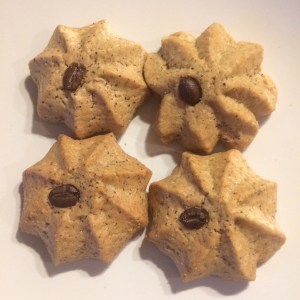
IMG_5172These little ‘Zuccherini’ biscuits hail from Romagna and are another donation from my friend Olivia who went on holiday to Ravenna a few weeks back. The makers, Modigliantica, have a rather nice selection of biscuits in their product range, and – tidings of great joy for the lactose-intolerant – they all seem to be dairy-free. Like most Italian biscuits I’ve had the pleasure of sampling, these are drier than their British counterparts but sweet and subtly flavoured and an excellent accompaniment to your morning coffee. In fact these biscuits are partly made of coffee (the decorative ‘eye’ on top is a coffee bean and the specks in the mixture coffee grounds). Altogether a lovely little biscuit then.

DLx3nrOWkAAQ2jW
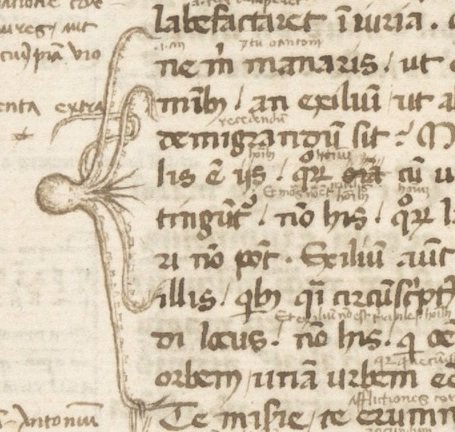
Octopus marginalia, 15th-c Italy

The name ‘Zuccherini’ suggests sugary treats rather than the usual Italian word ‘biscotti’. (Incidentally, a lot of coffee chains in Britain use the plural ‘biscotti’ as singular, causing amusement to Italian speakers across the board.) I particularly loved the fact that no two of the Zuccherini look exactly the same in the packet, some of their ‘arms’ are evenly shaped and some aren’t but together they fill the gaps on the plate ingeniously, as you can see in the photo above. The biscuits themselves look a little like starfish or even octopuses given their vaguely octangular structure. And this in turn reminded me of Ave, Maris Stella, the popular medieval invocation to Mary as the Star of the Sea: an invocation which feels touchingly poetic, even if it may originally have come about through scribal error.

Still a keystone of Catholic prayers today, the Hail Mary is the opening of the angel’s greeting to the mother of Jesus in Luke’s gospel so I think it appropriate to borrow those words as the moral sentence for this biscuit. In this lovely post on the medieval poetry and imagery of the Annunciation, one of today’s clerks of Oxford reminds us how such art ‘tends to emphasise the quiet, private, gentle nature of this encounter’ and that the stillness of such images is a good antidote to the noisy chatter of the internet. Mary’s trusting response also reminds me of the wisdom of Isaiah, who provides another whisper of Christmas in Advent’s Waiting Room: ‘In repentance and rest is your salvation, in quietness and trust is your strength.’

Further Delectation

Reclaim a bit of calm in the Christmas rush with Monteverdi’s Ave Maris Stella, ideally with coffee and biscuits…

Feast your eyes on the vibrant stillness of one of Fra Angelico’s beautiful Annunciations:

113728072-kab3xmav-20090516170957sanmarcofraangelico

Fed up of all this Christmas nonsense? Find yourself a solid Parliamentarian paper for all the latest on England’s Civil War (warning: contains early modernism and politics.)

Increase your capacity for wonder by befriending an Octopus. If you would like to see more entries more regularly and help keep this bestiary free of ads, you are welcome to contribute to the Biscuit Jar