Simnel Cake is traditional in Britain and Ireland for both Easter and Mother’s Day, but it was only recently I discovered that a number of bakers have transmuted its classic flavours into Simnel biscuits. The easiest recipe I could find was this five-ingredient one by Silvana Franco. My dough produced more than a dozen biscuits and though I hadn’t intended it they do look uncommonly like fried eggs. I opted for a handful of chocolate drops and currants in mine as well as a dab of marzipan on top but if you prefer a healthier option you could stick to mixed spice with chopped almonds.

Simnel sounds like a medieval word and it is. Its earliest attested use in the OED is in Havelok the Dane in c. 1300 to mean a high-class cake or bun. The true history of the cake is harder to come by but time-honoured traditional recipes are linked to Bury, Shropshire and Devizes. I took inspiration from another baking blog in adding marzipan to each biscuit as a nod to the Simnel Cake’s decoration with eleven marzipan balls representing the twelve apostles minus Judas (or twelve if you add one in the middle for Jesus).

Tonight’s the night we mark Maundy Thursday in the Western Church’s Calendar: the story of Jesus’s celebration of the Last Supper with his disciples followed by his vigil, betrayal, and arrest in the Garden of Gethsemane. The fullest account of that meal – which was no ordinary meal but the Jewish festival of Passover – and everything that followed it, can be found in the Book of John but it’s mentioned in all four of the gospels. At home I have a print of a beautiful painting by Charlotte Ashenden of the moment that Jesus offers a piece of bread to Judas (and in so doing identifies his betrayer) with verses from Matthew and John curled beneath it. It’s one of the most dramatic moments in the story before Judas departs into the night.
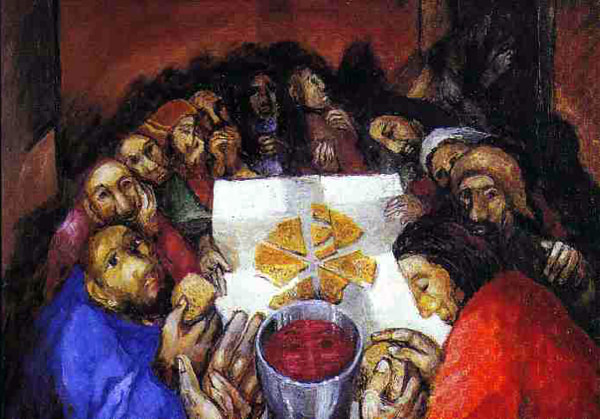
As the story of the evening unfolds, John tells us that Jesus knew that the hour had come for him to leave this world and go to the Father. Having loved his own who were in the world, he loved them to the end. It’s that quality of loving to the end that was shown so abundantly in every act of his life and never more so than in Holy Week, the week of his Passion. He loved John, the beloved disciple, but he also loved Judas. Through disappointment, betrayal, rejection, condemnation, torture and death he loved unwaveringly, whether they showed themselves to be his enemies or his friends.

As Christians we’re called to love like Christ and yet without his life in us it is impossible. It humbles us – and it should humble us – that anyone could love like that in the face of every human provocation not to. “A new commandment I give to you,” Jesus taught them that evening, that you love one another as I have loved you. By this shall all men know you are my disciples.“
Further Reflection
Fernando Ortega’s moving meditation on Jesus’ vigil in the Garden of Gethsemane:
If you would like to see more entries more regularly and help keep this bestiary free of ads, you are welcome to contribute to the Biscuit Jar.
 The Biscuit Bestiary