The kitchen of the house I’m living in has many reminders of Jerusalem, from the verses of Psalm 122 on the fridge in Hebrew, Arabic and English to the pottery on the windowsill to the beautiful recipe book of Jewish-Israeli chef Yotam Ottolenghi and Arab-Israeli Sami Tamimi inspired by the love of their home city. With the news so full of the conflict in the Middle East right now, my attention was drawn to the pictures of Jerusalem in happier times. One of the recipes in the book is for Tahini Cookies so I decided I’d have a go at making some…
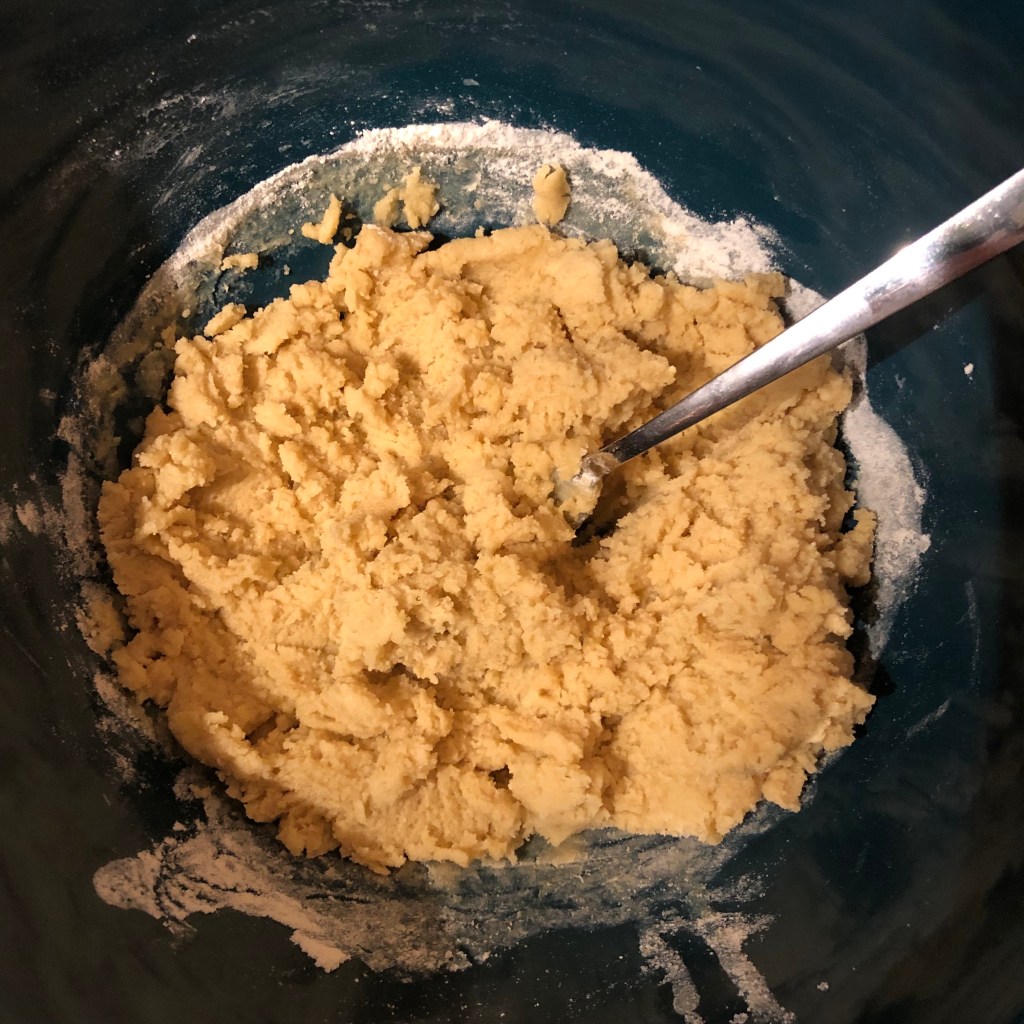
Tahini is a staple of Middle Eastern cooking: a paste or condiment made from toasted ground sesame seeds which is used in salads and savoury dishes as well as popular sweet treats like halva. Taste-wise, you won’t believe it’s not peanut butter and if you like peanut butter you’ll enjoy these. I made the dough without a food mixer and baked my cookies for a little less time than suggested after the first batch turned golden in ten minutes but followed the recipe to the letter in all other respects. The recipe makes about 35 biscuits altogether which sounds a lot but they were so tasty they had all gone to good homes within three days of making them. The finish is simple: a gentle fork pressing and a light dusting of cinnamon. Their soft texture combined with the peanutty flavour was rather special. A taste of one of the many flavours of Jerusalem.
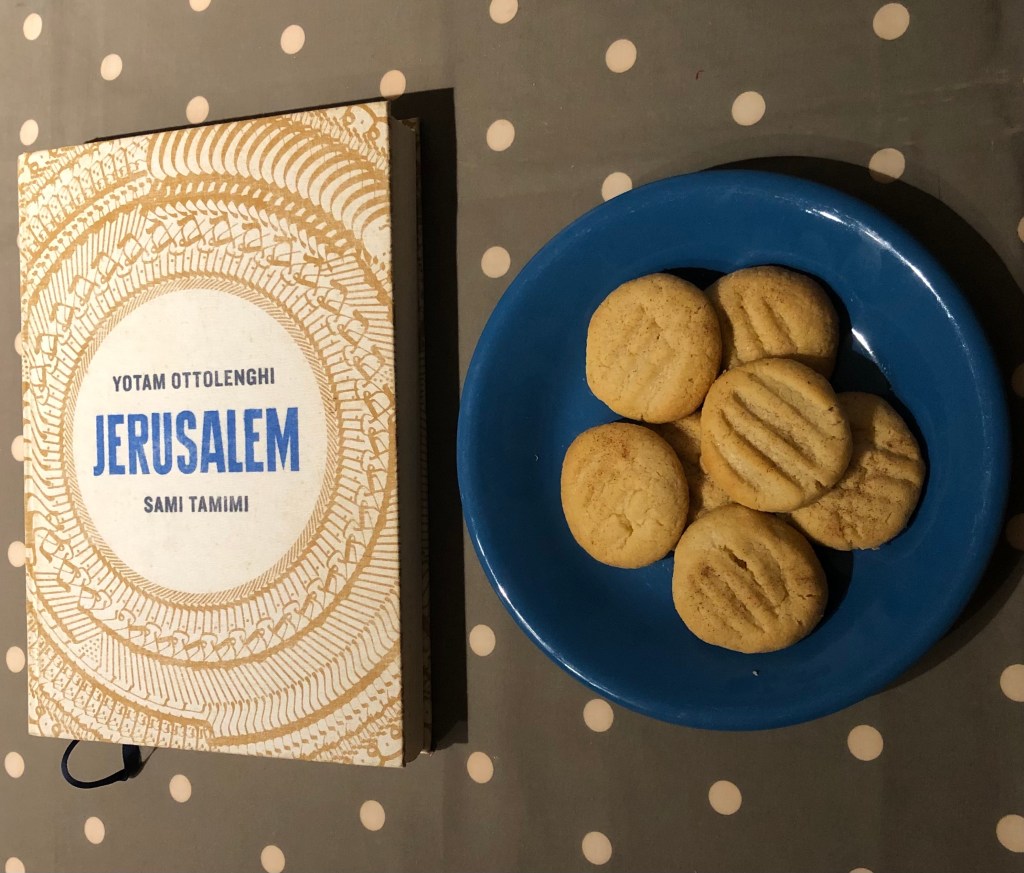
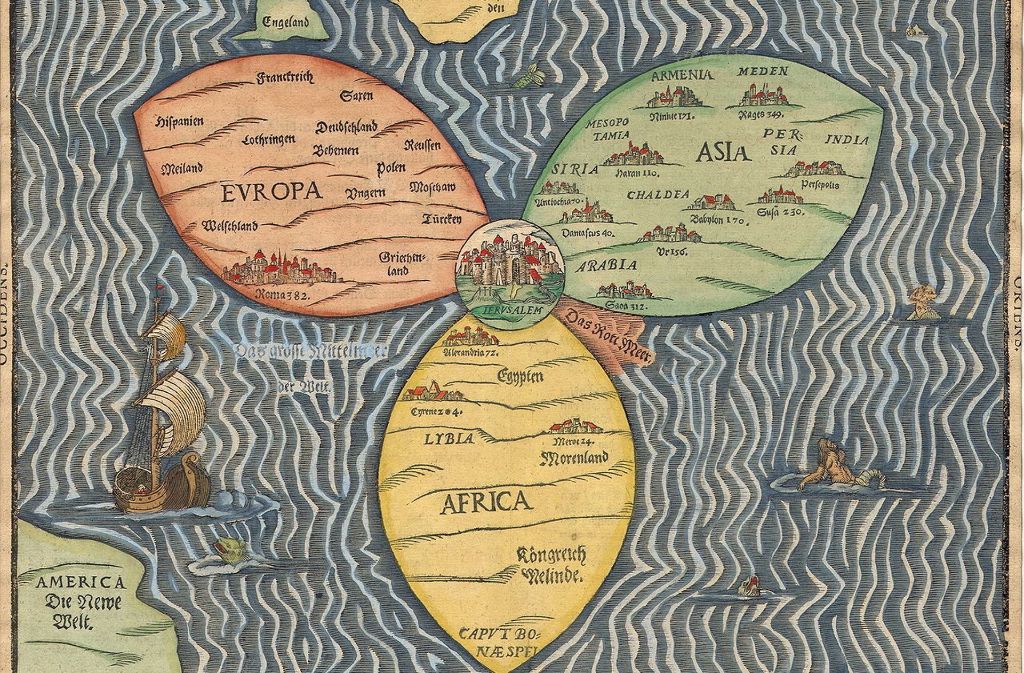
The cookies served as yet another reminder of that famous exhortation from Psalm 122 – the one up on the kitchen fridge – to pray for the peace of Jerusalem, the only city in which God says he will put his name and the only city we are called to pray for by name in the bible. The prophet Ezekiel, one of the exiles in Babylon, talks of God setting Jerusalem at the centre of the nations. Medieval Christians in Europe – who had a long, and not so admirable, history of ruling or attempting to capture the city during the Crusades – also recognised its importance as the spiritual capital of the world when they put it at the centre of their maps instead of Rome or Avignon or Constantinople. Here’s one example from the Hereford Mappa Mundi (c. 1300) where Jerusalem is depicted as a literal hub of the entire world, flanked by an image of the crucified Christ. It was also thought to be the place where Abraham offered to sacrifice Isaac and where God averted the plague in David’s time, after which it became the place the Jewish people went up to seek God: a place of longing and pilgrimage, as it still is today for many people, and as it is in Psalm 122 – a song of ascent.

The name Jerusalem itself has a meaning to do with peace and this means peace in the fullest sense of the word in the Hebrew, encompassing a sense of wholeness, restoration and well-being, not simply the absence of tension and warfare. This may seem a bitter irony given the current state of affairs in the Middle East but in another way it is not so surprising. Both the Tanakh (the Old Testament) and the New Testament are clear that we live in a spiritual battle zone and our battle is not against flesh and blood but ‘against principalities, against powers, against the rulers of the darkness of this age and against spiritual wickedness in high places’. If Jerusalem has a special place in God’s heart, little wonder this piece of divine real estate is so contested for it is both the microcosm and measure of this greater conflict we pray for an end to every time we pray the Lord’s prayer, which asks that God’s will be done on earth as it is in heaven and that we be delivered from evil. And in praying for the peace of Jerusalem, we must not be naïve about evil. The evil we saw unmasked on the 7th of October is very real and the way we respond to it matters.
If we’re called to pray Psalm 122 in times of (relative) stability, how much more in a time of war?
Pray for the peace of Jerusalem:
May those who love you be secure.
May there be peace within your walls
and security within your citadels.
For the sake of my family and friends,
I will say, “Peace be within you.”
For the sake of the house of the Lord our God,
I will seek your prosperity...
For the sake of the people of Israel (Christians, Arabs, Bedouins and Druse as well as Israeli Jews) and the Jewish diaspora, who are in need of comfort, strength and courage right now.
For the sake of the people of Gaza (no less loved by God, who hears the cries of the broken and destitute on both sides of the border).
For the sake of our cities, marked by disturbing expressions of violence and antisemitism.
For the sake of our churches, long divided on the issue of Israel.
For the sake of our families and friends across the globe.
For the sake of the One who is our peace and refuge in the storm.
Because to pray for the peace of Jerusalem is to pray for the peace of the whole world.
Further Reflection
A lovely piece on medieval maps and the Hereford Mappa Mundi in particular.
East meets West: the story of Yotam Ottolenghi and Sami Tamimi’s friendship, living parallel lives in West and East Jerusalem before finally meeting in London.
Finally – and sorry to make a usually lighthearted blog serious, but these are serious times – we all have a part to play in standing up to antisemitism, especially Christians.
If you would like to see more entries more regularly and help keep this bestiary free of ads, you are welcome to contribute to the Biscuit Jar.
 The Biscuit Bestiary