Water Biscuits

What a moving and turbulent two weeks it has been for the United Kingdom. After all the splendour and sadness of that state funeral, I think it’s high time for a cup of tea and a biscuit and as Her Late Majesty the Queen is known to have started each day in such a manner we can hardly do better than follow her example. Both her character and legacy have come into sharper focus in the shared grief of many at her passing: a vast jigsaw of memories, stories and tributes, revealing the beauty and, yes, the majesty of a life which was extraordinary by any estimation. For many of us I think there’s also been a felt grief at the symbolic passing of much we valued that she came to represent: a generation largely characterised by its sacrifice and an age largely characterised by its stability.
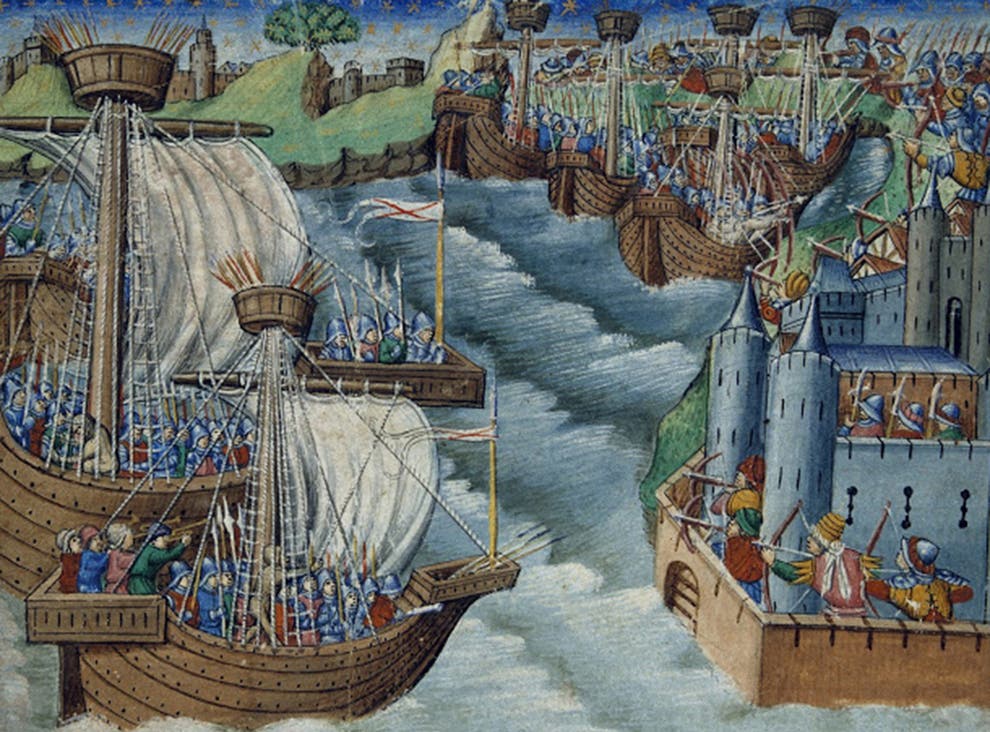
Ships from the fifteenth-century Romance of the Three Kings Sons (credit: British Library)

It’s in this spirit of gratitude and reflection that I invite us to consider the Water Biscuit. A category of savoury biscuit associated with its maker, Carr’s of Carlisle, who co-incidentally were also the first biscuit manufacturers to receive a Royal Warrant. It was an enterprising Theodore Carr who invented the Table Water Biscuit as an improvement on the Captain’s Thin in 1890. “What he did was to experiment with the thickness of this popular biscuit, trying to make it thinner and crisper, until it would seem almost like a new variety,” Margaret Forster writes in Rich Desserts and Captain’s Thin, her biography of the Carr family. The biscuit that Theodore created is basically a modern version of the Ship’s Biscuit slimmed down still further for your average landlubber. Taste-wise they’re deliciously thin and crispy, the biscuity equivalent of a pizza. As savoury biscuits, I’m pairing them with some nice cheese from Yorkshire…

As you might guess from the name, it’s water (rather than fat) that binds the ingredients together, and helps keep the Water Biscuit fresh for long voyages on or offshore and the table refers to the meal table (or perhaps the Captain’s table if it’s at sea). To me, the association of both evokes the powerful scene from the last supper, recorded in the gospel of John:

Jesus knew that the Father had put all things under his power, and that he had come from God and was returning to God; so he got up from the meal, took off his outer clothing, and wrapped a towel around his waist. After that, he poured water into a basin and began to wash his disciples’ feet…

Washing the dirt and dust of the road from your guests’ feet and drying them with a towel was clearly servants’ work in first-century Judea and not a role the disciples had ever envisaged for their Messiah. When Peter objects, Jesus tells them: “I have set you an example that you should do as I have done for you. Very truly I tell you, no servant is greater than his master.” It was a theme he returned to again and again in his ministry: that the greatest in the kingdom of God is the one most willing to become the servant of all.
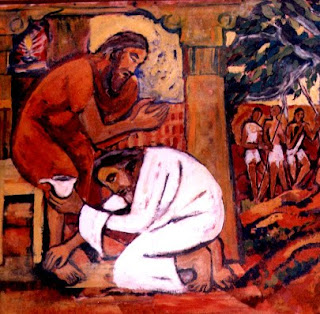
Jesus washing his disciples’ feet by Jyoti Sahi

It’s a message the late Queen would have been familiar with too as a practising Christian and a teaching she clearly aimed to put into practice. As Archbishop Justin noted at her funeral, the faithful devotion to service which so characterised her long reign, (and for which, I believe, she’ll be remembered as our greatest monarch), “had its foundation in her following Christ – God himself – who said that he came not to be served but to serve and to give his life as a ransom for many.”

While the manner and context of the Queen’s call to serve was both unusually public and privileged, she certainly understood the value of the contribution of the ordinary citizen to the health of the nation and with characteristic modesty believed that in the end it was just, if not more, vital to its success. The upward course of a nation’s history is due, in the long run, to the soundness of heart of its average men and women, she observed once. Like the trusty Water Biscuit, let’s cultivate such soundness wherever we can, the high watermark of which will always be our willingness to love and serve.

Further Reflection

A story about the part the Queen, her corgis, and some biscuits played in comforting a traumatised war surgeon in 2014.

An Unexpected History of Ship’s Biscuits.

The Queen’s life in her own words, although with unfortunately blurred footage. (She really did use the indefinite pronoun ‘one’ when speaking about herself and it’s nice to see some of her own wry humour coming out, and not a little brio!)

In the venerable tradition of Thomas Tallis, Sir James MacMillan set part of the passage in Romans 8 (“Who Shall Separate Us from the Love of Christ?”) to music in this eight-part a capella composed especially for the funeral on Monday. A beautiful piece – and promise – for the future:
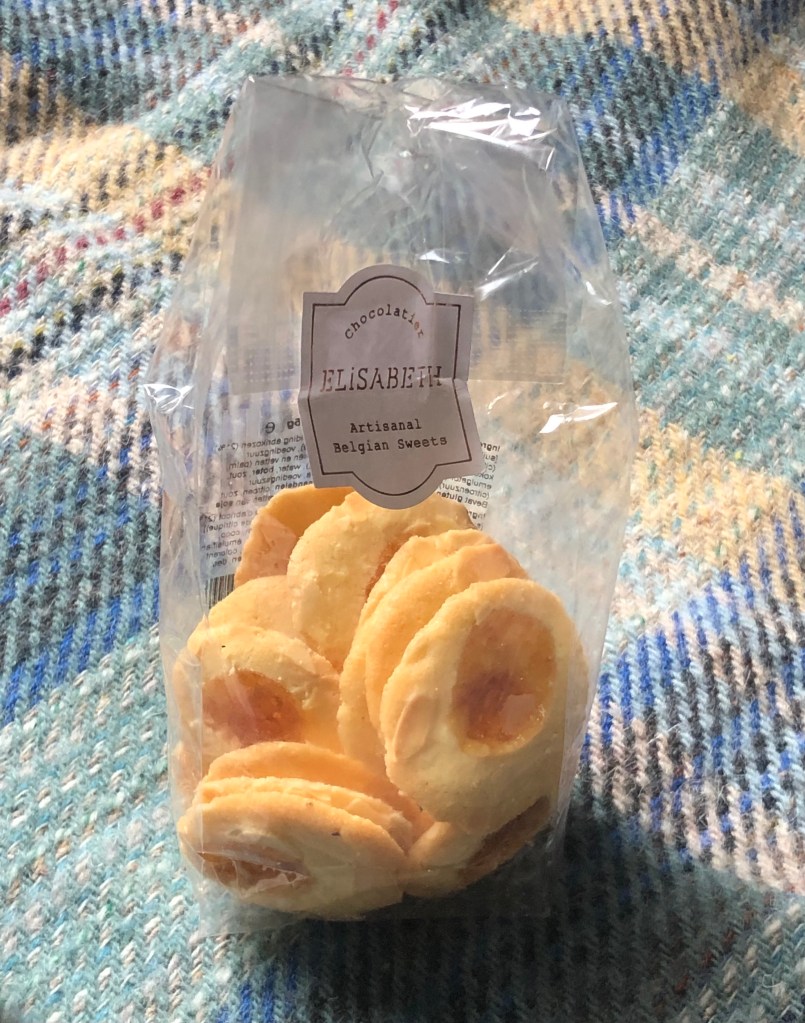
The Elisabeth Biscuits

My sister and brother-in-law went on a little break to Bruges in May, making up for lost travelling time during the pandemic. I caught up with them briefly at St Pancras on their way back and they gifted me these goodies from Elisabeth, a chocolatier with outlets across Belgium. According to their website, “Elisabeth’s lady owner travels all over the country to taste and select famous Belgian delicacies as well as long forgotten local culinary traditions” and this carefully curated collection includes these Aprikozenkoejke (apricot cookies) which I now think of as the Elisabeth Biscuits. Small delicate buttery drops with flaking of almonds and a pane of apricot jam in the middle, suspended like stained glass in a window… I’m quietly fascinated by the jam’s viscosity set in just such a way that it holds its shape.

It was a few days after I’d received the Elisabeth biscuits that I thought to connect them with that other Elizabeth whose seventy year Platinum Jubilee is being celebrated in the UK over four days of holiday this week with numerous street parties, beacon-lightings, pageants, fly-overs, and so on. Although differently imagined in our day, this sort of spectacle is one of the threads that connects modern Britain with its medieval past as the monarchy itself does (also differently imagined). And of course festive food…

More than ever these last few years I have appreciated the Queen’s dignified compassionate influence on public life, especially when those qualities have felt in short supply elsewhere. The steadfast manner in which she’s weathered so many storms and the whole character of her reign is proof that the art of viscosity – of holding firm under pressure – can be incredibly valuable in the right cause. There’s a verse in Psalm 15 where David asks who is worthy to dwell in God’s tent (i.e. in God’s presence) and one of the answers is a person who keeps their oath, even when it hurts – a line I’ve always found strangely moving. Ultimately of course it’s only God who is able to keep all of his promises perfectly, but whenever we find human examples of promises faithfully kept over many years it’s worth celebrating.

It’s hard to think of anyone who has kept a weightier promise as long or as faithfully as the Queen, so I find it apt that her name signifies oath-keeping. ‘God’s promise’ or ‘God is my oath’ are frequent translations of the name Elizabeth in Hebrew, as well as ‘God of the Seven’ which makes more sense when you realise that it’s the biblical number of completeness, abundance, or divine perfection. Seven cycles of seven years is also the number for a biblical jubilee: a year set apart for the returning of mortgaged lands, the freeing of slaves and prisoners, and the cancelling of all debts from the years preceding it. While this Jubilee is more about giving thanks for this particular milestone in the Queen’s long life of dedicated service, both uses of it carry the idea of a window of blessing and favour.

Restore our fortunes, O LORD,
like streams in the Negev.
Those who sow in tears
will reap with shouts of joy…

And in all these threads we touch into the great themes of redemption and covenant that make up the heart of God towards each and every one of us: of the freedom he works for us if we’ll let him and the promises he makes to us if we’ll have him – of his longing always to redeem, restore and relate. The Elisabeth biscuits for me are another reminder of that faithfulness over the years and the faithfulness it inspires in others. I hope Her Majesty gets the chance to enjoy a well-deserved biscuit or two this Jubilee weekend, and the esteem in which she’s held by so many of us.

Further Delectation

I’m glad I got the chance to watch the Thanksgiving Service in St Paul’s yesterday with a friend and more of the Elisabeth biscuits (I’ve taken them on several lovely outings this week and still not come to the end of them). The sermon from the Archbishop of York is worth a listen/reflection.

Baking for the holiday? The official dessert thing looks a bit fiddly so here’s the recipe for Her Majesty’s favourite chocolate biscuit cake instead (excellent choice, Ma’am). And for anyone who missed it, here’s a clip of her party at the palace with Paddington Bear.

I’m old enough to remember the Jubilee 2000 campaign in which many churches in the UK mobilised to help petition the richest countries in the world to cancel the debts of the poorest. The work it started is far from over. Learn more about it here.

A nice royal coat of arms from one of the British Library’s royal manuscripts:

Detail from BL Royal MS 18 A XII f. 1

If you would like to keep this bestiary free from ads and see more entries more regularly you are welcome to contribute to the Biscuit Jar.