Coronation Biscuits

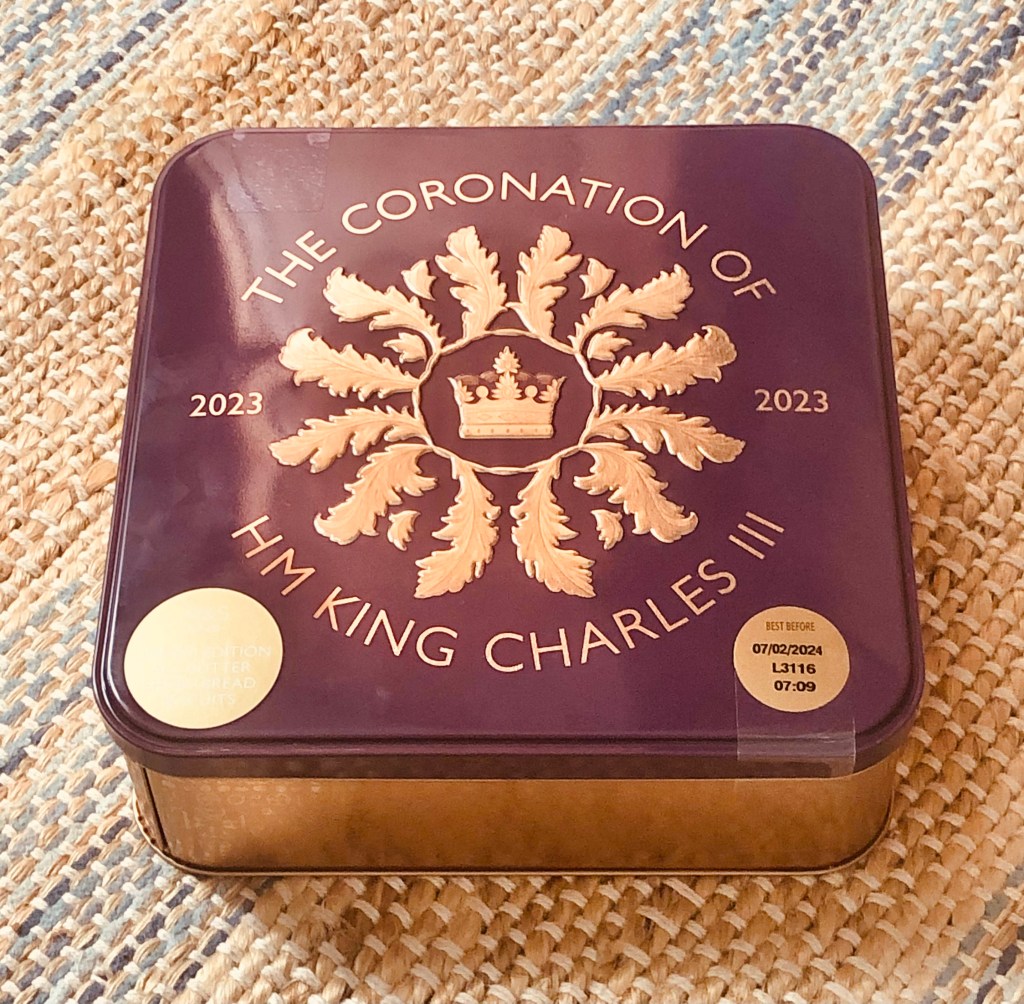
Each time there is a royal celebration of some kind there are special tins with special biscuits. I bought such a tin for the late Queen’s Diamond Jubilee, and either bought – or was given – them to celebrate the births of Princes George and Louis, and Princess Charlotte. So as this is the first time in seventy years that Britain has had a coronation I decided to purchase a Carolean one, although it still feels odd talking about the King instead of the Queen, and no longer being a noveau Elizabethan. I teetered a bit between one of Cartwright and Butler’s solemnly splendid evergreen tins and this gorgeous purple and gold affair from Marks and Spencer’s, which was twice as sumptuous at half the price:
I’ve learned over the years that you can’t judge a biscuit by its tin, but I was pleasantly surprised at the quality of the shortbread inside. I’ve written about this quintessentially Scottish biscuit before so won’t go into the history of it again but where I was expecting some standard rounds or wheels the M&S bakers went with a regal theme, a kind of regalia in biscuit form if you will…
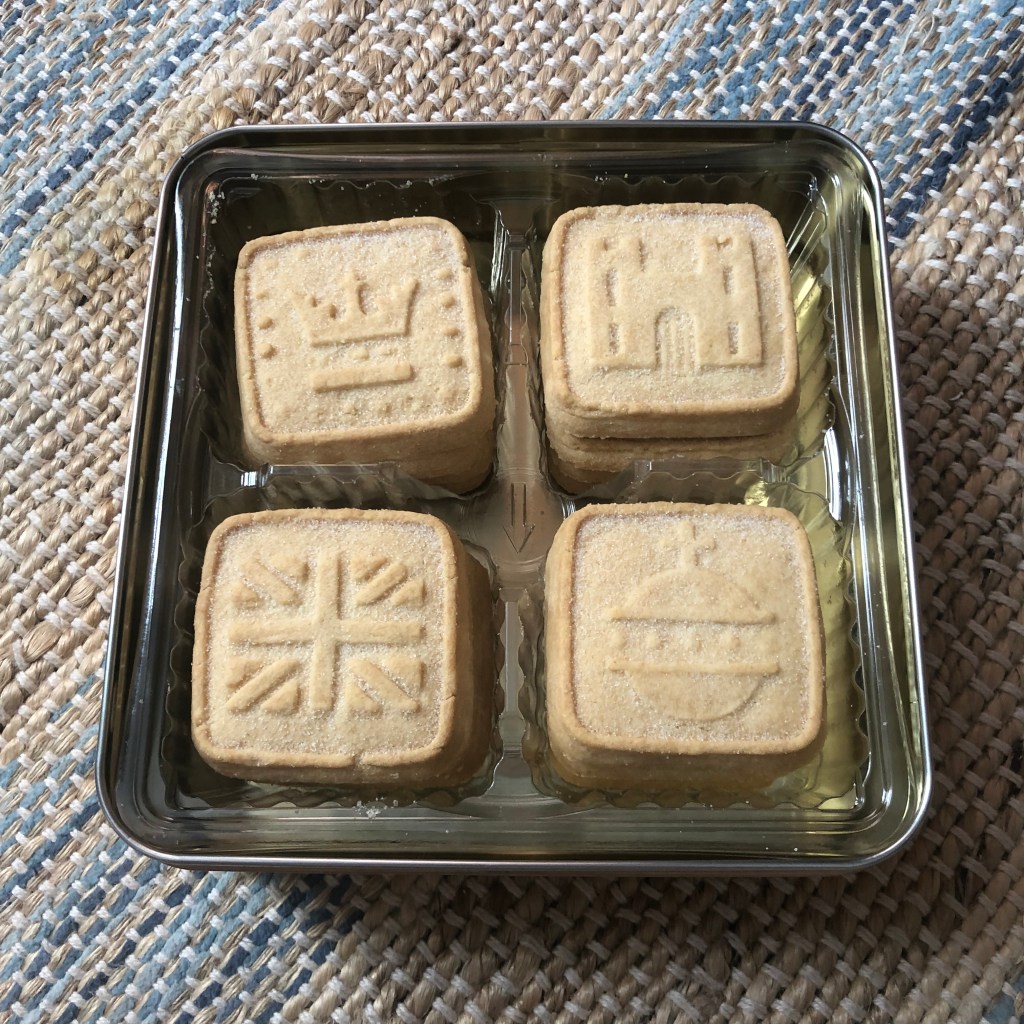
I’ll leave the crowns and palaces and flags to speak for themselves, but linger a moment on the symbol of the orb and cross. A distinctly medieval image, the orb alone was a Roman symbol of imperial power but for the Christian monarchs and emperors of Europe the addition of the cross over it refocused attention on Christ as the eternal sovereign of the world and the King to whom all earthly kings must be subject as holders of temporal and limited power.

Richard II (1377-1399)

This medieval view is biblical in so far as scripture talks of all earthly powers and authorities owing their positions to God, but the bible as a whole does not offer us unqualified support for monarchy as a system either. When the Israelites petition Samuel for a king so that they can be be like the other nations, God makes it clear that if they go ahead with their plans to adopt a monarchy it will place many burdens and obligations on them and that their asking itself is a symptom of their having rejected Him as the only king they need. However, once the decision in favour of a monarchy has been made and their first king, Saul, fails several crucial tests of character, God chooses his own king for his people, the shepherd boy David, and blesses his socks off, telling him he will never fail to have a descendant on the throne of Israel. All of which suggests that God is not so much pro- or anti-monarchy as he is willing to work in whatever flawed-but-capable-of-good governmental systems we find ourselves in to help bring about the coming of his own – everlasting – kingdom.
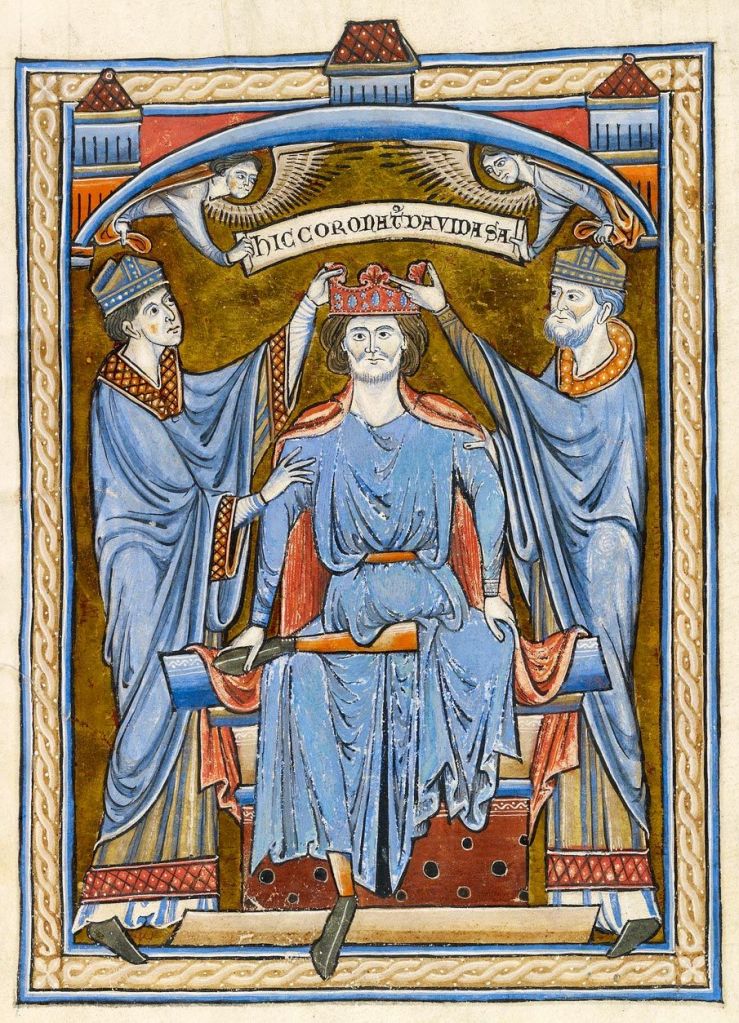
The coronation of King David

The Books of Kings and Chronicles record the deeds and characters of the kings of Israel and later of the Northern and Southern kingdoms after Solomon’s time. Some kings were outstandingly good, some were outstandingly evil, and some were fairly good or fairly evil, but for each the crucial question was whether they would worship the God of their ancestors and worship him exclusively; their success and prosperity was determined in a large part by the spiritual choices they made and on who, or what, they had set their hearts. The damage done to a nation by a weak-willed or corrupt king and conversely the good done by a virtuous one could be so great that the moral and political education of a future monarch was of the utmost importance to their subjects in medieval Europe and led to a whole genre of literature on the topic called Mirrors for Princes. Here’s an illustration of the London poet and scribe Thomas Hoccleve handing his Regement of Princes (c.1411) to the future Henry V:
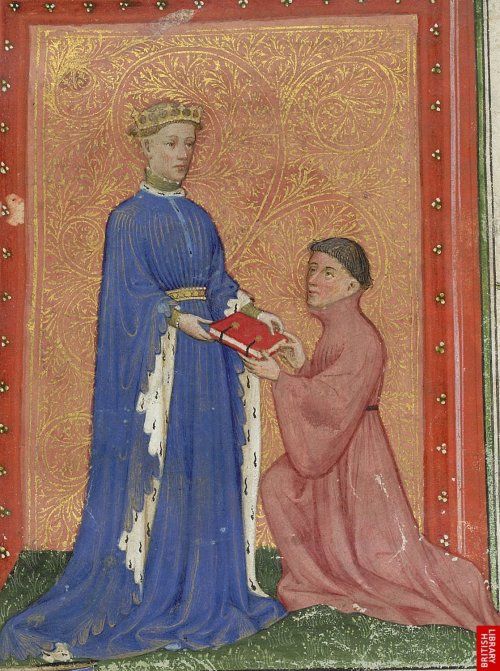
Hoccleve and Prince Hal / the future Henry V

The powers of a king these days are more constrained thanks to the checks and balances of constitutional monarchy but he still possesses extraordinary influence. Pace Dieu et mon droit, less emphasis is given to his divine rights than his divine responsibilities; it is the Christian ideal of servant-hearted kingship that informs the ceremony of the Coronation in the liturgy used in Westminster Abbey this weekend, where a young person (one of the choristers of the Chapel Royal) will welcome King Charles with these words:

Your Majesty,
as children of the Kingdom of God we welcome you
in the name of
the King of Kings

And he replies:

In his name, and after his example, I come not to be served
but to serve.
..

Just as the best earthly marriages offer our imaginations a little glimpse of the marriage of Christ and his people, so the best earthly coronations offer our imaginations a glimpse of the glory and majesty of the King of Kings and the immense dignity and significance that he gives to us as his sons and daughters. And it’s characteristic of the best earthly monarchs that they have always understood themselves as human actors in a spiritual drama, never mistaking the shadow for the eternal reality. A perspective evident in the old Wesleyan hymn sung at the funeral of the late Queen:

Finish, then, thy new creation;
pure and spotless let us be:
let us see thy great salvation
perfectly restored in thee;
changed from glory into glory,
’til in heav’n we take our place,
’til we cast our crowns before thee,
lost in wonder, love, and praise.

Tomorrow feels like more of a solemn than a celebratory moment in the life of the nation if I’m honest but one I’ll be watching with a cup of tea and a coronation biscuit.

Further Delectation

A round-up of Coronation Biscuit Tins… Good Housekeeping have produced a feature on the best ones to buy!

Following the ceremony tomorrow with your choice of coronation biscuit? Here’s a link to the service guide with all the liturgy they will be using with the bible readings and songs.

Not such a fan of thrice-gorgeous ceremony? Neither was one of Shakespeare’s best loved medieval kings. ‘Tis not the balm the sceptre and the ball... A superb rendition of one of Henry V’s monologues by Sam West.

And here’s the wonderful Porter’s Gate declaring the greater glory of the King over all:

If you would like to see more entries more regularly and help keep this bestiary free of ads, you are welcome to contribute to the Biscuit Jar

Navettes

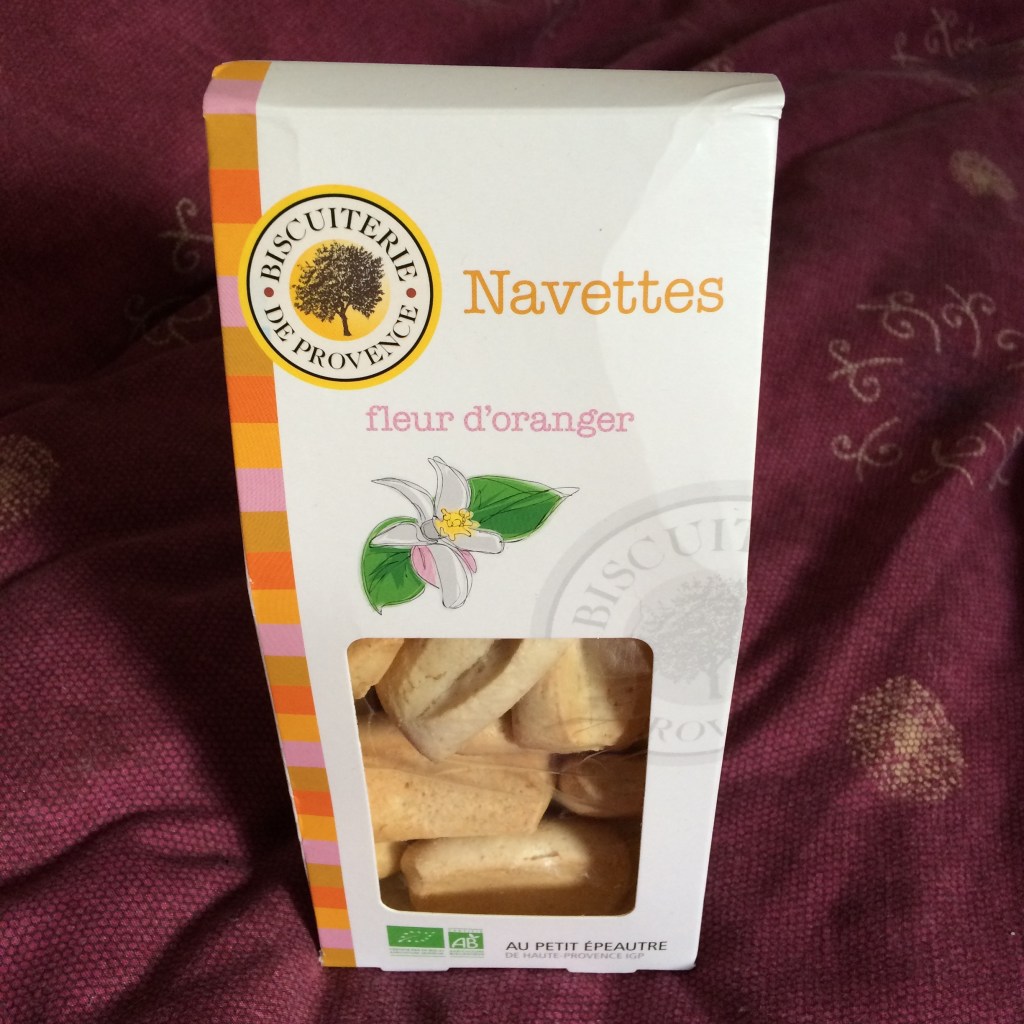
For Candlemas this year I’m revisiting the Navette, a biscuit I first came across seven years ago thanks to some kind Californian friends who brought me a packet of them from a holiday in Nice. Everywhere else in France the first choice of treat to celebrate it would be a pancake but in Provence they eat this special type of biscuit whose name means “little ships”. They look a little like a little ship too or at least a primitive sailboat.

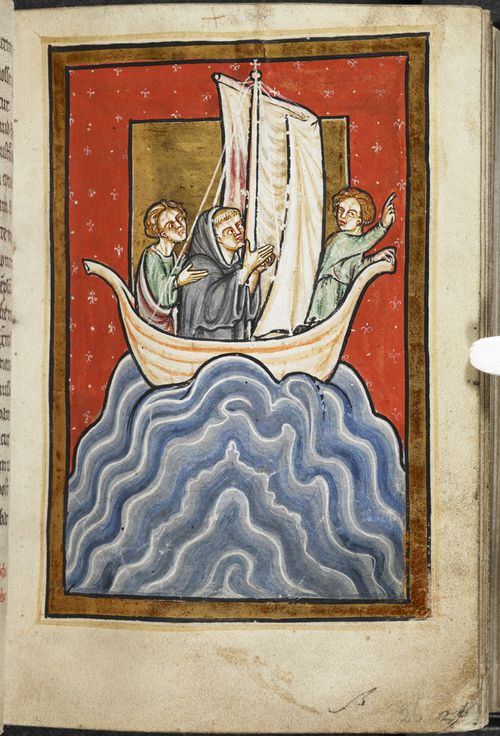
The legend that gave rise to the invention of the Navette is almost certainly apocryphal: the voyage of Mary, Martha and Lazarus (or in some versions three Marys) to the coast of Southern France. Civic pride probably played a part in the eagerness of medieval Christians to link their city’s or region’s history to that of the early Church in some way, but I admit that the reason the biscuits have been associated with Candlemas is not clear to me (answers on an e-postcard!) These are made to the classic fleur d’oranger recipe popular in Marseilles. With their subtle citrus notes, it’s the biscuit equivalent of a Lady Grey tea.


Aesthetically, Candlemas must be one of the most memorable feasts of the Christian year even if it’s not quite in the same league as Easter and Christmas. I know I’ll never forget the wonder I felt the first time I celebrated it with a sea of glimmering lights in Durham cathedral. In the medieval Church, Candlemas marked the end of the Christmas season with a special procession and the blessing of candles commemorating Mary’s “churching” (i.e. the rites of purification prescribed for Jewish mothers forty days after childbirth) and Jesus’s presentation in the Temple. The child’s parents were obliged to bring an offering with them and their choice of pigeons or turtledoves shows they were not wealthy people. To a casual onlooker, and probably to Mary and Joseph themselves, their entrance with the newborn Yeshua might have seemed uneventful, but God prompted Simeon and Anna to recognise its significance and speak of the child’s extraordinary future, encouraging and preparing them for what was to come. It’s also the occasion for the beautiful prayer of Simeon, now referred to as the Nunc Dimittis:

Lord, now lettest thou thy servant depart in peace
according to thy word.
For mine eyes have seen
thy salvation;
Which thou hast prepared
before the face of all people;
To be a light to lighten the Gentiles
and to be the glory of thy people Israel…

Luke 2:29-32
C15th illustration of Simeon and Anna with the Holy Family from Pierpont Morgan Library. MS M.117

Clearly Simeon had already had an inkling that he would have a part to play in welcoming the Messiah, but for all we know Anna may only have recognised hers in the moment it arrived. It’s moving to think of these two elderly servants of the Lord – both prophets in some sense – waiting their whole lives for this meeting. How easily they might have missed it if their focus had been in the wrong place at the wrong time. If the Navette carries a message for us today, and if it can be linked to the celebration of Candlemas, it might be something to do with being attentive to divine appointments in our own lives, wherever and however we find them in our comings and goings.

Scenes from The Life of St Cuthbert, Durham

Further Delectation

More on celebrating Le Chandeleur (or “Crepe Day”) in France.

My favourite discovery this week (and just in time for St. Valentine’s Day…) send a medieval postcard!

A beautiful blog post from the Clerk of Oxford on the history and customs of medieval Candlemas, and some music to listen to in celebration of the feast. You could also take a look at this sweet film for kids or Michael Card’s Now That I’ve Held Him in My Arms – both retellings of the story from the perspective of Simeon.

If Candlemas be Fair and Bright… Like St Swithin’s Day in folklore, Candlemas also doubles as Groundhog Day for some people as a forecast for the weather!

If you would like to see more entries more regularly and help keep this bestiary free of ads, you are welcome to contribute to the Biscuit Jar

Shortbread

Wishing you a joyous Epiphany (and Twelfth Night, if you celebrate it). Some parts of Europe celebrate it on the night of the 5th of January but the feast itself falls on the 6th in the Church of England’s calendar, which, coincidentally, is also National Shortbread Day, so here are a few epiphanies about this wonderful biscuit…

Around the fifth Day of Christmas, we uncovered a box of shortbread. To quote my sister, “I don’t know where they came from or who brought them; I just started eating them,” but the packet did say these were baked in Scotland which was promising. I’ve read somewhere you aren’t allowed to sell shortbread with less than 50% of butter in the shortening (an archaic term for the fat content) north of the border and still call it that, “All-Butter” being the gold standard. Like gingerbread, shortbread comes with a medieval history: there’s evidence this quintessentially Scottish biscuit was produced as early as the twelfth century although Mary Queen of Scots and her French cooks were thought to have developed the recipe to its current state of perfection in the sixteenth. According to Walkers of Speyside, it “was originally reserved for celebrations such as weddings, christenings and for family gatherings at Christmas and Hogmanay.” Not that this packet made it that far as my brother-in-law nabbed the last one early on NYE…

Scene from the Hours of James IV of Scotland, c.1500

It also sounds a suitable biscuit for consumption on Twelfth Night, which in Britain used to be celebrated more than now. Kings and queens, or ‘lords of misrule’ were appointed to preside over the festivities, a special kind of fruit cake was eaten, wassailing (ale-drinking and carolling) undertaken, and entertainments like plays and mummings were popular. I’m afraid we have Queen Victoria to blame at least in part for those traditions disappearing after the 1800s, but the earlier pattern was for an abstemious Advent in December followed by a January that was… joyful. Now the twelve days of Christmas are rarely marked in full and our Januarys can feel so somber it often seems like the calendar has been turned on its head.

The most brilliant of the Makars, whose flowering of poetic creativity coincides with the development of shortbread in late medieval and early modern Scotland (no coincidence, surely?) understood all too well how tough the dark winter days can be. I’m particularly fond of the mercurial, melancholic William Dunbar: a cleric attached to the household of James IV. Amusing the court with dramatic entertainments on occasions like Twelfth Night was one of Dunbar’s lighter duties and one he excelled at, but despite being the cause of great laughter in others he wrote feelingly about his own low spirits in winter:

Into thir dirk and drublie dayis
Quhone sabill all the hevin arrayis
With mystie vapouris, cluddis, and skyis,
Nature all curage me denyis
Of sangis, ballattis, and of playis…

In these “dark and cloudy days”, even “songs, ballads and plays” can’t cheer him up, he says, vexed as he is with “heavy thought” on every side. “Yit quhone the nycht begynnis to schort / It dois my spreit sum pairt confort.” (Yet when the night begins to shorten, it brings my spirit some comfort.)

Scottish terrier greeting Welsh sunlight with an English human (out of shot).

I hadn’t realised until I came to research it that the word ‘short’ in shortbread refers not to their size or fat content but their crumbliness: a short biscuit (or cake, or pastry) is one that is friable – i.e. something that breaks easily. I’ll admit I hesitated to write about this as a desirable quality in a biscuit until I looked beyond the breaking to connect it to the bread part. Bread in the bible is a symbol of spiritual as well as bodily nourishment and in the breaking of it we are reminded of the fellowship of the early Christians, who had all things in common, but most of all perhaps of the body of Christ broken for us.

God never promises us that this breaking wouldn’t be unsettling, but to quote Leonard Cohen, the cracks may be how the light gets in (or sometimes how it gets out). To the weary and wary alike, the stories we celebrate in Epiphany speak of a heavenly reality breaking into our world like a light does: in the story of the wise men who discovered a king worthy of all other kings’ worship, and of that same king, now a grown man living a humble life in the backwaters of Nazareth, rising up from the waters of baptism to hear a voice from heaven telling us this is God’s beloved son.

Jesus’s baptism, by artist Dave Zelenka (2005)

The curious semantics of the shortbread reminds me of another moment of revelation which feels both familiar and mysterious somehow. Two puzzled and grieving disciples journeying along the road to Emmaus fall in with a stranger who helps them make sense of what had happened to a loved, lost friend. Stopping for a meal together, they finally recognise the same friend in the person of the stranger teaching them about the role of the Messiah, but their eyes are only opened to see him at the breaking of bread.

After everything 2021 threw at us, you may not expect much joy from your January – or 2022 as a whole – this year, but I hope and pray that however distant joy seems you are surprised by it. And whatever kind of news is breaking, whatever burdens you may be carrying (or still carrying) in the days to come, may you find that king-friend-stranger walking with you on the journey and know him in the breaking of bread.

Further Delectation

Apparently Twelfth Night still survives in the West Country, God bless it. With all that excellent cider it had to be the home of wassailing… Click the link above to read more about Old Twelfth Night on the 17th of January. (If you’re especially keen, it also has a Wassail recipe here.)

A blog post on the history of shortbread with yummy recipes from the British Food blog written by Dr Neil Buttery (yes, that is his name, I kid you not…)

A beautiful reflection on Epiphany from the Digital Nun, whose wisdom I have much appreciated over the years.

Not specifically about Twelfth Night, Epiphany or shortbread, but my friend Olivia alerted me to this post on Bread, Cake and Biscuits by the gentle author of the Spitalfield’s Life blog which is well worth a read if you have the time.

Looking for some quality Twelfth Night entertainment? This fun clip of Mark Rylance (as Olivia) and Stephen Fry (Malvolio) in the Globe’s 2013 production of Shakespeare’s play for the Inns of Court might add a little levity to your evening (performed in early modern fashion with men taking women’s roles):

If you would like to keep this bestiary free from ads and see more entries more regularly you are welcome to contribute to the Biscuit Jar.