Just when most Christians in the West are taking down their Christmas trees, Christians in the East are breaking their Advent Fast, so this 7th of January may I wish you a very happy Orthodox Christmas in the company of some Egyptian Kakh? Kakh are probably the closest Egypt comes to a national biscuit. They are traditionally made as treats for both Christian and Muslim festivals, and were probably eaten in some form or other as far back as the time of the Pharaohs, which means they may actually be the oldest biscuit to be featured on the Bestiary thus far. So it seems fitting they are associated with the High Holy Days of one of the world’s oldest Christian communities: the Coptic (Egyptian Orthodox) Church.

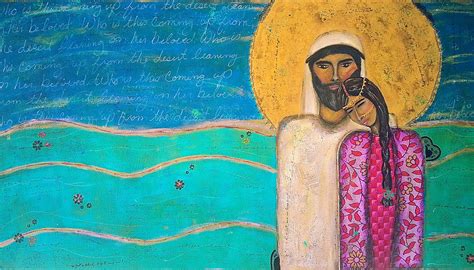
Disclaimer: I don’t know much about the Orthodox Church but what I do know was enriched by an ecumenically-minded ‘taster day’ of sorts at Southwark Cathedral last year (although it did not include any tasting of Kakh). The programme featured talks from representatives of the Eastern Orthodox and Oriental Orthodox Churches as well as British icon maker Aidan Hart. Brief as it was it communicated something of the understanding of the nature of God and the life of faith the Orthodox have stewarded through the ages that impressed me with its beauty, discipline, and reverence for mystery and holiness. Elements we have not always reflected as consistently in our traditions in the West. As Hart reflected, “the secular world is more likely to try to sedate us than to kill us”. One of the insights I took from his talk was that worship in the Orthodox Church is about trying to wake us up. At its best, the Orthodox imagination views everything created: people, animals, the whole of the natural world: as a mystery alive with the glory of God, who is himself the greatest mystery and source of all beauty and wonder.

In the Coptic Church, the discipline of fasting is yet another means of waking our sleeping souls a little. The meat and dairy-less fasts of Lent and Advent might seem austere to a bumbling Anglican, but there are good biscuits waiting for us on the other side: Ghorayebah and Egyptian Petits Fours, as well as Kakh: essentially a type of butter cookie filled with dates or figs or nuts. I did think about having a go at making some myself before buying this box of them from a Middle Eastern specialty supermarket near Baker Street. I couldn’t find date or fig ones which would have been my first choice, but took a punt on these Kakh with Malban (Egyptian Turkish Delight) made in Cairo by Egyptian biscuit company BiscoMisr:

The Kakh in the BiscoMisr box came separated in ones and twos in plastic compartments with packets of sugar for dusting. I’ve found out since that it’s natural for Kakh to crumble at the slightest pressure. And these ones crumbled spectacularly, not just into fragments but into a sort of biscuit dust which made eating them elegantly quite a challenge. “Not a biscuit for dipping!” remarked the friend I was taste-testing them with and she was right. The buttery flavour was pleasant but some of them could have done with a bit more of the sweet filling, as you can see from the picture below. “They might be good with coffee,” another friend suggested at a gathering at the weekend “but I’d only give them 4 out of 10” (although this relatively low score didn’t stop him going back for another one). As I’ve carried on eating them, however, I’ve grown to like them better, especially the ones with the citrus-flavoured Malban. Although they’re really meant as festive biscuits they are a handy size for work coffee breaks (and yes, probably better with coffee than tea).

The dustiness and crumbliness of the BiscoMisr Kakh reminded me of the desert fathers and mothers whose adventures with God in the Egyptian desert helped to lay the foundation for the great monastic movements of the Middle Ages. Henri Nouwen’s The Way of the Heart is a beautiful reflection on their influence and retells the story of Antony of Egypt (251-356), the Coptic Saint whose feast day is later this month. Famous for his life of asceticism and solitude, as a young man Antony sought to detach himself from the world in order to attach himself to God. His friend and biographer, St. Athanasius depicts him alone in the desert wrestling with demons. It seems the demons – imagined by Nouwen not as devils with pointy horns but as a host of addictions, fears and compulsions – became much realer to Antony in the desert. But God became realer too, until after twenty years he emerged with a new inner freedom.

I suspect Nouwen chose his title, The Way of the Heart, because so often this is also the Way of the Desert. “Remember how the Lord your God led you all the way in the wilderness these forty years, to humble and test you in order to know what was in your heart…” Moses tells the people of Israel. Moralists like to talk as if our experiences of emptiness, renunciation or deprivation are valuable aids in strengthening character but they’re also a way of exposing the character that is already there. The desert reveals the true condition of it. If there is any bitterness, pollution or debris in the soul – any flash of ego or mixture of motives – it will show it up. The Bible teaches us that the heart is the wellspring of life so if we want what flows from our hearts to be life-giving, we need to be willing to allow God to help us heal them where they are not healthy, and purify them where they are not pure.
And the moral? Like the great feast after the great fast, or the singing after the silence (or like the Malban at the centre of the Kakh), if God sends you into the desert, he will look after you there. And even if you’ve landed there without his invitation, like a depressed and depleted Elijah, he can still meet you in it. On his return from the desert, “the place of great struggle and great encounter,” Henri Nouwen writes: “Antony took his solitude with him and shared it with all who came to him. He had become so Christlike, so radiant with God’s love.”
Further Delectation
More on Coptic Christmas in Egypt and outside it, and on the history of Kakh and a recipe for making them.
More on icons and icon-making: “Hope and Fragility: An Interview with Coptic Iconographer Stéphane René from Orthodox Arts Journal.
More on Antony and the Desert Fathers from Bishop Erik Varden as part of a new podcast, The Desert Fathers in a Year.
More on Henri Nouwen’s The Way of the Heart.
If you would like to see more entries more regularly and help keep this bestiary free of ads, you are welcome to contribute to the Biscuit Jar.


Hello Liz,“The Damascus Events” by Eugene Rogan is the next book I will present for your perusal when back
LikeLike
Thank you, Ralf! I would be interested to read it.
LikeLike
what a beautiful post. How true about the sedation of secular society. Thank you!
LikeLike
Thanks, Fiona. So glad you enjoyed it!
LikeLike