Last month I had the opportunity to take a trip to one of the oldest sites of pilgrimage in Britain: the island of Lindisfarne also known as Holy Island. I’d visited a couple of times while I was living in the North East but my connection with Cuthbert, its most famous Saint, goes even further back to my time in Durham. Like St. Francis, Cuthbert had an affinity with animals. The ‘cuddy ducks’ around the island are named after him and legend has it on one occasion after he spent the night standing in the North sea praying, a pair of otters came to meet him on the shore and warmed and dried his feet with their fur – an act of creaturely charity wondrous and charming.

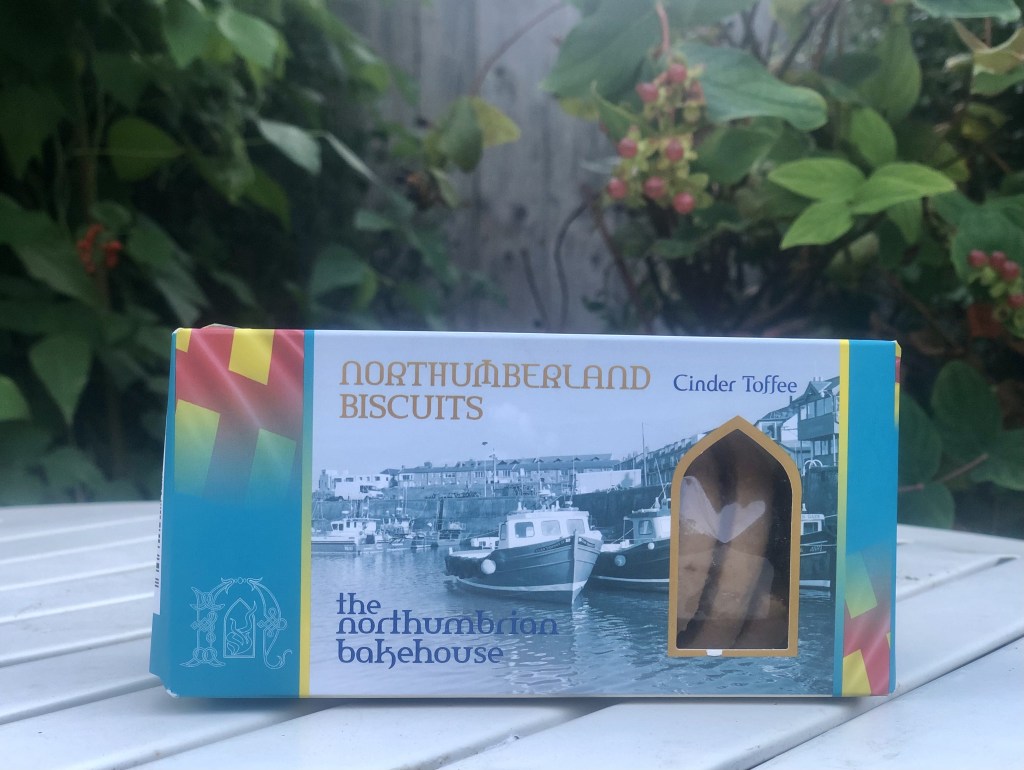
I’ll admit I was hoping to find a biscuit native to the island but alas the shortbread sold in its few gift shops is woefully generic. A quick scour of some regional recipe books turned nothing up either, but I did discover a company called the Northumbrian Bakehouse which produces at least one variety of biscuit I’d not tried before: Cinder Toffee Biscuits.

You might be familiar with Cinder Toffee if you’re a fan of Cadbury’s Crunchies. Apparently you can make it quite easily at home using a combination of sugar, golden syrup and baking soda and it is known for its brittle, aerated texture. (It first became popular in the nineteenth century when baking soda was invented.) This butter biscuit contains sizeable fragments of it which makes for a slightly toffee-ish flavour and feels quite similar to the Baked Apple and Custard Biscuits I featured a few years ago. The picture on the box is from Seahouses, a fishing village from which you can take a trip to other Farne Islands where Cuthbert lived for a time with only God and the sea birds for company.
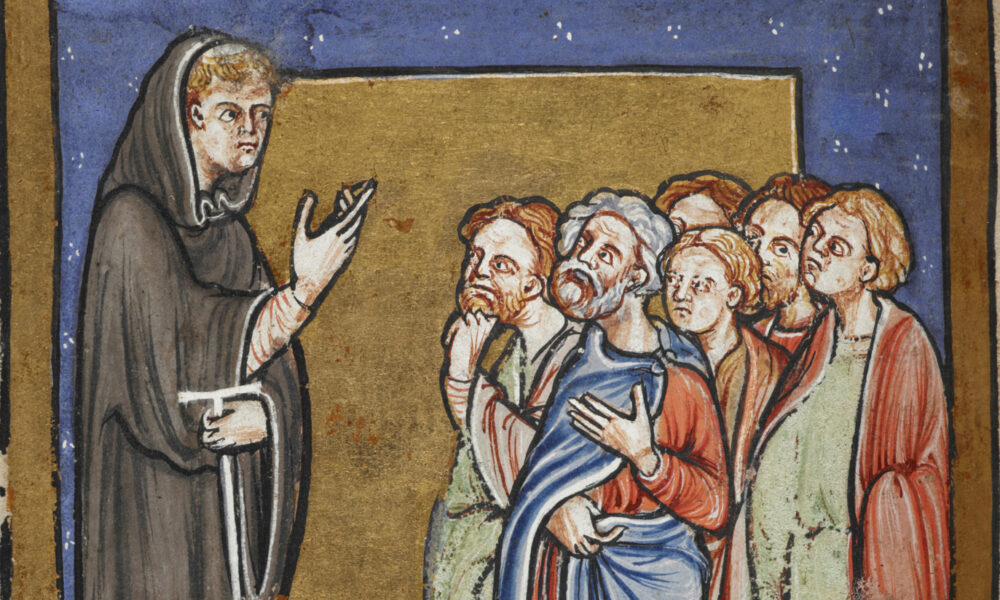
Aidan (c.590-651), an Irish monk and Lindisfarne’s first bishop, has a name which means ‘little fire’. Often depicted with a flaming torch, his love of God was a fire that led him to travel many miles around the North East by foot, strengthening the faith of those who already believed and inspiring it in those who didn’t. The early English historian, Bede, writing in the eighth century, said the saint’s life was “in marked contrast to the apathy of our own times for all who walked with him, whether monks or lay-folk, were required to meditate, that is, either to read the scriptures or to learn the Psalms.” One wonders what he would make of the twenty first century in this respect, but the idea that a single person can change the culture around them is a powerful one. Bede’s History of the English Peoples describes Aidan and his successor Cuthbert (c. 634-687) in glowing terms. If Aidan was Northumbria’s first missional saint, Cuthbert was its first mystical one “afire with heavenly love, unassumingly patient, devoted to unceasing prayer, and kindly to all who came to him for comfort.”
Fire, of course, has many mentions in the Bible both good and bad. The Lord speaks out of the fire to Moses from a bush burning in the wilderness and at the giving of the Ten Commandments (in Hebrew, Ten Words) He speaks to the Israelites “out of the midst of the fire, the cloud and thick darkness.” He is himself described as a consuming fire and the metal-worker of many refining ones. Still, at other times, as Elijah discovered, the Lord is not in the fire but the gentle whisper. We cannot assume where and how we will meet him next, which is one reason for always keeping our spiritual eyes and ears open.

With the government warnings about wildfires this last week and so much of the UK experiencing a serious drought, I began to notice how often fires featured as a threat to life in Bede’s narratives where the prayers of the saints (and even the ground they were buried in) could be powerful enough to put out the flames. Bede did not live to see the sacking of Lindisfarne by Viking raiders in 793, but according to one author of the Anglo-Saxon Chronicle there had been portents of the attack in the months before it: “Dreadful forewarnings come over the land of Northumbria, and woefully terrified the people: these were amazing sheets of lightning and whirlwinds, and fiery dragons were seen flying in the sky.” Literally or metaphorically, this was a fire they were not saved from and it sent shockwaves throughout Christian Europe.
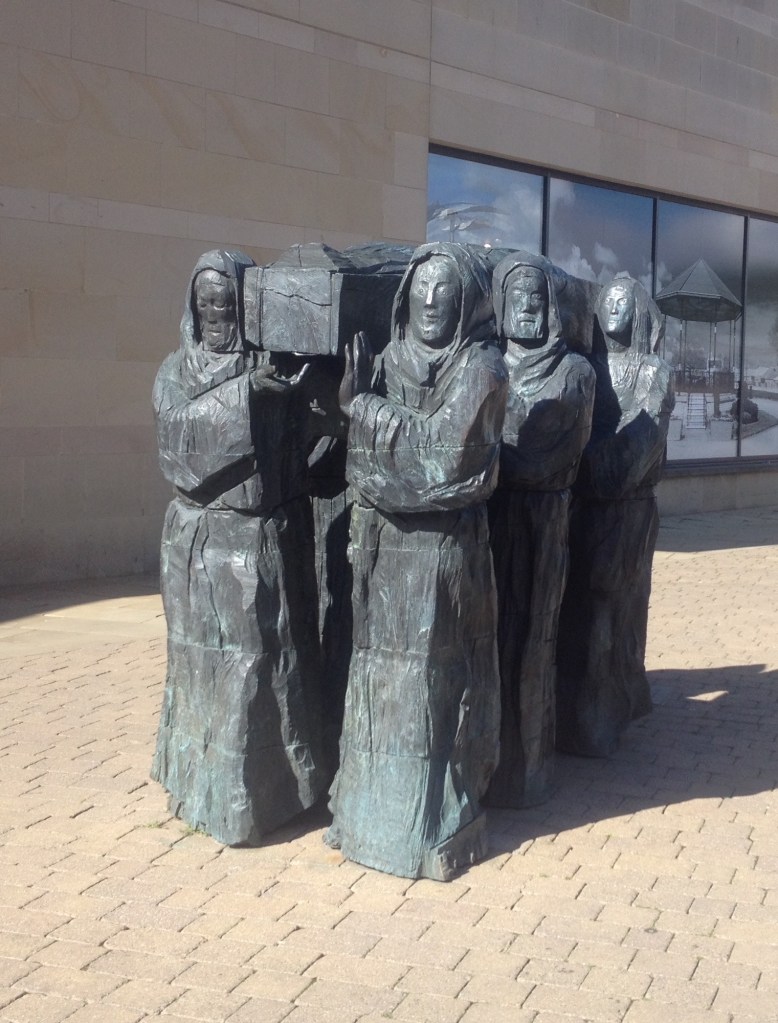
The beleaguered monks of Lindisfarne sought to guard the spiritual treasures entrusted to them, remaining on the island through a series of later raids before finally leaving it in 875 and embarking on a seven year journey through Northumbria taking Cuthbert’s body with them. Cuthbert’s body might have left Lindisfarne for good but 400 years later the monks would return to rebuild the community, at least until the monastery’s dissolution. Today the island is thought of as what the Celtic Christians would have called ‘a thin place’, as if something in the landscape brings it closer to heaven. This may be easier to understand if we imagine God being drawn to the places he feels sought and welcomed. As if all the prayers offered here over the years have left their imprint, a beaten track to his door.

Another way of putting it, a way an older generation of worshippers would have understood, is that where we build the altar the fire will come. And sometimes through a gift of sheer grace we may come upon altars others have built and find our hearts strangely warmed by them. “Were not our hearts burning within us while he talked with us on the road and explained the scriptures to us?” the disciples in Emmaus asked one another, remembering how the risen Jesus surprised them in coming alongside them as a fellow traveller, much as his servant Aidan (the ‘little fire’) would do centuries later. Perhaps this is the message of the Cinder Toffee Biscuits: to remain open to the fire of God wherever we meet it and to guard that flame wherever it is found.

Further Delectation
More on pilgrimage and faith in the North: http://www.faithinthenorth.org
For the good and the bad fires… A beautiful rendition of Isaiah 43:2 by The Porter’s Gate:
Medieval art from: BL Yates Thompson MS 26. From A Menagerie of Miracles: The Illustrated Life of St Cuthbert and the Road to Emmaus: a detail from a fresco by Duccio di Buoninsegna (c. 1308-11).
If you would like to keep this bestiary free of ads and see more entries more regularly you are welcome to donate to the Biscuit Jar.
 The Biscuit Bestiary