Biscuits for breakfast: OK or not OK? In Britain I don’t know a single soul who eats those Belvita biscuits although at weekends a biscuit or two might be the prelude to the Breakfast Proper. But in America a dish called Biscuits and Gravy is regularly eaten for breakfast and here we come to one of the great culinary divides between the two nations, a chasm so vast confused biscuit lovers on both sides of the pond find themselves in the position of Inigo Montoya in the cult film The Princess Bride, when he says: You keep using that word. I do not think it means what you think it means…
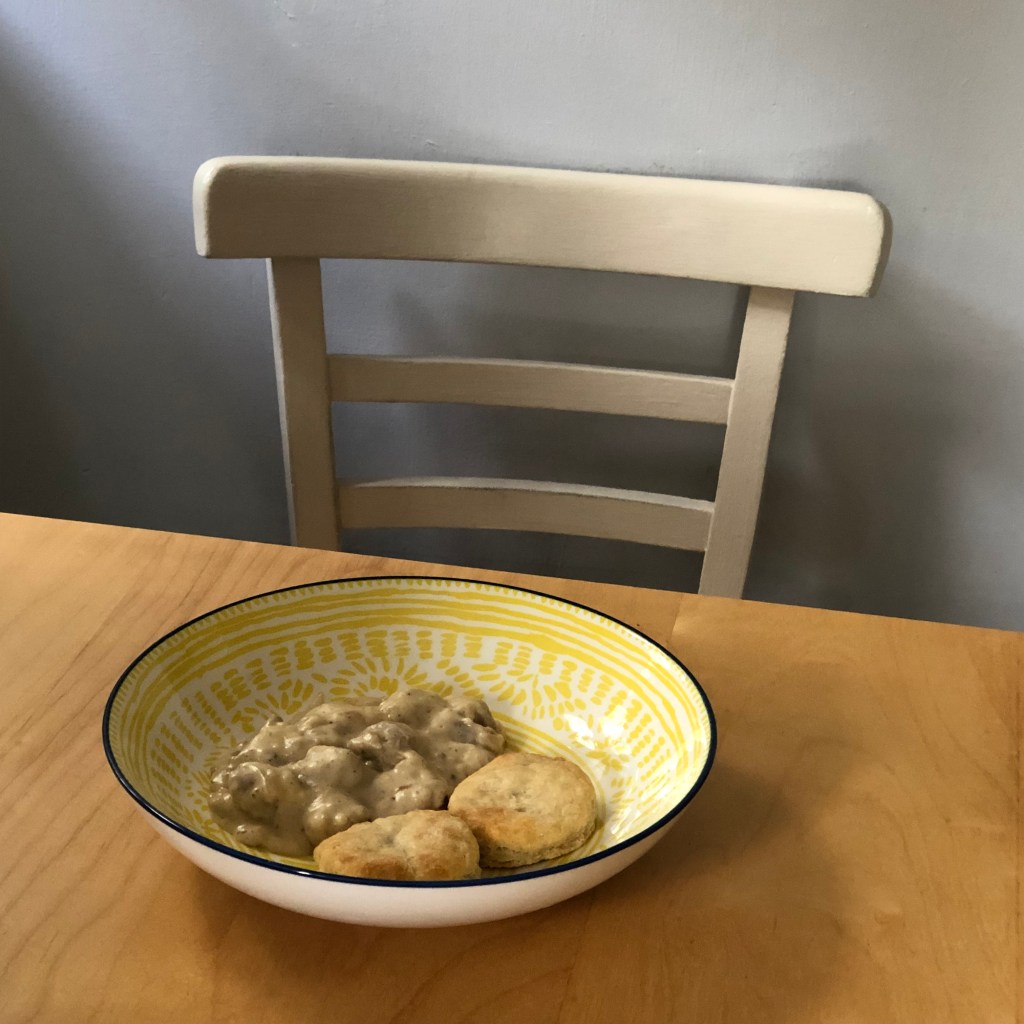
So what does it mean? I’ve tried before to answer the question here. To summarise: in Britain, a biscuit is what most Americans call a cookie and is (generally) sweet and (generally) smaller, flatter and tougher to bite into than a cake, but emphatically not a cake although it may at times be confused with one. To make things even more complicated in Britain a cookie is thought of as a subtype of a biscuit which means all cookies are biscuits but not all biscuits are cookies… In America, a biscuit is much closer to what we Brits call a savoury scone but (generally) lighter and fluffier and made to be eaten with a white sausagey gravy we would think of more as a sauce. As you can see the meaning is quite different, which begs the question how did such a semantic divergence come about? English Language and Usage Stack Exchange concludes:
At various times before 1800, dictionaries have used [words such as bisket, biscuit and bisquet for] a confection made with flour, eggs, sand sugar (among other ingredients). But at other times before 1800, dictionaries have applied the words bisket, biscuit, and bisquet to tiny rounds of hard-baked bread. Under the circumstances — especially in view of the equivocal treatment of the word in Samuel Johnson's tremendously influential 1755 dictionary, it is hardly surprising that British English went one way with the word biscuit and North American English went the other...
Like Robert Frost, the latter opted for the path less travelled semantically speaking. Or as one wit on the internet put it:

American biscuits are often thought of as a Southern staple but are now eaten everywhere in the States, where, like French onion soup, they’ve made the unexpected journey from low-cost peasants or workers’ fare to general comfort food. I’d never tried American biscuits before so wasn’t quite sure what they were meant to taste like but decided I’d have a go at making some. I think these biscuits turned out better than the gravy although to be fair I veered off the beaten track of the recipe several times, overdoing it on the buttermilk and underestimating the amount of whole milk that I needed, partly as a result of struggling to convert the measurements accurately.
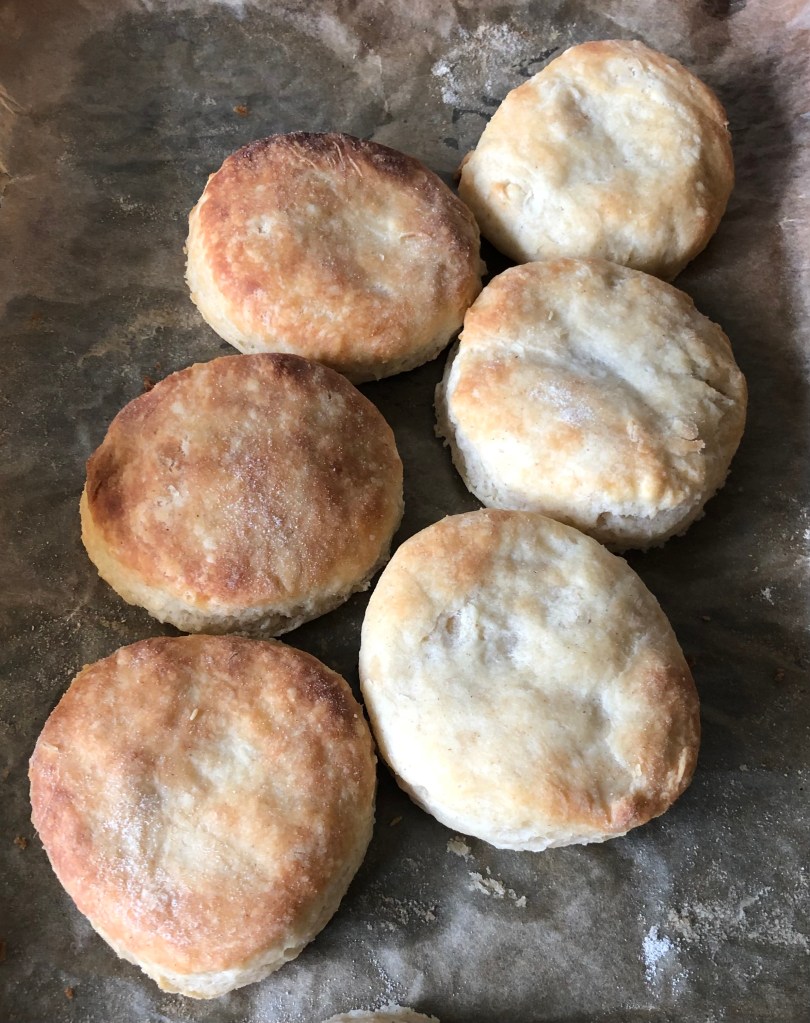
There’s no doubt the biscuits were at their best fresh and I followed the advice to split them and fill them with gravy to make a delicious, if slightly gloopy, sandwich. All in all this tasted a bit like a cross between a sausage McMuffin and a plain flour dumpling, while fulfilling the same function as the wedges of thick farmhouse bread you’d use to mop up a hearty stew. While it felt odd as a breakfast option, I did enjoy it.

And the moral of the American biscuit? In the same way as this unusual experience (for us in England) explodes our idea of what a biscuit is, are we ready to welcome the risen Jesus if he shows up in a different way to the one we expected? In this Easter-tide it’s good to remember that those first days after his resurrection some of his closest friends didn’t recognise him to begin with and that there were aspects of his resurrected life that were very different to the one they had known before. He could meet them inside locked rooms still bearing the marks of the nails on his body. He could walk with friends who took him for a stranger until a word or touch brought the revelation of his presence, long after they had felt their hearts burning within them in their conversation on the road. He could show up on the shores of Galilee to cook his disciples breakfast (fish, not biscuits). He could appear and disappear out of nowhere (or everywhere?) There was a divine mystery in it all that they could not understand, much less control.
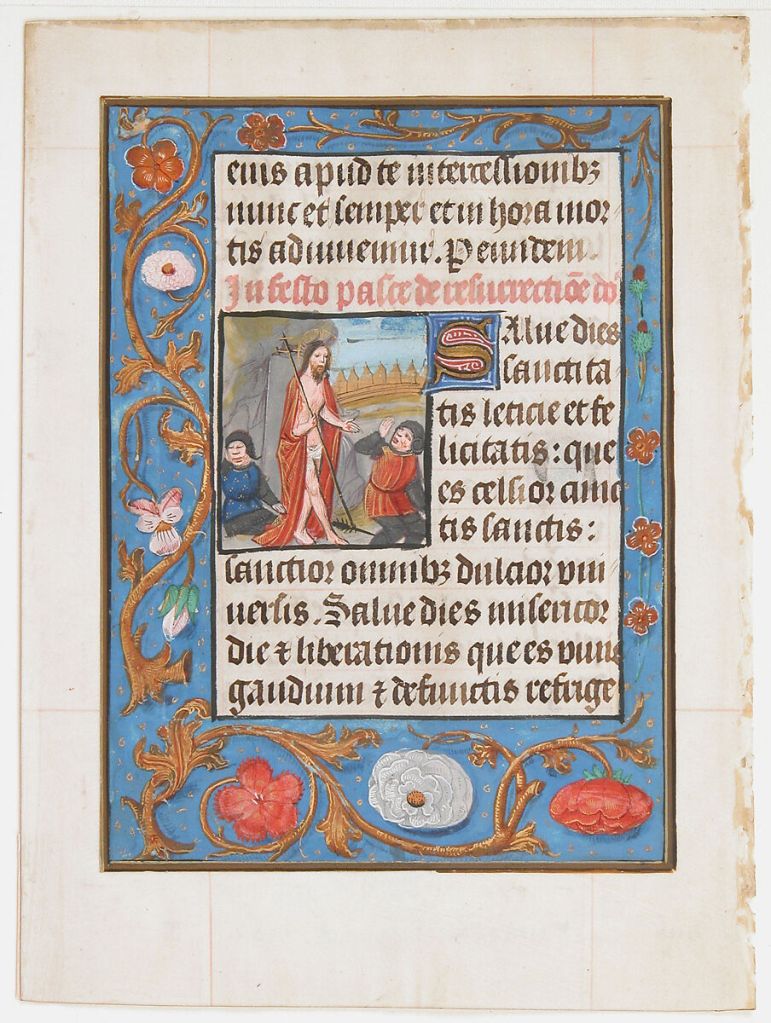
The story of Christ’s return from the dead is exciting but it is also challenging. Are we willing to have our understanding of everything challenged, in the way that resurrection life always challenges us? In those strange, thrilling days between Easter and Pentecost, the astonished disciples hadn’t much of a clue what their risen Lord was doing (some of us still don’t) but they were learning to trust him and to recognise him whenever he appeared in their midst.
Further Delectation
Biscuits and Gravy: A Little Bit of History.
Watch this fun film experiment introducing American biscuits and gravy to British teenagers (and their headmaster).
From darkness to light: a lovely article on Easter Exultet rolls from the BL’s Medieval Manuscripts blog.
And lastly, that exchange from The Princess Bride:
If you would like to see more entries more regularly and help keep this bestiary free of ads, you are welcome to contribute to the Biscuit Jar.
 I was surprised to discover that the Oreo first appeared in 1912 around the same time as equivalent sandwich styles premiered in Britain (c.f. the Bourbon and Custard Cream). Even today, America’s Oreos are still produced by Nabisco, the successors of the wonderfully named National Biscuit Company (a name which itself belongs to that bygone era when Old and New World biscuits were largely the same thing).


 The Biscuit Bestiary