I write this sitting in the attic of the London Library, listening to a very young and a very old scholar talking, watching the sun following the rain, the rain following the sun, and thinking about Jaffa Cakes (as one does). It’s the layer of orange jelly sandwiched between the sponge base and chocolate covering that gives the Jaffa Cake its name, recalling the sweetness of Jaffa Oranges. I’ve waited a long time to write about the Jaffa Cake, a staple of the McVitie’s range for almost a century. These days they come in boxes of 10 (I read somewhere they used to be 12, another casualty of the metric system?) and I have 7 left in this…

I think Jaffa Cakes go best with the citrus notes of a Lady Grey tea but I’ve paired mine with a Pret filter coffee (at just 49p with a re-useable cup, it has to be the cheapest coffee in London). The more astute among my readers will have noticed the word cake where biscuit is wont to be… The question of whether the Jaffa Cake is really a cake or a biscuit has never been settled to complete satisfaction and was the subject of a somewhat divisive marketing campaign this summer, the fruit of which can be seen on the billboard below:

‘The clue is on the box’ McVitie’s tell us in an attempt to shut down any arguments to the contrary but despite being labelled as a cake on the packaging, you’ll invariably find all the Jaffa Cakes hanging out with the biscuits in the supermarket aisles…

If you take an interest in biscuit trivia, you may remember the infamous 1991 Tribunal which overturned HM Customs and Excise’s ruling that the Jaffa Cake should be classed as a biscuit for tax purposes. Noting that there is now no generally accepted definition of either a cake or a biscuit, Mr Potter QC listed a number of ways in which the Jaffa resembles both, however the evidence which finally led to its being ruled a cake was its tendency to harden over time (stale biscuits get softer apparently). McVitie’s actually baked a giant Jaffa Cake to prove it.
Given this is a Biscuit Bestiary, you might expect to find me arguing for the Jaffa Cake’s re-classification as a biscuit, but I’d like to propose a more radical solution: what if it’s both at the same time? For in my mind, the dilemma posed by the Jaffa Cake in modern philosophy bears some resemblance to that of the early church grappling with the theology of the incarnation, the doctrine at the heart of the faith expressed in the Nicene Creed:
We believe in one Lord, Jesus Christ, the only Son of God, eternally begotten of the Father, God from God, Light from Light, true God from true God, begotten, not made, of one Being with the Father…
As a twelve year old attending an Anglican church that repeated the creed in its communion liturgy most weeks, I couldn’t understand the need for all these words, especially this bit. But what seems an incontrovertibly fixed doctrine to the majority of Christians today was once contested by the Arians and Docetists of the fourth century, or as I like to think of them the Exclusively-Cake and Exclusively-Biscuit camps of late antiquity. Neither camp could accept the orthodox position that Christ shared both a human and divine nature fully. The Arians emphasised the humanity of Christ at the expense of his deity (more Biscuit than Cake) and the Docetists his deity at the expense of his humanity (more Cake than Biscuit).
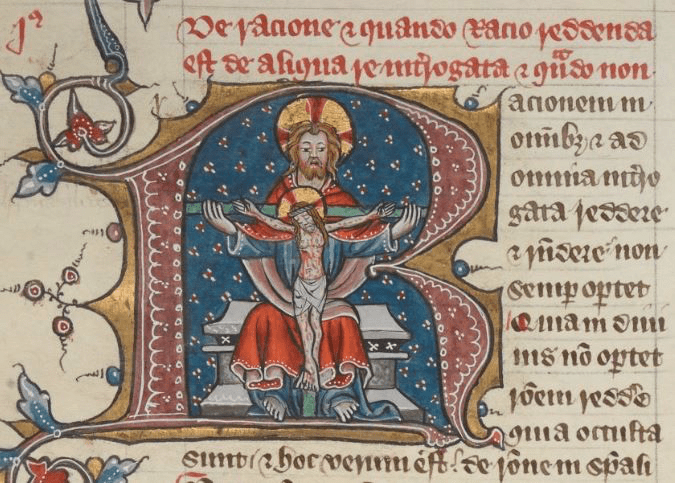
There’s a mystery to the incarnation, just as there’s a mystery to the Trinity. One evoked with the greatest poetry perhaps in the beginning of John’s gospel where the Word pitches his tent among us and the greatest warmth in St. Paul’s letter to the Hebrews, where he writes that ‘the one who makes people holy and those who are made holy are of the same family’. I won’t spend a lot of time charting the ups and downs of the Council of Nicaea, or Athanasius who bravely stood his ground contra mundum (against the world) and flipped the tables on the Gnostics by arguing that Christ sanctified the body by being in it, but rather the beauty of the second person of God coming in flesh and blood to reveal the heart of the first to us.
And here we get to the moral of the extraordinary substance of the Jaffa Cake: just as those who persist in seeing it solely as a cake struggle to encounter it in the biscuit aisle, so those who refuse to see it as anything other than a biscuit will struggle to accept the evidence of their senses on biting into its aerated sponge. An appreciation of both together allow for the richest paradox and fullest picture. So the next time someone tries to corner you on whether it’s a Cake or a Biscuit, ask them why it can’t be both at the same time?
Further Reflection
The simplest explanation I can find of the whole Biscuit-Cake court case for those who have never heard of a Jaffa Cake and are unfamiliar with British tax law. Professor Tim Crane, who discusses the philosophical conundrum of the Jaffa Cake publicly in a number of places, posts a link to the analysis of Mr Potter QC on his website here. And here’s footage of the largest Jaffa Cake since records began (maximus in mundo?) courtesy of Radio 4’s Philosophers’ Arms, Bake-Off’s Frances Quinn, the Team at Hambleton Bakery, and the Guinness Book of Records:
Lastly, and more importantly, it wouldn’t be right to let mention of Jaffa oranges pass without remembering the sadness of much that’s happened in and around Israel and the Middle East this last year. May the year to come see the first fruits towards healing and the establishment of God’s peace in the region, the only peace that is the true and deep and lasting kind.
If you would like to see more entries more regularly and help keep this bestiary free of ads, you are welcome to contribute to the Biscuit Jar.


 The Biscuit Bestiary