The Jaffa Cake

I write this sitting in the attic of the London Library, listening to a very young and a very old scholar talking, watching the sun following the rain, the rain following the sun, and thinking about Jaffa Cakes (as one does). It’s the layer of orange jelly sandwiched between the sponge base and chocolate covering that gives the Jaffa Cake its name, recalling the sweetness of Jaffa Oranges. I’ve waited a long time to write about the Jaffa Cake, a staple of the McVitie’s range for almost a century. These days they come in boxes of 10 (I read somewhere they used to be 12, another casualty of the metric system?) and I have 7 left in this…

I think Jaffa Cakes go best with the citrus notes of a Lady Grey tea but I’ve paired mine with a Pret filter coffee (at just 49p with a re-useable cup, it has to be the cheapest coffee in London). The more astute among my readers will have noticed the word cake where biscuit is wont to be… The question of whether the Jaffa Cake is really a cake or a biscuit has never been settled to complete satisfaction and was the subject of a somewhat divisive marketing campaign this summer, the fruit of which can be seen on the billboard below:

‘The clue is on the box’ McVitie’s tell us in an attempt to shut down any arguments to the contrary but despite being labelled as a cake on the packaging, you’ll invariably find all the Jaffa Cakes hanging out with the biscuits in the supermarket aisles…

If you take an interest in biscuit trivia, you may remember the infamous 1991 Tribunal which overturned HM Customs and Excise’s ruling that the Jaffa Cake should be classed as a biscuit for tax purposes. Noting that there is now no generally accepted definition of either a cake or a biscuit, Mr Potter QC listed a number of ways in which the Jaffa resembles both, however the evidence which finally led to its being ruled a cake was its tendency to harden over time (stale biscuits get softer apparently). McVitie’s actually baked a giant Jaffa Cake to prove it.

Given this is a Biscuit Bestiary, you might expect to find me arguing for the Jaffa Cake’s re-classification as a biscuit, but I’d like to propose a more radical solution: what if it’s both at the same time? For in my mind, the dilemma posed by the Jaffa Cake in modern philosophy bears some resemblance to that of the early church grappling with the theology of the incarnation, the doctrine at the heart of the faith expressed in the Nicene Creed:

We believe in one Lord, Jesus Christ, the only Son of God, eternally begotten of the Father, God from God, Light from Light, true God from true God, begotten, not made, of one Being with the Father…

As a twelve year old attending an Anglican church that repeated the creed in its communion liturgy most weeks, I couldn’t understand the need for all these words, especially this bit. But what seems an incontrovertibly fixed doctrine to the majority of Christians today was once contested by the Arians and Docetists of the fourth century, or as I like to think of them the Exclusively-Cake and Exclusively-Biscuit camps of late antiquity. Neither camp could accept the orthodox position that Christ shared both a human and divine nature fully. The Arians emphasised the humanity of Christ at the expense of his deity (more Biscuit than Cake) and the Docetists his deity at the expense of his humanity (more Cake than Biscuit).

Historiated initial from BL Royal MS 6 E Vii2 502v

There’s a mystery to the incarnation, just as there’s a mystery to the Trinity. One evoked with the greatest poetry perhaps in the beginning of John’s gospel where the Word pitches his tent among us and the greatest warmth in St. Paul’s letter to the Hebrews, where he writes that ‘the one who makes people holy and those who are made holy are of the same family’. I won’t spend a lot of time charting the ups and downs of the Council of Nicaea, or Athanasius who bravely stood his ground contra mundum (against the world) and flipped the tables on the Gnostics by arguing that Christ sanctified the body by being in it, but rather the beauty of the second person of God coming in flesh and blood to reveal the heart of the first to us.

And here we get to the moral of the extraordinary substance of the Jaffa Cake: just as those who persist in seeing it solely as a cake struggle to encounter it in the biscuit aisle, so those who refuse to see it as anything other than a biscuit will struggle to accept the evidence of their senses on biting into its aerated sponge. An appreciation of both together allow for the richest paradox and fullest picture. So the next time someone tries to corner you on whether it’s a Cake or a Biscuit, ask them why it can’t be both at the same time?

Further Reflection

The simplest explanation I can find of the whole Biscuit-Cake court case for those who have never heard of a Jaffa Cake and are unfamiliar with British tax law. Professor Tim Crane, who discusses the philosophical conundrum of the Jaffa Cake publicly in a number of places, posts a link to the analysis of Mr Potter QC on his website here. And here’s footage of the largest Jaffa Cake since records began (maximus in mundo?) courtesy of Radio 4’s Philosophers’ Arms, Bake-Off’s Frances Quinn, the Team at Hambleton Bakery, and the Guinness Book of Records:

Lastly, and more importantly, it wouldn’t be right to let mention of Jaffa oranges pass without remembering the sadness of much that’s happened in and around Israel and the Middle East this last year. May the year to come see the first fruits towards healing and the establishment of God’s peace in the region, the only peace that is the true and deep and lasting kind.

If you would like to see more entries more regularly and help keep this bestiary free of ads, you are welcome to contribute to the Biscuit Jar.

The Chocolate Hobnob

If I had a favourite commercially mass-produced biscuit it might just be the chocolate hobnob. Not that there’s anything wrong with an unvarnished hobnob per se, but the only way to improve on a biscuit this satisfying is to enrobe it in a reservoir of chocolate. Despite McVitie’s controversial assertion that true cognoscenti will serve a chocolate hobnob oat-side up, most people I’ve spoken to prefer to keep the chocolate uppermost. Here’s a rare glimpse of an uneaten specimen warming itself in the late autumn sun:

IMG_5123 2

Unsurprisingly, the upgraded hobnob performs well in the biscuit leagues, regularly beating the bourbon and vying with the chocolate digestive for the top spot in the UK charts. Taste is key when it’s down to the wire and this biscuit is so moreish it’s quite possible to eat three in one sitting without discomfort.

The plain hobnob we looked at in the previous entry; in pondering the deeper meaning of the chocolate hobnob the first question is what, if anything, is the spiritual significance of the chocolate part? Chocolate isn’t mentioned in any of the bestiaries I’ve come across, but from a consumer’s perspective I feel confident in suggesting it can only signify love as the richest, most magically transformative and generally satisfying ingredient in the cupboard. Chocolate makes everything taste better and covers over a multitude of errors in the oven. And while it would be a sin to call a plain hobnob an error there’s no doubt that without the chocolate it would be a lot rougher and scratchier round the edges. It’s the chocolate that smooths all that over – like love. 

To extend the parallel further, it’s usually when we come into contact with others for any significant amount of time that we also come into contact with our own ‘scratchy’ places: hidden resentments, irritations and lack of love. It’s where the difference between real and imaginary love becomes painfully apparent: how we treat the actual, flawed specimens of humanity we’re forced to hobnob with in everyday life is so often the real measure of the heart. There’s a reason it’s easier to be kind to people at a distance, where kindness doesn’t have to be sustained for as long and doesn’t cost as much. Want to check your love? Have a hobnob. 

Further Delectation

Hold your breath, make a wish… If you don’t have a ticket to see McVities’ reservoir of chocolate, you can at least get a glimpse of Willy Wonka’s:

And for medievalists especially, a splendidly colourful patchwork of bestiary-like images from Amiens MS 399, courtesy of Damien Kempf

If you would like to see more entries more regularly and help keep this bestiary free of ads, you are welcome to contribute to the Biscuit Jar

The Hobnob

IMG_5131
A plain hobnob at half moon

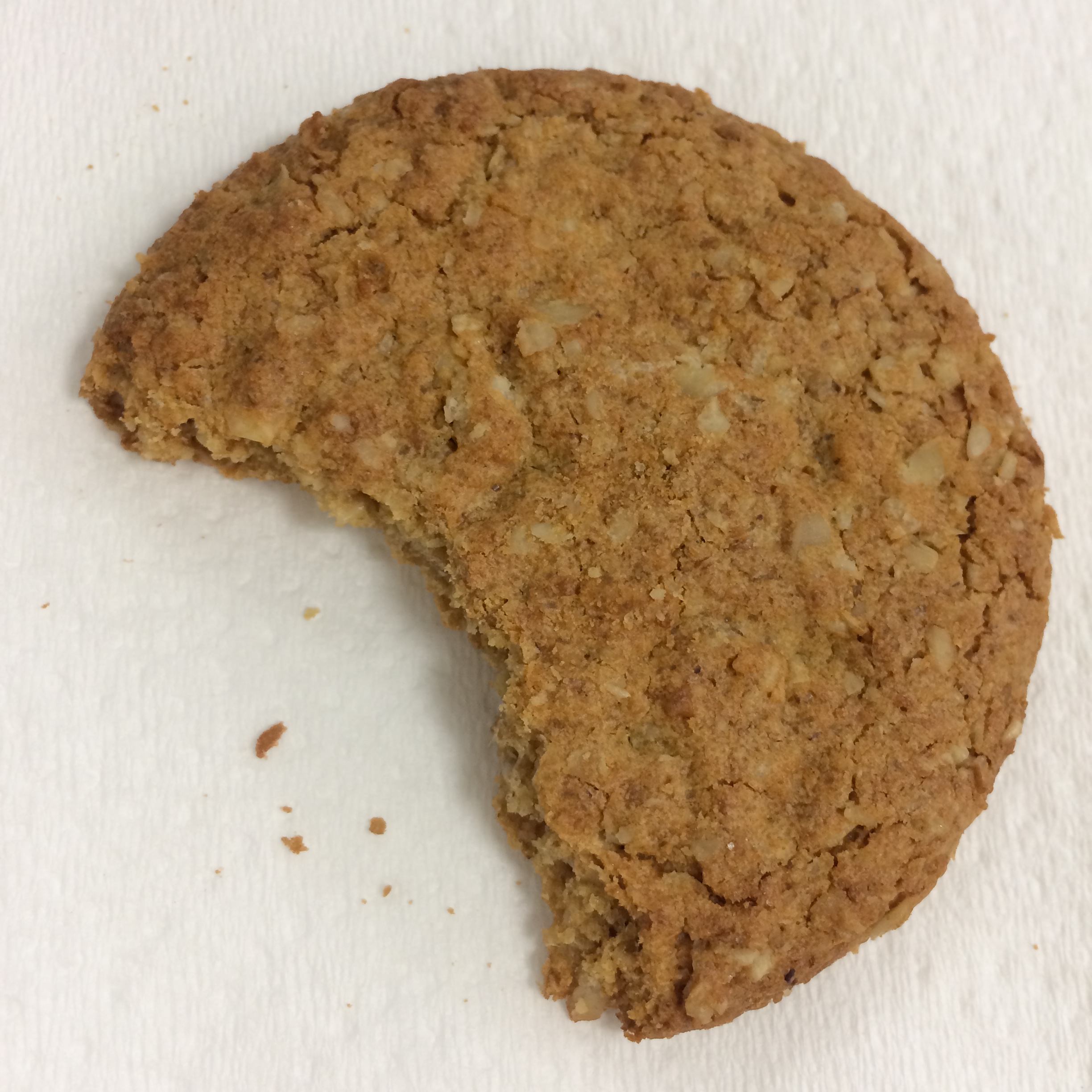
“Enjoy the oaty rough and tumble of the nation’s crunchiest companion.” To me, McVitie’s promotional tagline for the plain or ‘original’ hobnob describes the experience of this biscuit rather well. Opinions differ as to whether it really is the crunchiest on the market, but there can be few more satisfyingly homely, unpretentious accompaniments to a strong cup of cha. Granted it may be a little rough around the edges with a tendency to crumble at the slightest touch, but there’s just something very satisfying about the way it nonetheless conveys a sense of substance. An aura of wholesomeness, too, is a large part of the hobnob’s appeal. It must be something about the oats and the way they pack them…

6a00d8341c464853ef017c358c2fd0970b-500wi
Alfred, the Legend

While it may not score that highly on visual aesthetics, most consumers agree that this is a nice-tasting biscuit, despite looking like something King Alfred might have burned. Although its use isn’t recorded until the early seventeenth century, the word has at least one medieval association: in old Sarum (Salisbury for twenty-first-century readers) the hobnob was the name of the mischievous hobby-horse used to scatter the crowd before the giant in the Midsummer’s Day Procession. Contextually, to hobnob meant to give and take a blow in Shakespeare’s Twelfth Night, where the riotous Sir Toby uses it to describe the (imaginary) fights of the drunk and disorderly Sir Andrew. It isn’t until the next century it comes to mean socialising or chinking glasses with pals, perhaps because of its association with Shakespeare’s bon viveurs. 

Today, the idea of hobnobbing carries faintly disparaging allusions of social-climbing (‘hobnobbing with the top brass’), a shift of meaning that seems peculiar given the hobnob’s obvious lack of pretension. You might expect this sort of behaviour from a Ferrero Rocher, but a hobnob? It’s hard to imagine a biscuit less snobbish. Which brings me to the moral… St Paul in his letter to the Romans warns his church against this kind of elitism. This isn’t about bad versus good company per se, but all the other (spurious) ways in which we mentally divide people by class or culture or profession or social standing. The conclusion? ‘Do not be proud but be willing to associate with people of low position.’ If you don’t have any friends in ‘low’ places, you might just be hobnobbing with the wrong people.

Further Delectation

Try smuggling a hobnob into the Ambassador’s Reception, or maybe just enjoy one at home with Builders’ tea and Francis Bryan’s Dispraise of the Life of a Courtier if you’re sick of all this hobnobbing.

Impressed by Alfred’s cooking skills? Learn more about his legacy at the British Library’s Anglo Saxon Kingdoms exhibition (on till February 2019). Later medieval readers may wish to read more about hobnob and the Salisbury Giant.

Take in a view of hundreds of paper doves at Salisbury Cathedral, an installation by Michael Pendry to commemorate the 100 year anniversary of the end of the First World War (photo credit: Howard Darvil). When the news of the Armistice reached the trenches many British soldiers reported they were ‘too far gone, too exhausted’ to enjoy it. One summed up the mood rather tellingly in remarking ‘There was nothing with which we could celebrate, except cookies.’

Dg-G8QJWsAE6aNR.jpg

If you would like to see more entries more regularly and help keep this bestiary free of ads, you are welcome to contribute to the Biscuit Jar

The Humble Digestive

mcvities_3
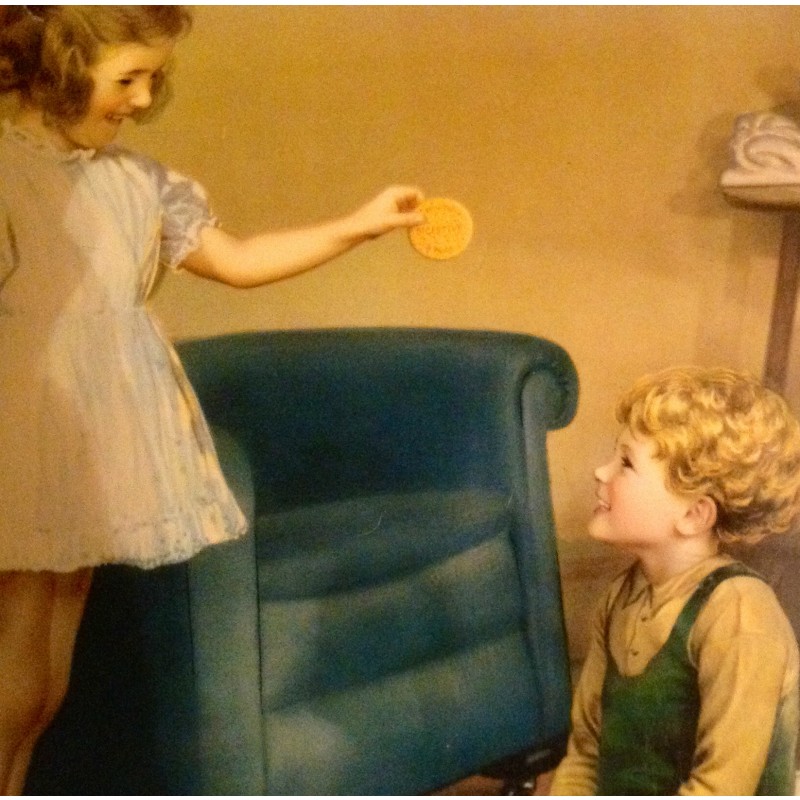
1930s McVitie’s advert

Sweet, wholesome, and amiable, the digestive is nothing if not well-rounded in character. Durable too with its Scottish roots, it’s successfully transitioned from a poster boy of the industrial revolution to tea-time staple. These days you rarely see digestives thrust into the limelight yet in a time of crisis few sights are more reassuring. It’s one of the first things you offer anyone in a state of shock, being right up there with other life essentials like tea, blood and oxygen.

As with most heroes of the bestiary, the digestive is renowned for its medicinal qualities and folk legends abound with tales of sudden miraculous recoveries attributed to its invigorating powers. In medieval tradition, a special place is reserved for St Timothy’s Biscuit. After St Paul advised the younger man to drink a little wine for his stomach trouble, it was only a hop, skip and jump to luxury cheese. This seems to be the explanation for the otherwise puzzling reference in Chaucer’s The Camembert’s Tale: ‘some bisquite take yow, by St Timothee / For shame yt is such cheses should go fre’.

IMG_0051

Of late the free-flow of digestives through these isles has led some to assert that this is the most popular biscuit in our history: a claim that is the less astonishing when you consider the role of the digestive as the natural companion of cheese and chocolate. Like a  faithful friend, this modest soul is never happier than when promoting the excellence of others. If it has any lesson to teach us it’s that humility has its pleasures and one of them may be making opportunities for others to shine.

Further Delectation

Read this charming post on the digestive’s history or watch this digest of Victorian biscuit mania first screened on The Great British Bake Off.

Try these ingenious recipes including passionfruit meringue and other biscuity trifles.

Been redirected here from the fourteenth century? You may wish to pair your cheese and wafers with some spiced Ypocras.

Has a digestive saved your life? Send a message of thanks to McVitie’s as they need cheering up right now.

If you would like to see more entries more regularly and help keep this bestiary free of ads, you are welcome to contribute to the Biscuit Jar