So I promised my friend Naomi I’d profile the Malted Milk, but so far I’ve held off because (whisper it) I find it hard to get excited about biscuits like these… What is it that draws so many of us to anything resembling chocolate and away from the plainer sorts of biscuit lauded for their lower calories? It takes a special kind of individual or perhaps self-restraint to choose a Malted Milk over a Chocolate Hobnob, and yet there’s no sign of the former disappearing from the supermarket shelves anytime soon.

The first thing to note about this biscuit is its curiously homespun quality: its well-known emboss design of grazing cows resembles a cave painting more than the industrial precision of the Oreo and for that very reason there’s something charmingly unselfconscious about it. I find such comfortable rusticity reminiscent of a lost Eden, a place where cows (or sheep?) may safely graze and biscuits be consumed in peace and quiet.
‘When Adam delved and Eve span, who was then the gentleman?’ asked preacher John Ball, the voice of socialism in the 1380s. Chaucer’s Ballad of Gentilesse turns the same question on its head by suggesting true nobility is a spiritual condition within the reach of each of us. It does feels a little odd seeing Adam, the original bad boy of Genesis, held up for emulation as the Father of Gentilesse in this poem but Chaucer is here talking about pre-Lapsarian or unfallen man as he might have existed in that legendary time before Paradise was lost. A state of perfect innocence before the Malted Milk became shackled to a blues song…

Thankfully the story of Adam and Eve doesn’t end with their expulsion from Paradise and medieval theology sets great store by the concept of Felix Culpa or the Fortunate Fault. Even the teenage Mary’s decision to accept the task of bearing the Messiah (‘Be it unto me according to thy word’) forms a crucial part of the reversal of human fortunes through the sacrifice of Jesus and a particular kindness of God’s to make salvation hinge on a woman’s obedience as well as a man’s. From weal to woe to weal again and from greater woe to greater weal — as a meta-narrative it’s all so beautifully constructed and what God does on that large canvas for all of us he loves to replicate on the smaller canvases of our individual lives, turning even our Valleys of Weeping into places of refreshing.

Further Delectation
Read more about the history of Malted Milk with a cup of Horlicks and a Malted Milk to hand…
Did you know that Malted Milks are second cousins to the Malteser? Also light caloried, but with added chocolate. You’re welcome.
Listen to Audrey Assad’s Fortunate Fall album (or pretty much anything she’s written.)
If you would like to see more entries more regularly and help keep this bestiary free of ads, you are welcome to contribute to the Biscuit Jar.
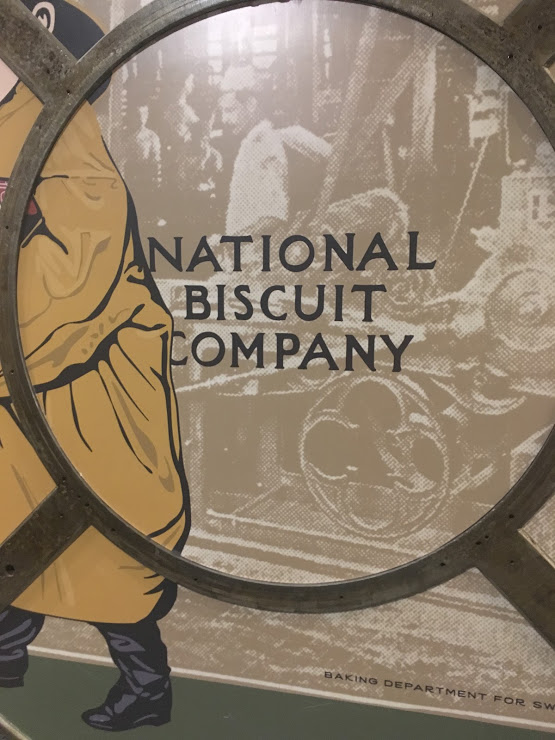
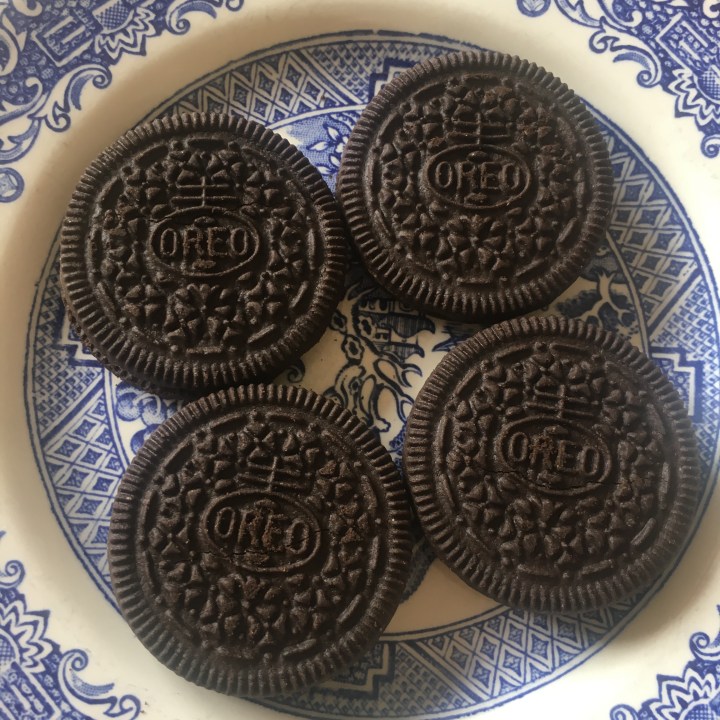 I was surprised to discover that the Oreo first appeared in 1912 around the same time as equivalent sandwich styles premiered in Britain (c.f. the Bourbon and Custard Cream). Even today, America’s Oreos are still produced by Nabisco, the successors of the wonderfully named National Biscuit Company (a name which itself belongs to that bygone era when Old and New World biscuits were largely the same thing).
 The Biscuit Bestiary