The Jaffa Cake

I write this sitting in the attic of the London Library, listening to a very young and a very old scholar talking, watching the sun following the rain, the rain following the sun, and thinking about Jaffa Cakes (as one does). It’s the layer of orange jelly sandwiched between the sponge base and chocolate covering that gives the Jaffa Cake its name, recalling the sweetness of Jaffa Oranges. I’ve waited a long time to write about the Jaffa Cake, a staple of the McVitie’s range for almost a century. These days they come in boxes of 10 (I read somewhere they used to be 12, another casualty of the metric system?) and I have 7 left in this…

I think Jaffa Cakes go best with the citrus notes of a Lady Grey tea but I’ve paired mine with a Pret filter coffee (at just 49p with a re-useable cup, it has to be the cheapest coffee in London). The more astute among my readers will have noticed the word cake where biscuit is wont to be… The question of whether the Jaffa Cake is really a cake or a biscuit has never been settled to complete satisfaction and was the subject of a somewhat divisive marketing campaign this summer, the fruit of which can be seen on the billboard below:

‘The clue is on the box’ McVitie’s tell us in an attempt to shut down any arguments to the contrary but despite being labelled as a cake on the packaging, you’ll invariably find all the Jaffa Cakes hanging out with the biscuits in the supermarket aisles…

If you take an interest in biscuit trivia, you may remember the infamous 1991 Tribunal which overturned HM Customs and Excise’s ruling that the Jaffa Cake should be classed as a biscuit for tax purposes. Noting that there is now no generally accepted definition of either a cake or a biscuit, Mr Potter QC listed a number of ways in which the Jaffa resembles both, however the evidence which finally led to its being ruled a cake was its tendency to harden over time (stale biscuits get softer apparently). McVitie’s actually baked a giant Jaffa Cake to prove it.

Given this is a Biscuit Bestiary, you might expect to find me arguing for the Jaffa Cake’s re-classification as a biscuit, but I’d like to propose a more radical solution: what if it’s both at the same time? For in my mind, the dilemma posed by the Jaffa Cake in modern philosophy bears some resemblance to that of the early church grappling with the theology of the incarnation, the doctrine at the heart of the faith expressed in the Nicene Creed:

We believe in one Lord, Jesus Christ, the only Son of God, eternally begotten of the Father, God from God, Light from Light, true God from true God, begotten, not made, of one Being with the Father…

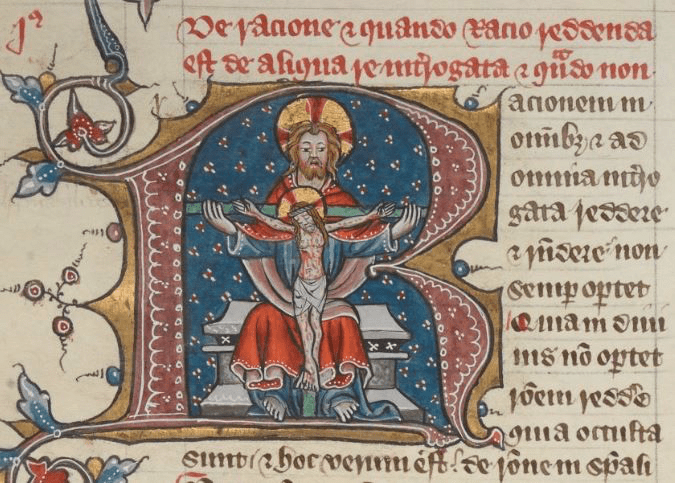
As a twelve year old attending an Anglican church that repeated the creed in its communion liturgy most weeks, I couldn’t understand the need for all these words, especially this bit. But what seems an incontrovertibly fixed doctrine to the majority of Christians today was once contested by the Arians and Docetists of the fourth century, or as I like to think of them the Exclusively-Cake and Exclusively-Biscuit camps of late antiquity. Neither camp could accept the orthodox position that Christ shared both a human and divine nature fully. The Arians emphasised the humanity of Christ at the expense of his deity (more Biscuit than Cake) and the Docetists his deity at the expense of his humanity (more Cake than Biscuit).

Historiated initial from BL Royal MS 6 E Vii2 502v

There’s a mystery to the incarnation, just as there’s a mystery to the Trinity. One evoked with the greatest poetry perhaps in the beginning of John’s gospel where the Word pitches his tent among us and the greatest warmth in St. Paul’s letter to the Hebrews, where he writes that ‘the one who makes people holy and those who are made holy are of the same family’. I won’t spend a lot of time charting the ups and downs of the Council of Nicaea, or Athanasius who bravely stood his ground contra mundum (against the world) and flipped the tables on the Gnostics by arguing that Christ sanctified the body by being in it, but rather the beauty of the second person of God coming in flesh and blood to reveal the heart of the first to us.

And here we get to the moral of the extraordinary substance of the Jaffa Cake: just as those who persist in seeing it solely as a cake struggle to encounter it in the biscuit aisle, so those who refuse to see it as anything other than a biscuit will struggle to accept the evidence of their senses on biting into its aerated sponge. An appreciation of both together allow for the richest paradox and fullest picture. So the next time someone tries to corner you on whether it’s a Cake or a Biscuit, ask them why it can’t be both at the same time?

Further Reflection

The simplest explanation I can find of the whole Biscuit-Cake court case for those who have never heard of a Jaffa Cake and are unfamiliar with British tax law. Professor Tim Crane, who discusses the philosophical conundrum of the Jaffa Cake publicly in a number of places, posts a link to the analysis of Mr Potter QC on his website here. And here’s footage of the largest Jaffa Cake since records began (maximus in mundo?) courtesy of Radio 4’s Philosophers’ Arms, Bake-Off’s Frances Quinn, the Team at Hambleton Bakery, and the Guinness Book of Records:

Lastly, and more importantly, it wouldn’t be right to let mention of Jaffa oranges pass without remembering the sadness of much that’s happened in and around Israel and the Middle East this last year. May the year to come see the first fruits towards healing and the establishment of God’s peace in the region, the only peace that is the true and deep and lasting kind.

If you would like to see more entries more regularly and help keep this bestiary free of ads, you are welcome to contribute to the Biscuit Jar.

Blue Riband

Morning, all. Today is popularly known as Blue Monday: a day popularly regarded as the most depressing day of the year although if you google the rationale for that you’ll find it’s just as popularly debunked as an advertising gimmick from the early 2000s. Whether justified or not, it’s fair to say that the idea has taken hold in the public imagination prompting a plethora of more or less helpful social media posts on the subject of depression and this rather esoteric one on the Blue Riband.

I’d forgotten all about the Blue Riband’s existence until December when a colleague drew parallels between it and a Slovakian biscuit she’d come across. I mentally dated the brand to the late 1980s (when I might have last eaten one) but it turned out to be a lot more venerable than I’d thought. It was Scottish biscuit giant Gray Dunn who began producing these biscuits in 1936 although sadly the Glasgow-based factory was forced to close in 2017. At 92 calories per bar, the Blue Riband is admittedly a light bite with what feels like a much thinner wrap-around of chocolate than either a Penguin or a Club Biscuit but an ambitious four layers of wafer underneath it. More than the milk chocolate, it’s the wafer which makes a bid for your taste buds.

The term Riband is an old fashioned word for ribbon: a very medieval spelling dating back to the mid fifteenth century, at least in the Oxford English Dictionary’s first attested use. The term Blue Riband also has the specialist sense, popular in the 1930s, of a metaphorical prize ribbon awarded to the liner capable of making the fastest crossing of the Atlantic from New York to Southampton. I suspect this is the original inspiration for its name but it was in use more generally before this to mean a mark of quality; this is where the notion of Cordon Bleu cooking is from, a reference to France’s chivalric order of the Holy Spirit whose knights were known as Les Cordons Bleus because of their light blue ribbons and whose banquets were said to offer exceptionally top nosh.

However, Bestiary readers might be interested to know that the Blue Riband has a claim to being one – maybe even the only – biscuit whose name is mentioned, albeit indirectly, in the King James Bible: “Speak unto the children of Israel, and bid them that they make them fringes in the borders of their garments throughout their generations, and that they put upon the fringe of the borders a ribband of blue,” God tells Moses in the Book of Numbers, a practice still observed by religious Jews today in the weaving and knotting of blue threads into talits or prayer shawls. “And it shall be unto you for a fringe, that ye may look upon it, and remember all the commandments of the Lord, and do them…” (Numbers 15).

Detail from the Codex Rossianus, c.1453

Why blue specifically? The short answer is because God said so… The speculative one opens out a lovely fan of references to this particular colour in scripture which suggests that if he has a favourite colour it might well be this one. When Moses, Aaron, and representatives of the twelve tribes meet with God on the top of Mount Sinai, we are told that “under his feet was something like a pavement made of lapis lazuli, as bright blue as the sky,” the likeness of a throne of lapis lazuli is mentioned in the revelation of God’s glory in Ezekiel, and the robe of the High Priest was made of blue cloth woven in one piece. A special shade of blue called tekhelet was used in the decoration of the temple and tabernacle as well as for the threads on the talits. It would have taken effort and expense to produce high quality blue dyes in the ancient world and in some sense that was part of the point: holiness for humans, meaning consecration or set-apartness for God, being something both costly and beautiful. As Chabad.org explains, the use of this specific blue for the prayer shawls was a mark of nobility, reminding the wearers of their place in God’s kingdom of priests.

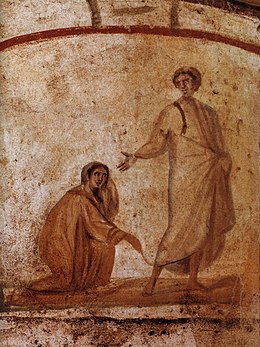
The fringe or the hem of the garment where the tassels were was an important part of the wearer’s identity, even authority in the ancient world. Knowing this casts more light on the episode of David cutting off the corner of King Saul’s garment (and his remorse afterwards). Blue tassels or tzitzit were part of the garments worn by Jews in Jesus’s day. One of the most moving stories in the gospels is the healing of a sick, socially outcast woman who reaches out through the press of the crowd to touch the hem of Jesus’s garment. “For she said to herself, ‘If only I may touch his garment, I shall be made well’…” (Matthew 9:21)

Image from a 4th century wall painting from the Catacombs of Marcellinus and Peter, near Rome.

As a colour in the Middle Ages, blue has a whole range of literary associations of which my favourite is constancy or steadfastness. This is not so surprising if you consider it is also the colour of the sky and sea (on a good day) both of which remind us of immensity and eternity. Blue or sometimes blue-toned teal frequently features in cross-cultural surveys as the world’s most popular colour, which suggests it appeals to something deep within the human spirit. Maybe we’re drawn to blue out of a heavenly homing instinct? “He has set eternity in the human heart,” writes the author of Ecclesiastes, no stranger to every kind of blueness. “Yet no-one can fathom what God has done from beginning to end.”

Wester Ross, Scotland. Photo credit: Annie Ede

Drawing all these threads together I hope, like me, you will think a little differently about the Blue Riband, and wish you all a tekhelet-toned Monday full of the deep consolations of God.

Further Delectation

Blue Monday or Brew Monday? Here’s a little piece from the Samaritans dispelling the myth of Blue Monday and encouraging us all to reach out and connect over a cuppa.

An excellent initiative to give out free biscuits with that cuppa this year. Coming soon to a station near Luton.

A recording of Adrian Plass’s poem A Hopeful Shade of Blue from Shipwrecks & Islands:

If you would like to see more entries more regularly and help keep this bestiary free of ads, you are welcome to contribute to the Biscuit Jar.

Baci del Chiostro

Lady’s Fingers, Roman Glasses, Bones of the Dead… Is it me or are the names of continental biscuits typically more imaginative than British ones? True, there are fewer opportunities for humorous misunderstanding as a result but also less sense of a back story, hints of a colourful history, in something as prosaically descriptive as a Custard Cream. This month’s biscuit translates to ‘Kisses of the Cloister’. At least that is the literal meaning of these Baci del Chiostro given to me by my friend Katka, a regional version of the better known Baci di Dama (Ladies’ Kisses) from Piedmont – popular little sandwich biscuits found in different forms across Italy.

Wrapped up like a sweetie in their bright orange wrappers, the biscuits are not as soft as I was expecting but would likely mellow a bit soaked in coffee if it’s not too much of a travesty to suggest that. You can definitely taste the chocolate-hazelnut filling and the little information I can find about them online suggest they came by their name because they look like two mouths kissing but I’ll leave you to judge that for yourself in the picture below! Recipes for Baci di Dama are easy to find but so far as I can tell there is only one company that makes this Baci del Chiostro version in Saronno.

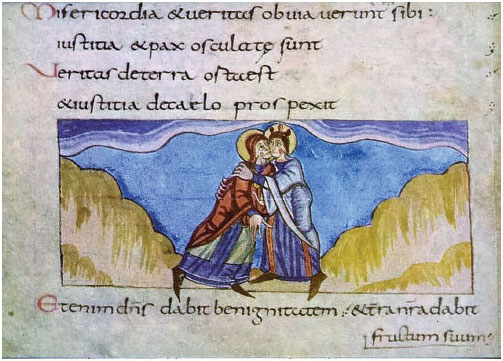
For the moral, I got to thinking about the theme of kissing in scripture… From Judas’s famous kiss of betrayal to the ecstatic kisses of the lovers in the Song of Songs, there are a lot of moments in the bible where a kiss is used to communicate more than words: to seal a romance or a friendship or even a sacred moment of worship, as in the beautiful image of the woman who covers Jesus’s feet with kisses and perfume. “Greet one another with a holy kiss” Paul tells the Church in Corinth – an injunction that was taken rather too enthusiastically by one man at a fellowship I once belonged to – and a custom which lives on today as the Kiss of Peace usually given before the Creed in the Orthodox Church, and the slightly awkward handshake in the Church of England.

Psalm 85: Righteousness and Peace kiss each other (detail from the 9th century Stuttgart Psalter)

But it’s another kiss that stands out more for me in one of the best known stories Jesus told about one — or rather two — lost sons:

There was a man who had two sons. The younger son said to him, ‘Father, give me my share of the estate.’ So he divided his property between them. After a few days, the younger son got everything together and journeyed to a distant country, where he squandered his wealth in wild living. After he had spent all he had, a severe famine swept through that country, and he began to be in need. So he went and hired himself out to a citizen of that country, who sent him into his fields to feed the pigs. He longed to fill his belly with the pods the pigs were eating, but no one would give him a thing. Finally he came to his senses and said, ‘How many of my father’s hired servants have plenty of food? But here I am, starving to death! I will get up and go back to my father and say to him, “Father, I have sinned against heaven and against you. I am no longer worthy to be called your son. Make me like one of your hired servants.”  So he got up and went to his father. But while he was still in the distance, his father saw him and was filled with compassion. He ran to his son, embraced him, and kissed him…

Luke 15: 11-20

It’s generally called the Story of the Prodigal Son but as Henri Nouwen reminds us it is also the Story of the Compassionate Father. In the culture of Jesus’s day, the son’s demand for his share of the estate and behaviour after leaving home shows an exceptionally callous rejection of his family of origin. It’s only when he finds himself in need and sees his folly for what it is that he returns to beg his father’s charity, expecting to be let back in in disgrace and offering to return to the household to work as a servant. But his father sees him coming from a distance and offers no word of reproach; instead he runs to him and kisses him. He’s just so grateful to have his son back whatever he’s done, all he wants to do is celebrate with a welcome home party! (Much to the disgust of the performance-driven elder son.)

The Prodigal Son by Charlie Mackesy

As with the other parables the longer you sit with the story, the more you may find it has to say to you. (I love this particular depiction of the kiss by artist Charlie Mackesy.) Advent is the Church’s great season of waiting, but the older I get I wonder if it isn’t also about God waiting for us. Not to mark us down or trip us up or ask us what we were thinking of staying out so late, but like the father watching at the window for the first glimpse of his son returning, hitching up his robes and running forward to kiss him.

Further Delectation

Have a go at making your own Baci di Dama (or cloister?) with this recipe from BBC Good Food.

Looking for some quiet reflection over Advent? Henri Nouwen’s meditations in The Return of the Prodigal Son are well worth a read, inspired by his encounter with Rembrandt’s painting of the same theme. You can read Part 2 of the story, about the Older Son, here.

For those who haven’t come across it, I recommend the beautifully and carefully curated content at the Visual Commentary of Scripture – stunning art work and thoughtful commentary on particular passages. This Drop Down Ye Heavens triptych works as an Advent meditation.

If you would like to keep this bestiary free from ads and see more entries more regularly you are welcome to contribute to the Biscuit Jar.

Penguin Biscuits

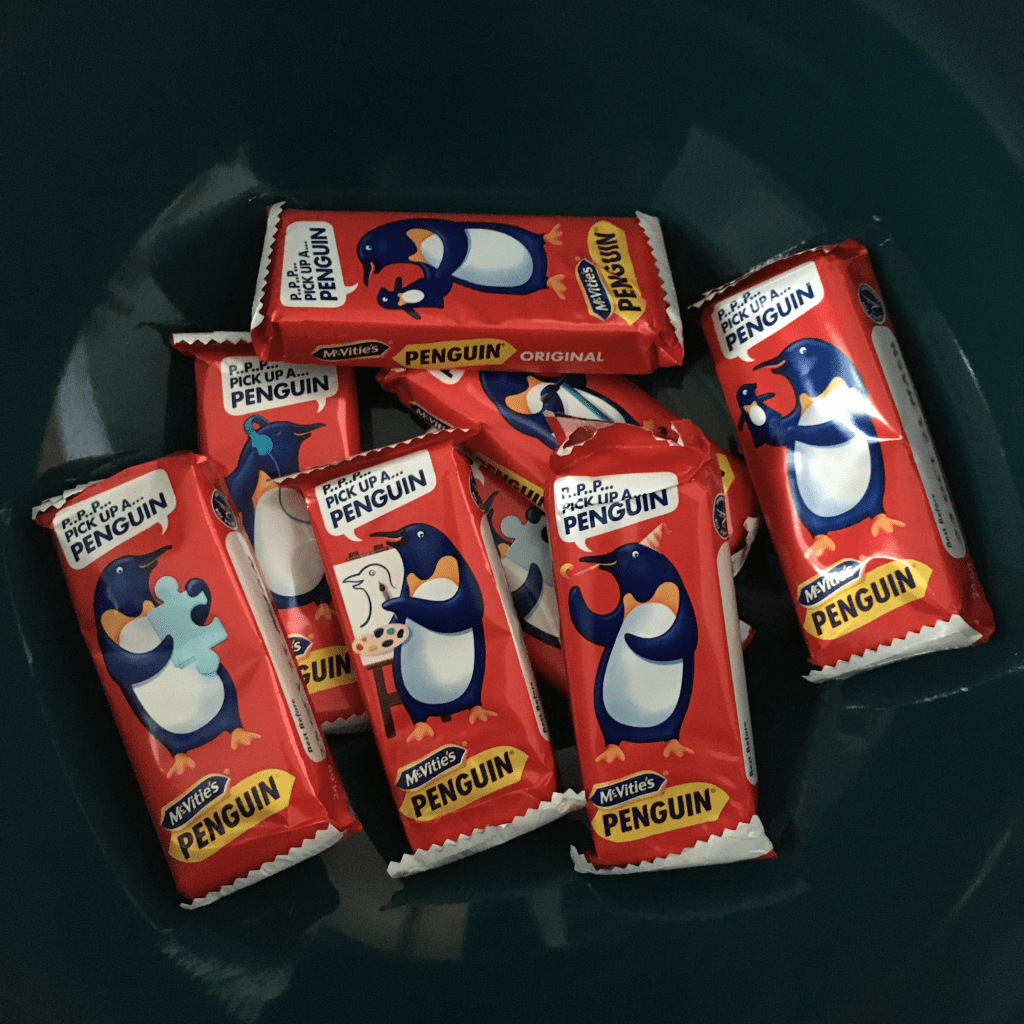
What with the cold and the gloom, I haven’t felt much like shopping for biscuits these last few weeks but I did p-p-p-pick up a penguin or eight from the local supermarket to see me through this wintery weather. It does the heart good to look in on the impromptu party they’re throwing in the writing room this week. The little fella with the hat and horn-blower is my favourite. (And before anyone asks, yes, they’re all from the same household.)

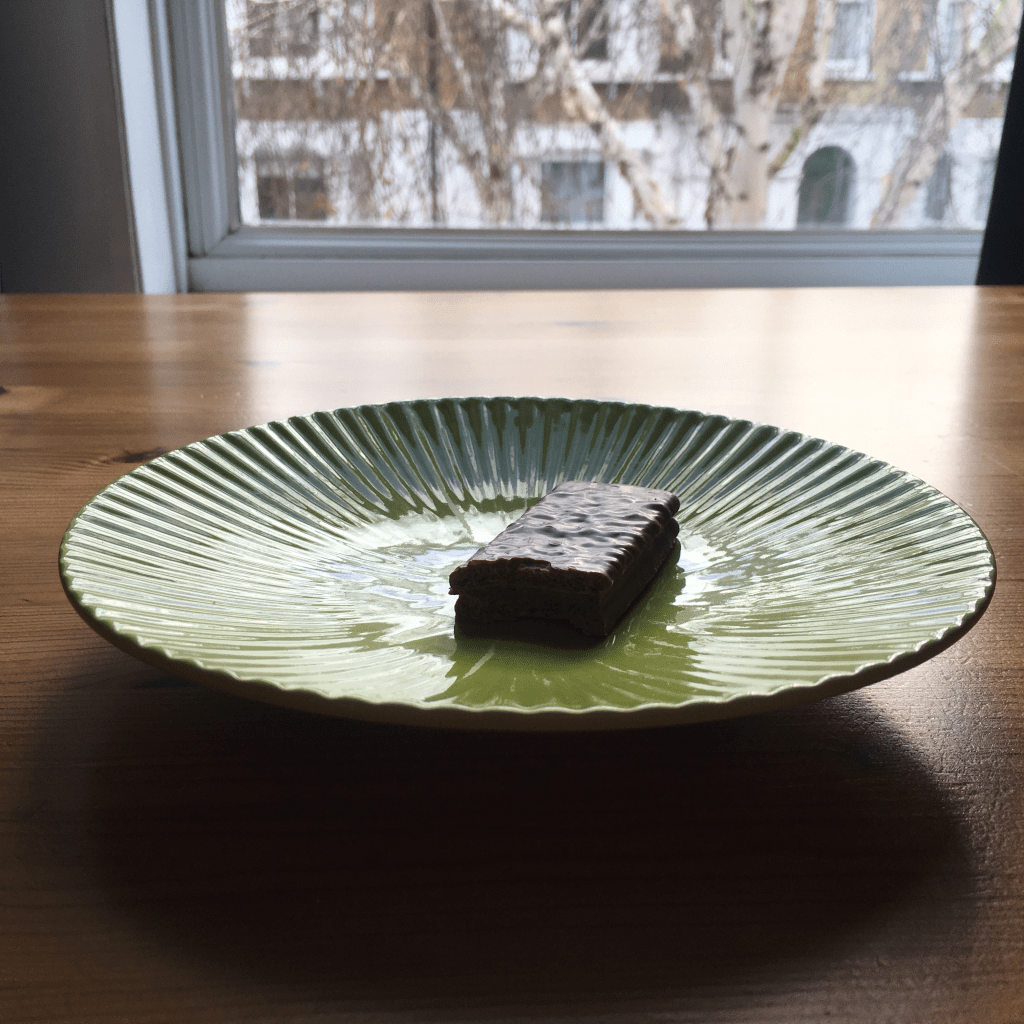
Penguins were a lunchbox staple of my childhood and I was happy to find they still come with jokes on their wrappers (‘How did the penguin pass his driving test?’ ‘He winged it.’). Judging from the plumage, these are probably kings or emperors. There’s no penguin design on the bar itself, a modest chocolate sandwich, but there’s something comfortingly solid about this species and they’ve certainly had their sincere and not so sincere imitators over the years from the dubious Puffin take-off to the high-flying Australian Tim Tam.

Penguins are not a feature of medieval bestiaries. The earliest possible sighting of any that Europeans were aware of may well have been the flightless ducks observed by the crew of the Portuguese explorer Vasco de Gama on his expedition to the Cape of Good Hope in 1497 (if so, the penguins surprised them by braying like donkeys). It’s a pity because bestiarists of all people would have appreciated this bird’s admirable qualities, its endearing clumsiness on shore and gracefulness in water for example, and still more its powers of endurance.

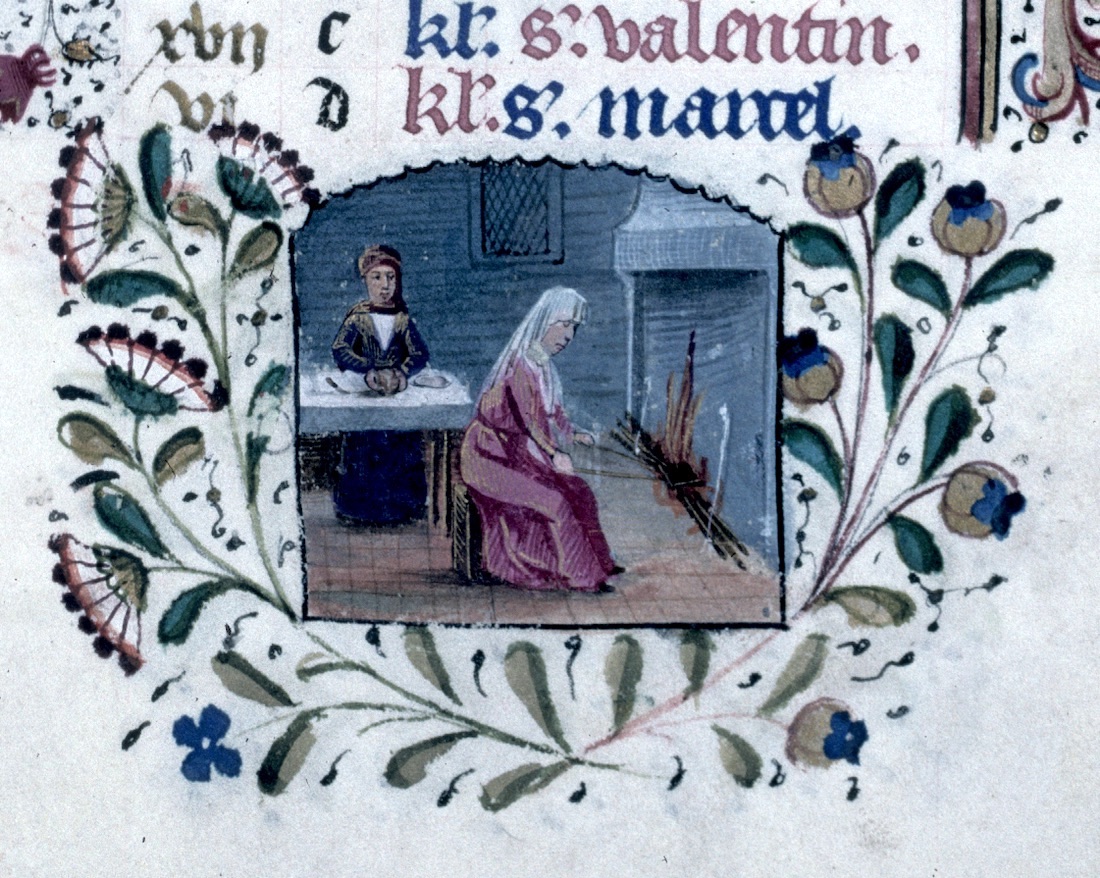
We’ve had need of that power these last few weeks. Collectively I suspect this has been the worst winter in recent memory in Britain and certainly within my lifetime. It’s been tough in ways few could have imagined a year or perhaps even half a year ago. And yet here we are. I understand better now why so many of the New Testament writers make such a virtue of endurance; it may not be the most appealing fruit of the spirit to try to cultivate, but how necessary it is for the long haul. ‘If we can winter this one out, we can summer anywhere,’ as Heaney put it, a quote that’s been circulating in lockdown for obvious reasons.

‘February’ in a 15th c. Book of Hours from Burgundy. (NY Public Library MS. Spencer 43, fol. 7r)

For the New Testament writers, the power of endurance promises us something more solid than simply wintering it out for the sake of survival, of gritting our teeth and rolling with the punches, although it’s definitely contained an element of that for me this month. St Paul tells us that it builds character and character hope, which begs the question of how we can find ways of enduring that allow us to emerge from this season in a stronger position spiritually than when we went into it?

When I look back to some of the toughest periods of my life before the pandemic I can see ways in which this strengthening process was already beginning. I haven’t doubted God’s presence with us throughout all this but I have come face to face with my own insufficiency to weather these new challenges without help, both from other people and from Him. There’s been a humbling and a levelling in that: a recognition that we’re all human, all vulnerable. But also new revelation that God’s grace has always been sufficient, his strength made more and more visible in our lives when we trust him with our weakness. So today my prayer for us all is that we might not only endure through this season but grow in hope and strength through it, inspired by the p-p-p-perseverance of the Penguin.

Further Delectation

What are the rival claims of the Penguin and the Tim Tam to biscuity greatness? Which Antarctic explorer was better at drawing penguins? How does a bird the same weight as a baby hippo get itself back out of the water? All your questions answered by the experts!

Enjoy a short but interesting read on medieval iconography for February from Princeton’s Index of Medieval Art site. Or if you’re impatient for the spring to come it may help to know it started on the 7th of February in the medieval calendar as the Clerk of Oxford explains in this lovely piece on early medieval celebrations of spring and its poetry.

No feathered friends where you are? Take a little time to tune in to some live penguin action from California. Recommended for a relaxing mini-break with a coffee and biscuit:

If you would like to see more entries more regularly and help keep this bestiary free of ads, you are welcome to contribute to the Biscuit Jar.
Jammie Dodgers

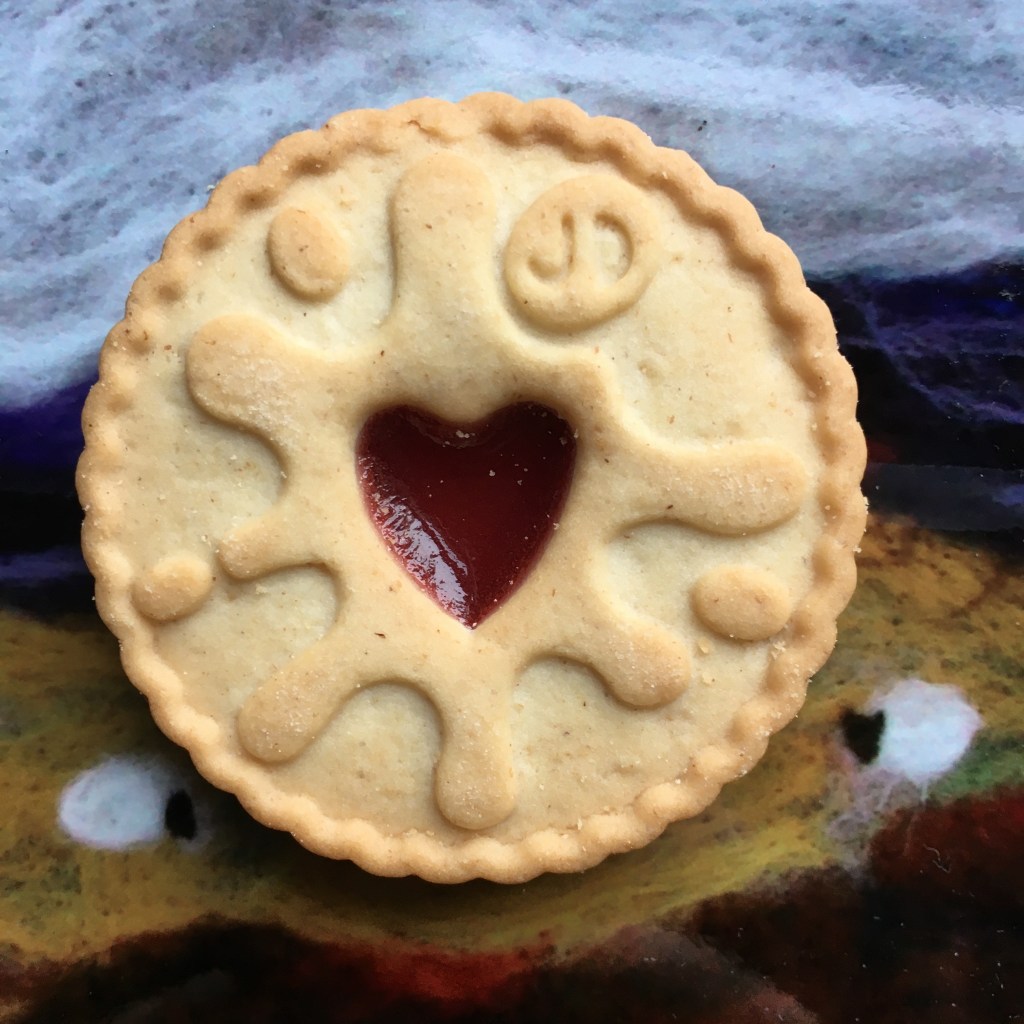
Way back at the beginning of the second lockdown I found myself craving Jammie Dodgers. As luck would have it they were on special at the local supermarket, but it had been so long since I’d bought them I was surprised to find their appearance and branding had undergone a bold cosmetic change. You can still see the old swirl-top pattern I remember in this recent article by Rachel Cooke, which confirms my view that many are turning to comfort biscuits in these trying times. In sympathy with the zeitgeist, the design now resembles a spillage at a jam factory. Still, these ones look very pleased with themselves sat on a plate in my new digs:

The company who make Jammie Dodgers, Burton’s, have been producing them in one form or another since the late 1940s. One — possibly apocryphal — story links them with Roger the Dodger of the long-running Beano comic. When I researched them further however, I found that the same biscuits have been in the news this year for distinctly un-comical reasons and we may find them in even greater demand this festive season if the Delivery Workers Guild goes ahead with its strike. So even comfort biscuits haven’t managed to dodge the shadow of 2020, it seems…

We listen to the evening news with its usual recital of shabbiness and horror, and God if we believe in him at all, seems remote and powerless, writes Frederick Buechner. But there are other times – often the most unexpected, unlikely times – when strong as life itself comes the sense that there is a holiness deeper than [the] shabbiness and horror and at the very heart of darkness a light unutterable.’ The apostle John might have agreed with him: The light shines in the darkness and the darkness has not overcome it, he writes in the prologue to his gospel, written in the glow of the extraordinary life of his friend Jesus of Nazareth.

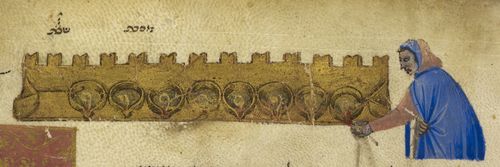
BL Oriental MS 5024 f. 19r

Light overcoming the darkness is also the message of the Jewish festival of Hanukkah, which begins this evening with the lighting of the first candle of the Menorah. Another apocryphal story tells how the Jews took back their temple after the Greek King Antiochus IV captured it in around 164 BC, desecrated the holy places, and made every effort to stop them practising their religion. At the re-dedication of the temple they only had enough of the consecrated oil to last for one day but the supplies miraculously stretched for seven until the new oil could be ready for burning. John gives us a glimpse of Jesus celebrating the festival in winter walking in Solomon’s Colonnade, a long pillared walkway not unlike a medieval cloister.

‘What if God became a human and lived with us?’ is the question John sets out to answer and you can read his gospel and the other gospel accounts of Jesus’ life or watch this recent TV adaptation if you want to know more of what happened along the way. I’ll admit I’m more than a little biscuit-obsessed these days, but to me the heart in the centre of the Dodger’s new splat speaks of the wonder of the Incarnation: of God looking on us with compassion in all our pain and confusion, horror and shabbiness, and sending himself as a human right into the heart of the mess.

BL Harley MS 4382 f.139

Further Delectation

Have a read of the Beano’s biscuit jokes (straight out of the Christmas Cracker school of humour) or have a go at making your own festive Jammie Dodgers.

Help support essential workers this Christmas. Let delivery companies like DHL know you’d like them to look after their drivers better. Ask your MP to support a pay-rise for NHS staff. Or consider whether you could help those on the frontlines of the food poverty crisis.

Prepare for Christmas with this medieval homily and meditation from the Clerk of Oxford’s modern counterpart. Listen to a beautiful twenty-first-century rendition of one of the oldest, loveliest hymns on the incarnation:

If you would like to see more entries more regularly and help keep this bestiary free of ads, you are welcome to contribute to the Biscuit Jar.

Macarons

To my mind, the Macaron (or French Macaroon if you want to be all English about it) is a bit like a Jaffa Cake in that opinions differ as to whether it’s a biscuit or not. You’ll be in no doubt this bestiary comes down firmly on the biscuit side of the argument from the existence of this entry, but on reflection it might be more strictly categorised as bakers’ confectionary (biscuit class). Previously I’d seen it as my calling to consume rather than concoct these lovely little creatures, but then around Easter I received the following kit from my sister grâce à the Honeywell Biscuit Company:

93818632_10158313733984859_6053972565121040384_oTruth be told I’ve had a bit of a thing for Macarons ever since a visit to one of Pierre Hermé‘s stores in Paris on a day that just turned out to be le jour du Macaron (a proof of providence if ever there was one). The high almond content made me hopeful this biscuit might be medieval in origin and legend has it that its first appearance was in the monasteries of medieval Venice, but the most exciting chapter in its history came when Catherine de Medici took the recipe to France, where it was eventually refined into the delicate sandwich form and produced in every colour and flavour the heart could desire. 
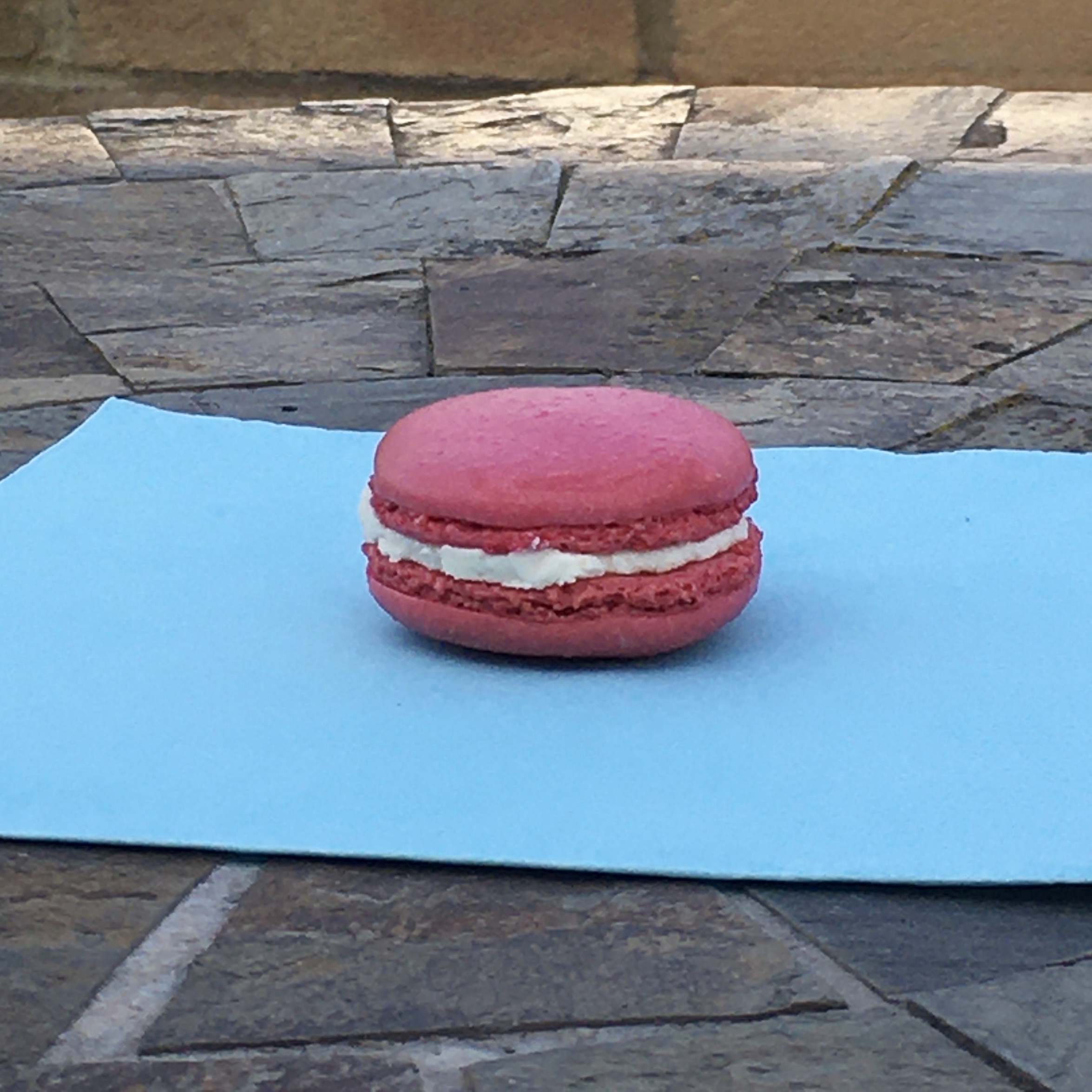
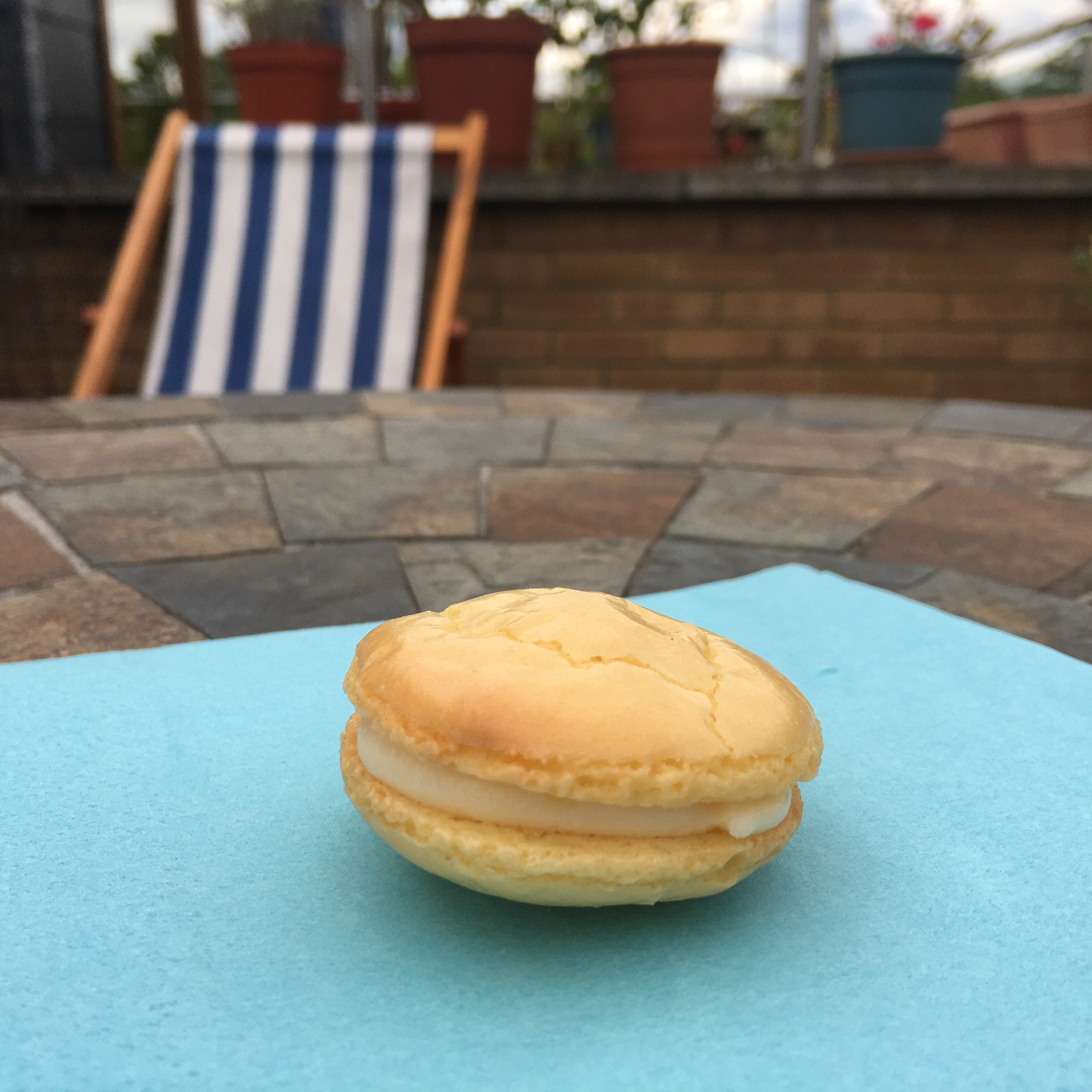
Nowadays the Macarons’ perfect roundness, evenness and sheer melt-in-the-mouth gorgeousness make them a pleasure of the highest order and what a feast of colour they provide for the eyes! I’m particularly in awe of those master bakers who excel at making them as they’re difficult to get right. I might not have plucked up the courage to try the kit at all were it not for a friend dropping some of her experiments round. Ellie has been perfecting the art of macaron-making during lockdown:

IMG_1610My kit from the Biscuit Company included a couple of icing tubes to pipe chick faces onto the Macarons after assembling them, but I decided not to make things too complicated for myself on my first try. I got off to a good start with the filling (butter icing and homemade lemon curd) but a rookie error in placing one tray of Macarons on the wrong side of the baking sheet which cost me in presentation later. Dropping the tray on the floor was the best bit – apparently it helps with eliminating air pockets – but the macarons still emerged from the oven a little cracked. What they lacked in texture they made up for in taste, however. The ‘shell’ was just a few millimetres thick, the ‘white’ beautifully light and tender, and the ‘yoke’ even softer and richer with that lemony burst at its heart.

IMG_1673The Macaron is a biscuit of great taste and beauty, but it’s also incredibly delicate – a delicacy in every sense of the word. Thinking about its fragility, I’m moved to reflect on the way the unwelcome intrusion of the pandemic into our everyday lives has ushered in a season in which we’ve become acutely aware of our own vulnerabilities and not just to the virus. For some it might be the ability to earn a living, preserve a peaceful home or stave off loneliness with face-to-face contact; the challenge of having too much time on your hands or paradoxically not enough. For many the membrane between our work and home lives has become a lot thinner now colleagues Zoom us from their kitchens and public figures speak to us from their at-home studies, often with family members drifting in and out. It can be hilarious but also homely and humbling to have this glimpse into each other’s domestic lives. A daily reminder that we’re all human with or without our public faces on.

These thoughts could easily lead into a meditation on the instability of life as depicted in the great wisdom literature of the bible, but many of us have already been wrestling with these lessons over the last few weeks and months. Instead I’m drawn to the comforting words about Jesus in the gospel of Matthew, quoting from the prophet Isaiah:

He will not crush a bruised reed or put out a flickering candle…

Tenderness towards the bruised and struggling has always been part of God’s mission and character. One positive outcome of the present time would be if as a society we learnt to be more compassionate and protective of the vulnerable, fragile places in ourselves and others.

Further Delectation

These days before Ascension Day are rogation days in the Church’s old calendar and you can read about them in the Clerk of Oxford’s blog here. It’s a time to bless the land, which seems peculiarly apt this year when in the quiet of lockdown nature has been such a blessing to those who are able to get outside to appreciate it.

May always feels such a medieval month and here’s another interesting piece by Michael Warren on medieval birds and birdsong. If you’re into medieval literature, you might like to pair it up with a reading of Chaucer’s Parliament of Fowls.

For anyone living alone or feeling alone right now, you might enjoy this beautiful recording of Sheppard’s Libera Nos (Deliver Us) by The Sixteen, which must be one of the loveliest things to come out of lockdown. Lots of love.

If you would like to see more entries more regularly and help keep this bestiary free of ads, you are welcome to contribute to the Biscuit Jar

The Oreo

Consider the Oreo… As many New Worlders celebrate their independence today, I thought it high time we profiled one of their national biscuits on the Bestiary (for the convenience of speakers of American English I shall be referring to it here as a cookie). It’s a measure of how popular Oreos have become across the pond that you can find them in the wilds of Yorkshire now. Here are four sitting pretty on some old Blue Willow china, no doubt waiting for a glass of milk to accompany them…

IMG_0932I was surprised to discover that the Oreo first appeared in 1912 around the same time as equivalent sandwich styles premiered in Britain (c.f. the Bourbon and Custard Cream). Even today, America’s Oreos are still produced by Nabisco, the successors of the wonderfully named National Biscuit Company (a name which itself belongs to that bygone era when Old and New World biscuits were largely the same thing).

chelsea-market-national-biscuit-company-factory.jpg
New York, New York and Nabisco (image from Chelsea Market and The Smithsonian)

Intriguingly, this compact and demure little cookie manages to attracts more controversy than the Knights Templar and the more you delve into the question of the Oreo’s spiritual significance the more you’ll find a dazzling, and frankly gnostic, range of exegeses on the market. While it’s not the first time we’ve profiled embossed cookies on the Bestiary, the intricacy and regularity of the Oreo’s design bears is worth commenting on. This excellent article from Edible Geography on the unsung heroes of biscuit embossing and the history of the Oreo is worth some perusal (I had no idea that the current design only dates to 1952, or that the Oreo has a very Greek-sounding rival, the Hydrox, with an even more venerable history).

IMG_5410
Photo credit: Olivia Brambill

The nearest thing I can find to a commentary on embossing in the bible comes in St Paul’s statements in Romans about Christians being conformed to the image of Christ and not the world’s pattern but if we’re honest, such advice sits uncomfortably with the Western mindset that freedom is ‘a breakfast food’, as one brilliant New World poet put it. Perhaps it plays too much on our fears that faith means adopting a sort of cookie-cutter saintliness that leaves no room for self-expression. For the New Testament writers, however, being conformed to Christ’s image offers the ultimate freedom from all creation’s ‘bondage to decay’ and the shackles of sin and death that accompany it — what Paul (and many of America’s founding fathers) would have understood as the glorious liberty of the children of God.

Further Delectation

A masterclass on the art of Oreo-eating from Jess and her Dad (but if all this seems very complicated, just experiment with your own inimitable style – whatever that is!)

Give the humble Hydrox some love – or at least a read of its history in the Atlas Obscura.

Don’t have any Oreos in the house to celebrate your independence with? Have a consolatory read of e e cummings’ loveliest medieval-themed poem.

If you’ve landed here straight from the High Middle Ages and find yourself a bit flummoxed by all these bizarre references to a New World, you can catch up with Amerigo Vespucci‘s correspondence on the subject or these more recent Letters from America and newfangled experiments in Netherlandish cartography:

400px-OrteliusWorldMap1570.jpg

If you would like to see more entries more regularly and help keep this bestiary free of ads, you are welcome to contribute to the Biscuit Jar

Stroopwafels

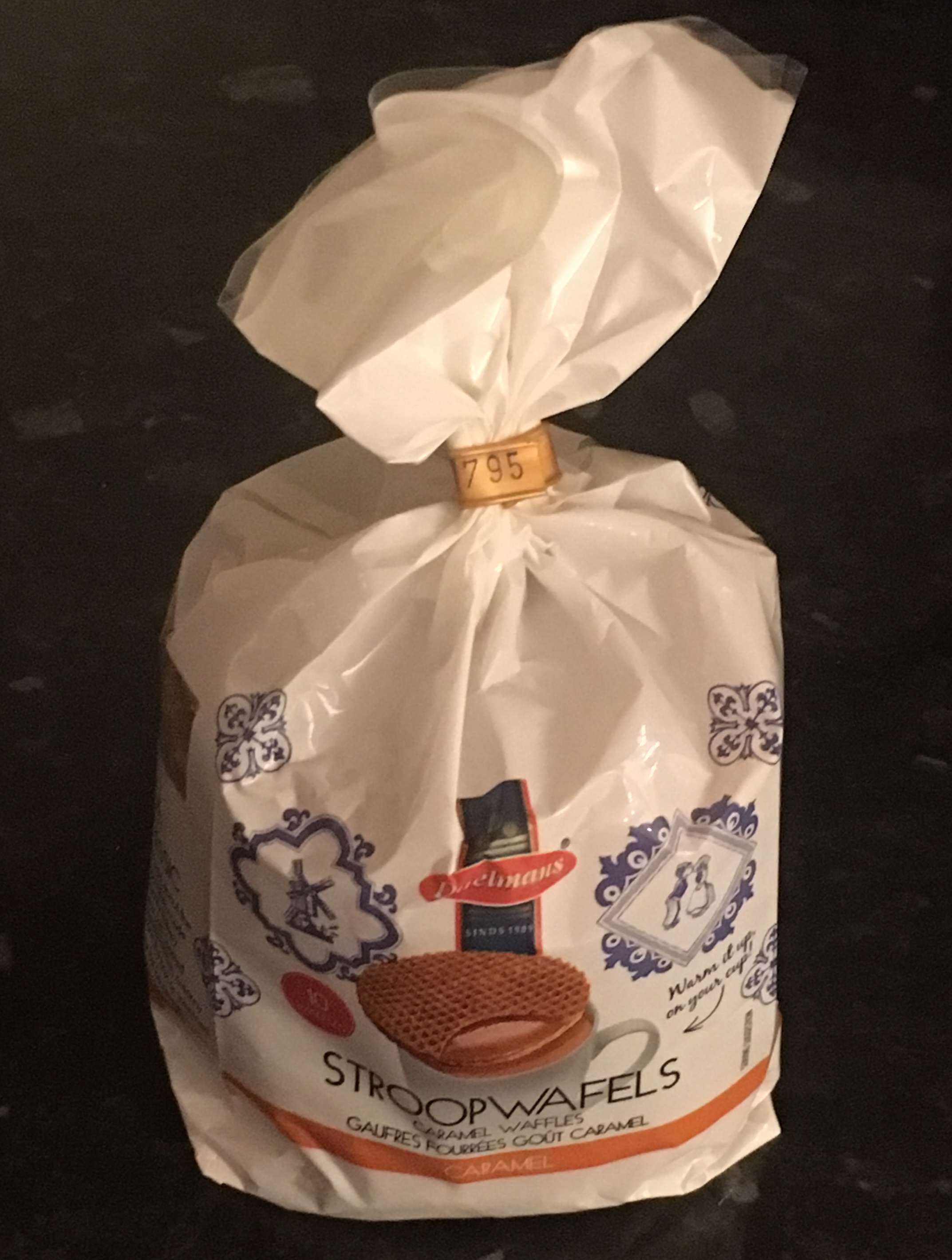
Beautiful, isn’t it? And to think it’s been only a few weeks since I discovered the Stroopwafel was a biscuit! (If you don’t believe me, visit Holland’s leading tourism site which describes it as a ‘combination of two cookies with a caramel centre’). With its rounded shape and syrupy goodness, it’s the closest thing I can think of to a pancake in biscuit form so this seems like a good day to catalogue it here…

img_0234.jpgI’ve been a dedicated consumer of Stroopwafels for years now and they’re about the only food I might be tempted to stockpile in the event of a no-deal Brexit. You can find them in coffee shops, but for my money the best – and best value – ones are made by the Dutch company Daelmans and available to buy in supermarkets in larger packs. The recommended way to eat them is to balance them on a mug of hot tea or coffee for a minute until the outer waffle warms through and the caramel becomes soft and gooey. Alas, these delightful creatures are pretty much spun from sugar, but arguably this makes them the perfect indulgence for Pancake Day.

Shrove Tuesday is known as Vastenavond in the Netherlands, and, as the name suggests, marks the final evening before Lent’s 40-day fast. As in many other parts of Europe, Lent was preceded by three days of Carnival in medieval Holland: a season of license and celebration where music, entertainment and civic processions – and even uproar in the streets on occasion – was the order of the day (and night). In the medieval imagination, Lent and Carnival were often depicted as slugging it out in an imaginary battle, as in this famous painting by Pieter Brueghel the Elder in which you can see King Carnival (with a pie on his head) brandishing a spit of meat at Lady Lent (in a habit and bee-hive):

Pieter_Bruegel_d._Ä._066.jpgI’m afraid any honied waffles in the vicinity would almost certainly be rooting for King Carnival as it’s hard to imagine many biscuits being eaten on Ash Wednesday except charcoal ones. For medieval Christians, Carnival probably represented a welcome letting off of steam before the fast began, or, more philosophically, a counterbalance to Lent’s mood of contrition and renunciation. Both the Dutch Vastenavond and the English word Shrove carry the suggestion of preparation for Lent more than Mardi Gras, although Shrovetide in England was also a season of license. As the final day before the long fast, Shrove Tuesday combined elements of both as Christians prepared by being shriven (making confession) and celebrating with treats that were meat-less.
IMG_0191 But what has all this to do with Stroopwafels, you may ask? Particularly when the point of Lent – and of fasting in general – is to focus on things that are more important than material satisfactions, since people cannot live on bread (or even biscuits) alone? As a season of renunciation and reflection, Lent offers us a sober but ultimately healing space to sift our goals and priorities, to humble ourselves where we need humbling, and soften our hearts where they are stiff and cold.

And this is where the example of the Stroopwafel comes in, for just as the caramel needs to be softened by the warmth of the tea below it, so our hearts can’t be changed except by the work of the holy spirit in our lives. ‘I will give you a new heart, and I will put a new spirit in you. I will take out your stony, stubborn heart and give you a tender, responsive heart,’ says the famous passage in Ezekiel – a promise I’ve grown to treasure as I’ve watched it working in my own life, little by little, in ways I never thought it could.

Further Delectation

Show the Bake-off contestants how it’s done and make your own Stroopwafels for Shrove Tuesday.

Celebrate the last night of Carnival with a dance from medieval Gelderland (or something) with bonus glowering from Rufus Sewell:

If you would like to see more entries more regularly and help keep this bestiary free of ads, you are welcome to contribute to the Biscuit Jar

Linecké Cukroví

In the Fourth Week of Advent my Czech friend gave to me… six beautiful handmade biscuits. At first glance they appear to be a daintier kind of Jammy Dodger – a delicate little jam and shortbread sandwich that would look quite at home in Alice’s Wonderland – but a little research reveals that they are in fact a special type of biscuit called Linecké Cukroví traditionally eaten in the Czech Republic at Christmas time. Katka assures me that the ones her mother makes are better, but I think these are perfect and very yummy indeed with a cup of coffee.

IMG_5282
The vivid colour and translucency of the jam reminded me of stained glass, and glass-making too belongs to a tradition of Czech craftsmanship dating back to at least the thirteenth century when it was part of the Kingdom of Bohemia.  It’s also the home of a medieval king long distinguished for his charity at Christmas: Good King Wenceslas, or Vaclav the Good as he is known in Central Europe. The English carol about him taking food to peasants is very new-fangled, but like Britain’s King Arthur it is said that if the Republic is ever in peril his statue in Wenceslaus Square will come to life and lead an army to victory with a legendary sword, bringing peace to the land.

With this in mind, it didn’t take me long to find a spiritual significance for the Linecké Cukroví. In one of the most famous passages of the New Testament St Paul talks about life in this world as an existence in which we only ever apprehend the real nature of things dimly, as if through a glass. ‘For now we see through a glass darkly; but then face to face: now I know in part; but then shall I know even as also I am known…’ This note of longing to know more fully and see better than we do at present is also a guiding theme of the ‘O’ Antiphons which the Catholic and Anglican church pray during this last week of Advent. Today’s Antiphon ‘O Oriens’ speaks of the longing of those walking in darkness looking for the light to come, and tomorrow’s ‘O Rex Gentium’ of the longing for the coming of the king of all nations and the peace he brings: a good sentence for the closing of Advent and these lovely Christmas gifts.

Further Delectation

Take a virtual tour of the stained glass in St Vitus Cathedral, where Wenceslas I is buried.

Have a go at whipping up your own Feast of Stephen with this Linecke Cukrovi recipe or some more Christmas biscuit recipes from around the world.

Enjoy these Advent Antiphon poems by Malcolm Guite or listen to Will Todd’s The Call of Wisdom a particularly beautiful album for Advent recorded by Tenebrae choir.

Music-making was a large part of Christmas celebrations in the Middle Ages. This beautiful Bohemian nativity scene is tucked away in a Cistercian book of liturgical music (image via Switzerland’s Central Library in Lucerne).

11331793206_cb0a2f61a1_b.jpg

If you would like to see more entries more regularly and help keep this bestiary free of ads, you are welcome to contribute to the Biscuit Jar


The Maple Cream Cookie

It’s autumn again and far too long since my last biscuit. This month I’m going to be blogging on the all-absorbing subject of the Maple Cream Cookie, a present from my friend Olivia who brought some back for me from a holiday to Canada in May. (Disclaimer: when I started this bestiary, it was my modest ambition to catalogue the 30 or so species of biscuit most plentiful to the British Isles, but somehow word has got around and I now have a whole shelf of offerings from America, Canada, South Korea and the Czech Republic so hold on to your hat-boxes, dear readers, we’re going to be travelling a lot further than planned).

img_2996

It would be hard to find a biscuit more Canadian-looking than this one, shaped to resemble a maple leaf albeit a little less delicately than the real McCoy. These have survived the voyage across the pond magnificently with only one hairline crack to show for it. The packaging also gets a thumbs up from this Brit: focused as I was on the comestibles, it was only when I went to photograph it that I noticed the picture of the Niagara Falls.

As this is the first ‘sandwich’ this bestiary has featured, it’s worth saying a bit about this special branch of the biscuit family (a branch big enough to embrace both the Oreo and the Custard Cream). The obvious advantage is that you get TWICE the biscuit in one mouthful, plus a delicious filling used as a kind of confectionary mortar to cement them together (although really the whole product is less like a sandwich than a heavy-weight macaroon).

img_3007

Even after five months on the shelf in our kitchen these still smelt strongly of maple syrup which is another plus point in my book, maple syrup being some ambrosia of the gods. Unlike the gods of the Greek Pantheon, however, these cookies had softened with age, so although they were still comfortably within their use-by-date it would be best to eat these straightaway for maximum pleasure.

I don’t have to look too far from the tree for a moral for this biscuit. Sic gloria transit mundi: like the leaves of autumn and the Maple Cream Cookie, thus passes the glory of this world. A medieval rejoinder can be found in the Book of Isaiah (a prophet and a poet): exsiccatum est faenum cecidit flos verbum autem Dei nostri stabit in aeternum/ ‘the grass withers and the flowers fade, but the word of our God stands for ever.’ To my mind, the awareness of autumn’s decay and winter’s mortality has the tendency to alter almost every perspective on life as we’re living it in the present: sometimes for the sadder and sometimes for the better, but always for the wiser in the end.

This slideshow requires JavaScript.

Further Delectation

What, it’s not enough that you get a slide-show of biscuits and flowers? How about a few exciting things to do with Maple Syrup then…

A glimpse of a summer beyond the grief of winter (music from the Medieval Baebes and lyrics from the Middle English Pearl, with various images from YouTuber Arthur Foster).

Is that the time? If you don’t have any cookies to hand, you can still feast your eyes on this month’s illumination from the Middle Age’s most famous book of hours (grâce à iBiblio.org).

october.jpg

If you would like to see more entries more regularly and help keep this bestiary free of ads, you are welcome to contribute to the Biscuit Jar