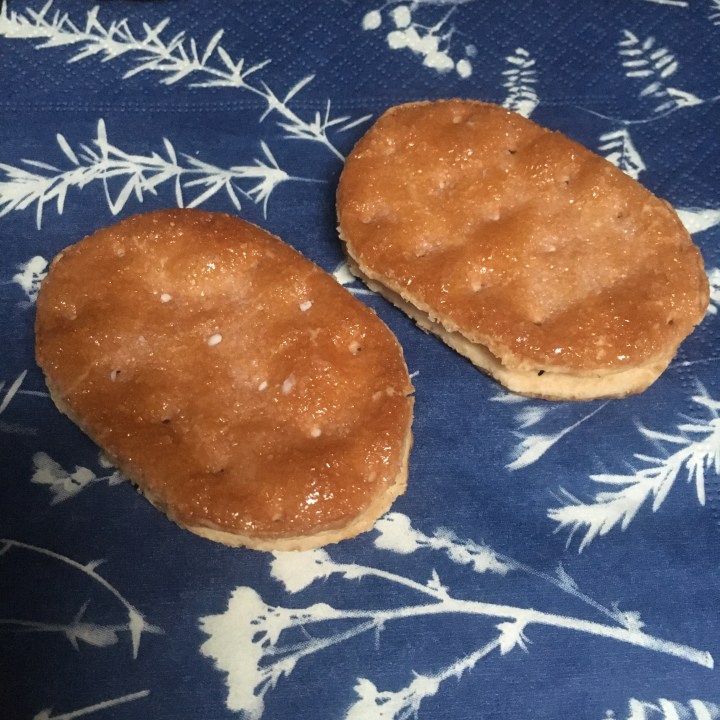
Appropriately enough given its Norse associations, late November’s biscuit is the gift of a cat called Master Loki and comes to us fresh from the bracing climes of Norway, a favoured holiday destination of Master Loki’s staff. The name of this species is Ballerina and it won’t surprise you to know that the word means the same thing in Scandinavia as in Britain, or that it is on long-term loan to us from the Italians, who are generous like that. The company who makes the Ballerina biscuits, Goteborgs Kex, is Swedish and its parent company, Norwegian Orkia, is the largest supper of brand goods for convince stores in both Norway and Sweden. In its size, compactness and solidity the Ballerina has much in common with the popular biscuit brands of Britain, but with one intriguing difference that makes it a paradox of biscuit design: its two very different sides. Here’s the recto:
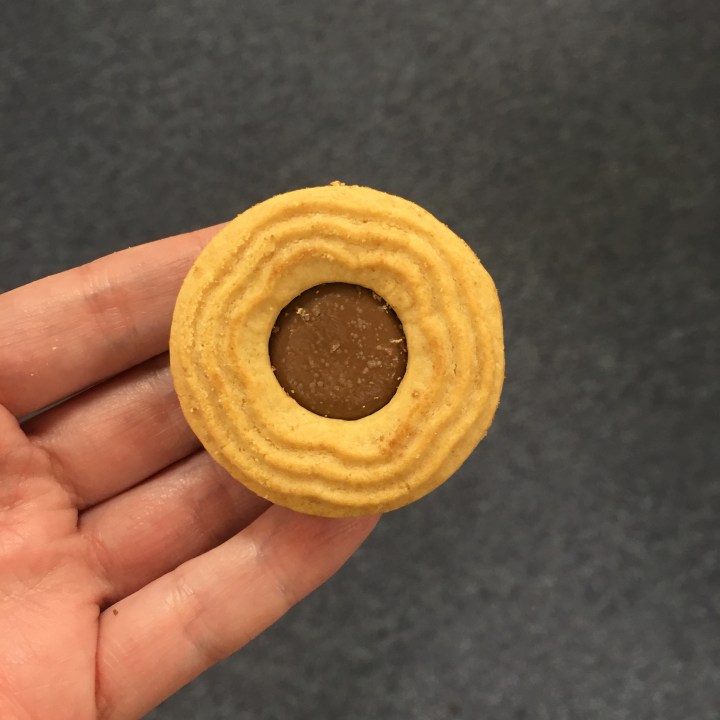
And here’s the verso:

As you can see, this is less yin and yang than Pushmi-Pullyu or perhaps two mass-produced biscuits for the price of one. Not that my tastebuds were at all put out by the incongruity, but intellectually I couldn’t quite grasp the reason for combining these two apparently unrelated designs.
The reason for the name also intrigued me and with a bit of imagination the recto side does look a bit like a tutu. Here’s a little reminder of what other famous ballerinas get up to from the wonderful Gina Storm Jensen, a Norwegian dancer who performs with the Royal Ballet:
Like their biscuity namesakes, human ballerinas combine two excellent characteristics you don’t often see operating together elsewhere: grace and strength. It takes sensitivity and understanding of the way the body moves through space to be able to create motions this exquisitely graceful, and it takes many hours of work to build up the levels of fitness and stamina needed to hold each position and execute each step with precision and care.
It feels like grace and strength of a less visible kind are badly needed in our world at present. ‘Patient endurance is what you need right now,’ counsels the writer to the Hebrews and I think it’s good advice for us. It’s so easy to be caught off balance when temptations to irritation, weariness and worry seem to be coming at us from so many angles. Stepping carefully through the trying days, especially when we are feeling tired or provoked in our spirits, can be a challenge, but I’ve never seen the value of holding our positions with strength and grace quite so much.
Further Delectation
Here for the dancing but having trouble keeping your balance? Try the Biscuit Ballerina – with a cup of tea and a smile.
Learn how to step carefully through the world the medieval way… (a German academic shows us how it’s done!)
The loveliest medieval poem I know of about a little white cat (trans. Seamus Heaney).
Eleanor Barraclough writes about the early Scandinavians as travellers, raiders, converts and chameleons in History Today (the image below is from a C14th MS reproduced there).

If you would like to see more entries more regularly and help keep this bestiary free of ads, you are welcome to contribute to the Biscuit Jar.
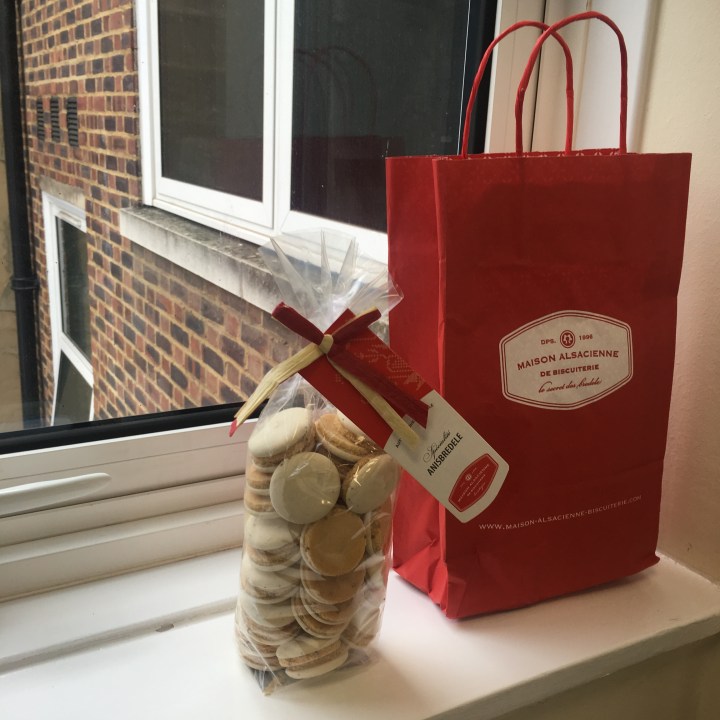 Bredele are treat biscuits enjoyed as Christmas cookies or petits four in France. The earliest recipes date back to fourteenth-century Strasbourg so they come with an excellent medieval pedigree also, but I have to admit I’ve only had one or two so far as liquorice is one of the few flavours I genuinely can’t abide. (This is an eccentricity of my own though and I’m pleased to say they’ve been popular with office mates who don’t share my prejudices!)
 In settling on a medieval-style sentence for the bredele, I couldn’t help remembering the famous line in the Lord’s Prayer: give us this day our daily bread. I doubt the most free-wheeling translator has ever stretched this into daily bredele, but the idea leads to an interesting question: is it OK to ask God for the little things as well as the big?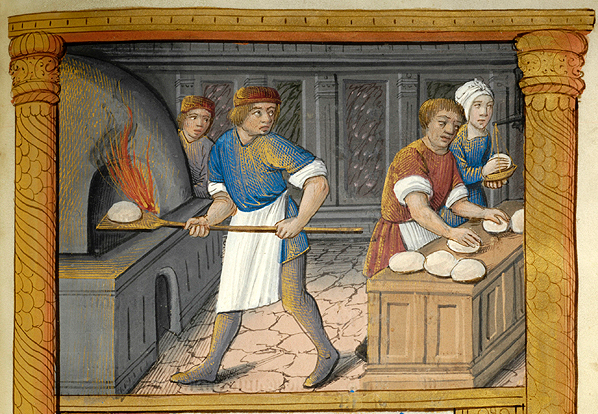



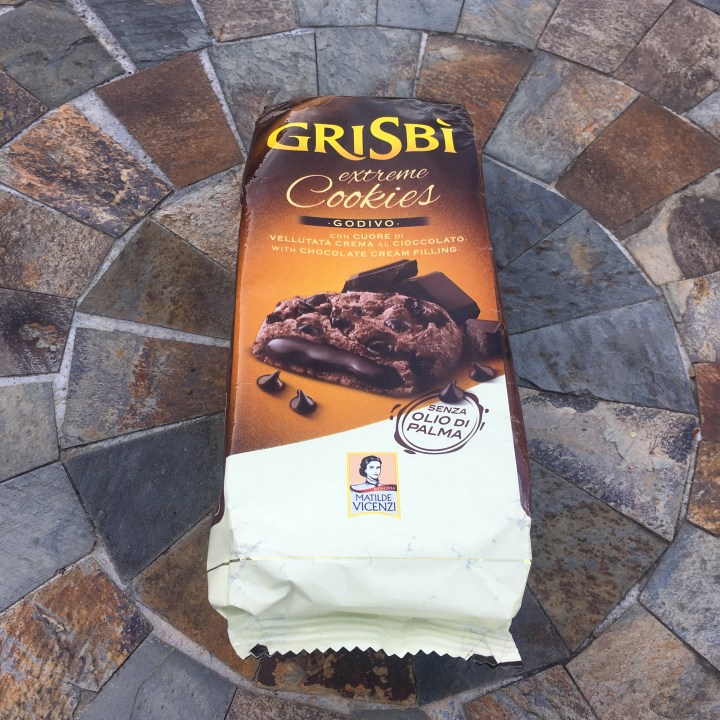
 While I don’t like ranking biscuits any more than people, I have to say this is chocolate of a high order and so rich it makes for the perfect dessert biscuit (more on that elusive genre at a later date). The gooeyness of the centre was an unexpected surprise, especially for an Italian biscuit as these tend to be dryer than the British sort. Anyone eyeing it from the outside could be forgiven for imagining it was the same texture all the way through and I must say I’m intrigued by the combination of outer crumbliness and inner creaminess its makers have managed to pull off.
 For the moral I couldn’t help but think of the prophet Samuel’s words when choosing a new king for Israel: ‘People judge by outward appearances but the Lord looks at the heart.’ Leaving aside the fact that the Lord’s choice, David, was apparently good-looking as well as goodhearted (some kings get all the luck), Samuel’s words are a sober reminder that what impresses on the surface does not necessarily make the best criteria for judging an individual’s worthiness or fitness for office.


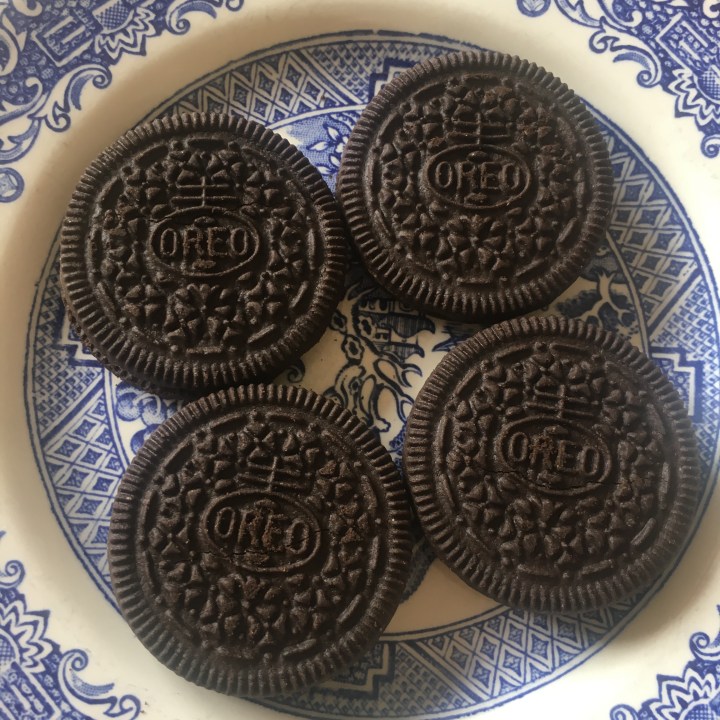 I was surprised to discover that the Oreo first appeared in 1912 around the same time as equivalent sandwich styles premiered in Britain (c.f. the Bourbon and Custard Cream). Even today, America’s Oreos are still produced by Nabisco, the successors of the wonderfully named National Biscuit Company (a name which itself belongs to that bygone era when Old and New World biscuits were largely the same thing).



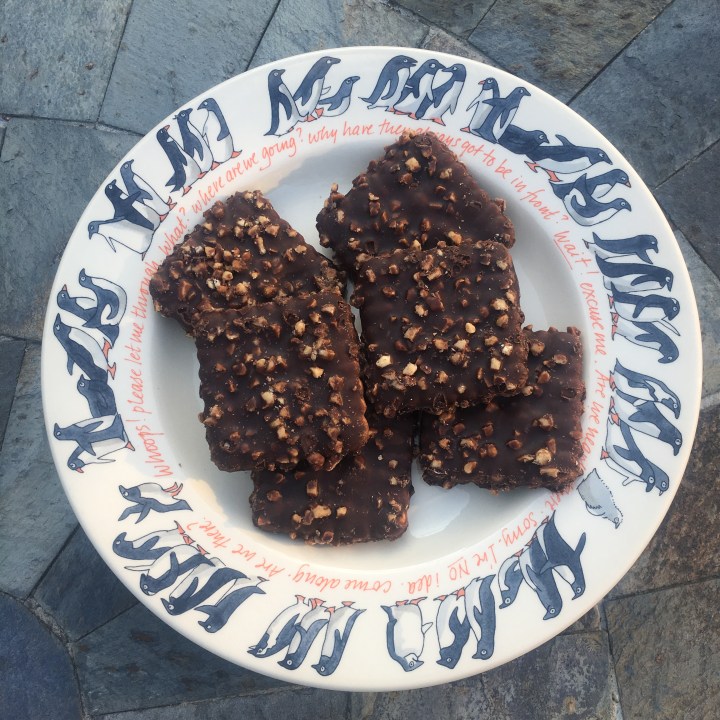
 Chocoline cookies are produced by a company in Minsk, whose name seems to be Chocoladovo transliterated from Belarussian. This particular incarnation of Chocoline is topped with a scattering of milled roast peanuts partially coated by a layer of soft chocolate, and the dimensions (5cm squares to about 8 or 9mm depth) seemed a bit unusual to me, probably because British brands look and feel chunkier. The peanut version was less crunchy in texture than I’d expected from the picture and the coating more sugary than nutty, but they were pleasant enough with a coffee after noon or dinner and thin enough to justify eating three or four at a push, or maybe six if you’re a penguin…