So this year Easter may have trumped the Bard’s Birthday as the greater and more moveable feast, but I did get time for a quick foray into the world of Elizabethan Jumbles in honour of Master Shakespeare. If you’re in any wise a biscuit-baker or couch-dweller you might be familiar with these intricately knotted creatures from their appearance on the Great British Bake-Off. Jumbles have been around since at least 1585 when the first recipe for them was printed in Thomas Dawson’s The Good Huswife’s Jewell, which is the nearest thing I can find to a sixteenth-century Mrs Beeton. It may or may not be true that they were rushed out to the Field of Bosworth by order of Richard III, but Bosworth Jumbles (‘s’ shaped, apparently) are a traditional part of Leicestershire cuisine so perhaps the Yorkists had their own version. Here are two discussing it on the eve of battle…
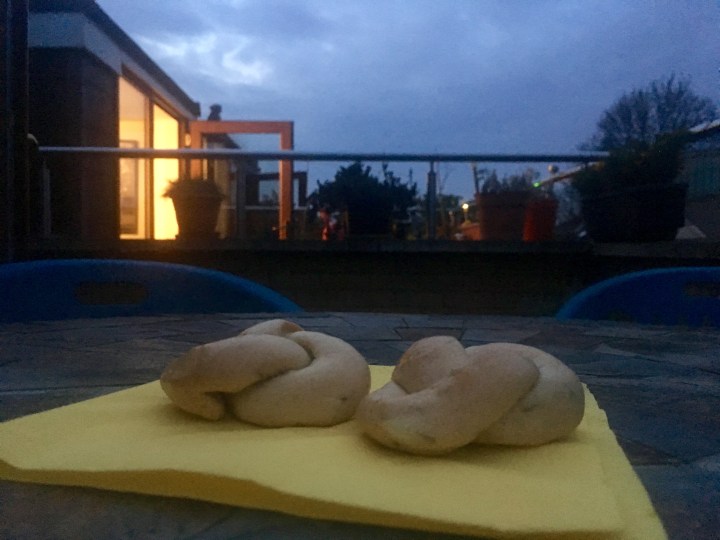 In the end I followed Dawson’s recipe, encouraged by Sanne Berry’s baking blog and a glass of the wine left over from Easter Sunday lunch. I have to say it was really fun keeping company with Elizabethan bakers for a few hours and I soon became engrossed in the unfamiliar twists and turns of Tudor biscuit-making. Mixing and rolling the dough into ropes was easy, but it took me a while to get the hang of the knot-tying part. After several unsatisfactory attempts at a True Love Knot (sorry, Shakespeare!) I decided to keep things simple and Trefoil.
If the weaving of biscuits was new to me, the really novel experience was boiling them before baking them in the oven. Dawson recommends dropping them in ‘seething water’, which I did with some trepidation having never cooked anything resembling a biscuit by this method before. Thankfully the unbaked Jumbles did not disintegrate on a rolling boil but rose to the surface like Gnocchi after just a few minutes. I then popped them in the oven at 160 C and was rewarded with this rather nice-looking batch within half an hour:
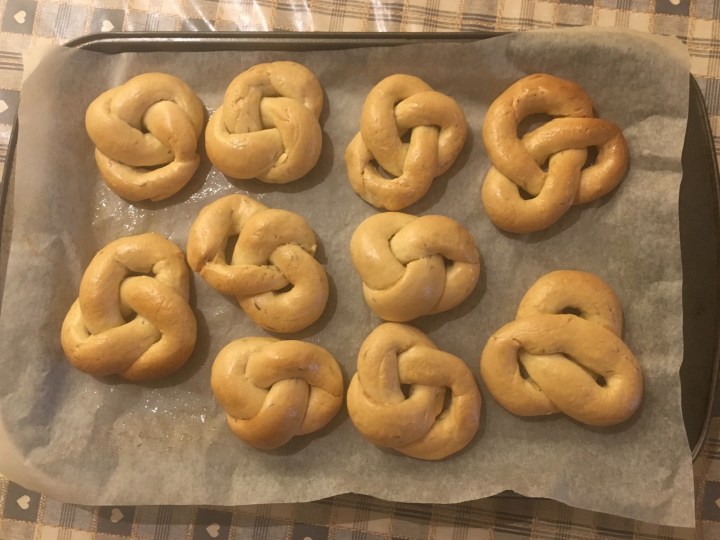 The first thing you might notice about the finished biscuits is their unusually smooth and shiny surface, the boiling having given them the effect of a gentle glaze. They were tastiest straight out of the oven with a strong cup of tea (Yorkshire, naturally). Personally, I wouldn’t want to chew on more than one at a time given their formidable density, however from a practical angle it’s easy to see how the Jumbles’ toughness and protective glazing makes them more durable and portable than most modern biscuit types. These specimens could easily last a week, preferably softened up with some tea-dipping after cooling overnight, and apart from being boiled within an inch of their lives their most distinctive characteristic is their knot design.
 Considering how fond the Tudors were of rings, wreaths and knots in general, I couldn’t help but remember how it was the metaphorical tying of a knot by Elizabeth of York and Henry Tudor that brought a symbolic end to the Wars of the Roses in 1486. Of course Shakespeare would draw on the histories of that war for some of his earliest dramatic material about a century later; his plays, too, explore the role of love and marriage in uniting communities, and even today it’s how many comedies end and loose plot-ends are tied. When Shakespeare’s Agrippa councils Caesar to marry his sister Octavia to Antony, he advocates it as a means of knitting both men’s hearts ‘with an unslipping knot’. Such bonds offered a way of turning strangers into fathers and mothers, brothers and sisters (in the true fiction of the law at least), supporting the wider ministry of reconciliation Christians are called to practice in the world at large.
‘Blessed be the tie that binds our hearts in Christian love / The fellowship of kindred minds is like to that above,’ as the old hymn puts it – but as heavenly as the fellowship or even marriage of true minds may be, it often seems like a lost Eden when each day brings painful evidence that we don’t all think alike. Yet even where agreement or fellowship isn’t possible, kindness and courtesy can be. Jesus wasn’t joking when he asked us to love our enemies and part of the reward for doing so may be to find that they are not quite the enemies we thought they were.
Further Delectation
Check out Sanne Berry’s wonderful Dollop of History, for your own Jumble-making and many other excellent recipes from times past.
Can there really be such a thing as a marriage of true minds? Have a listen to the lovely Patrick Stewart reading Sonnet 116 and decide for yourself with a glass of sack.
Bring your Jumbles to Shakespeare’s Globe for an afternoon of quality theatre. The main season is now open if you want to sneak a look at the programme.
Take a virtual flying trip through seventeenth-century London just a few years after Shakespeare quit it (as imagined by students of De Montford University using contemporary sources from before the Great Fire):
If you would like to see more entries more regularly and help keep this bestiary free of ads, you are welcome to contribute to the Biscuit Jar.
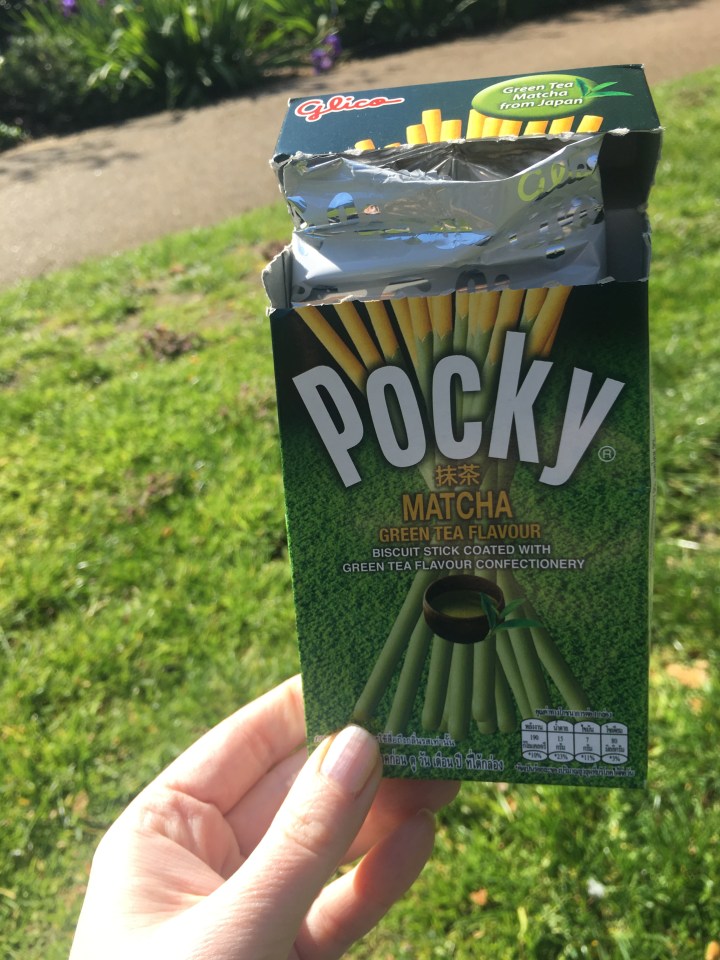
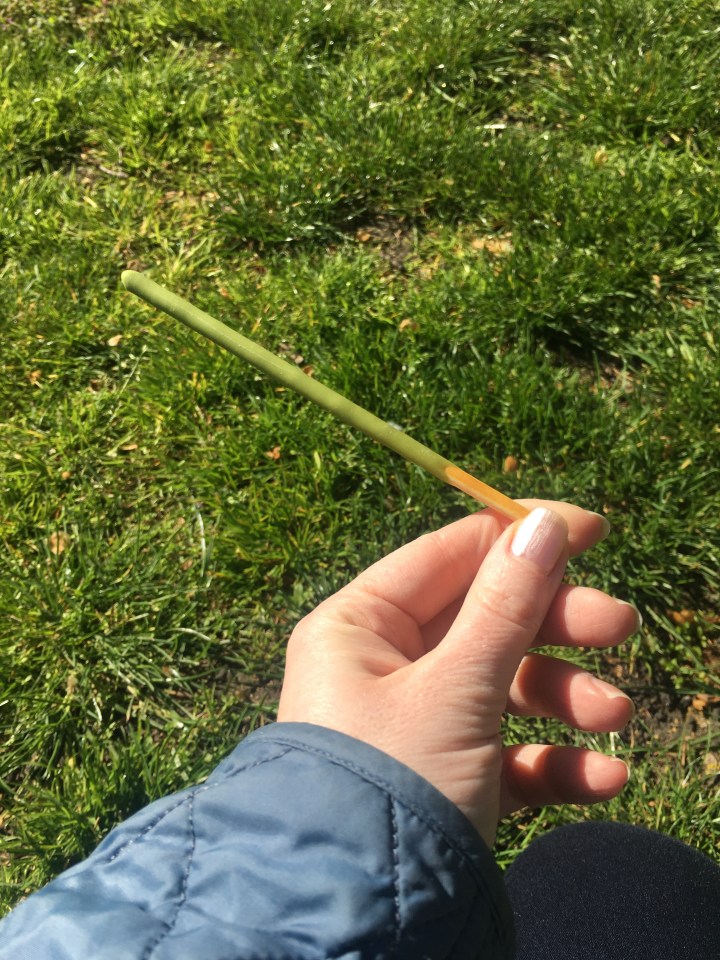

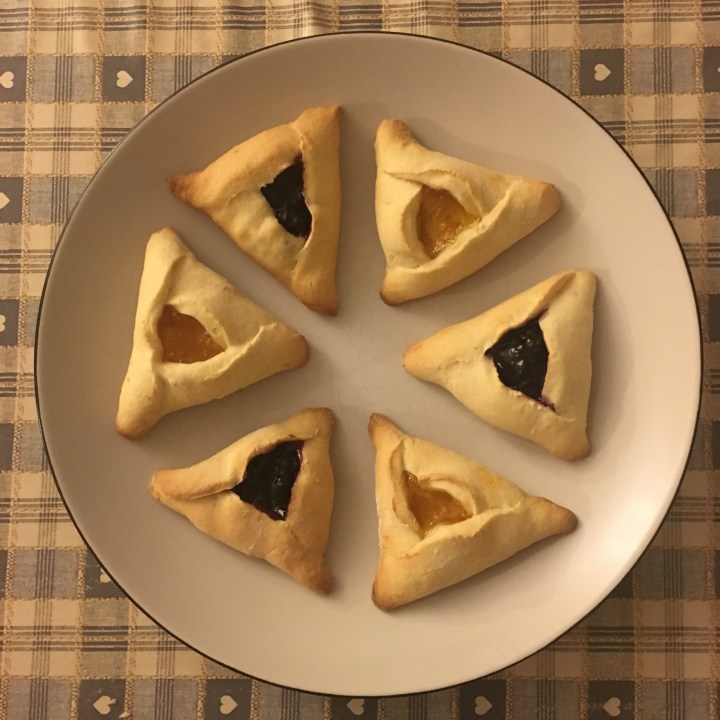 These biscuits are made from a
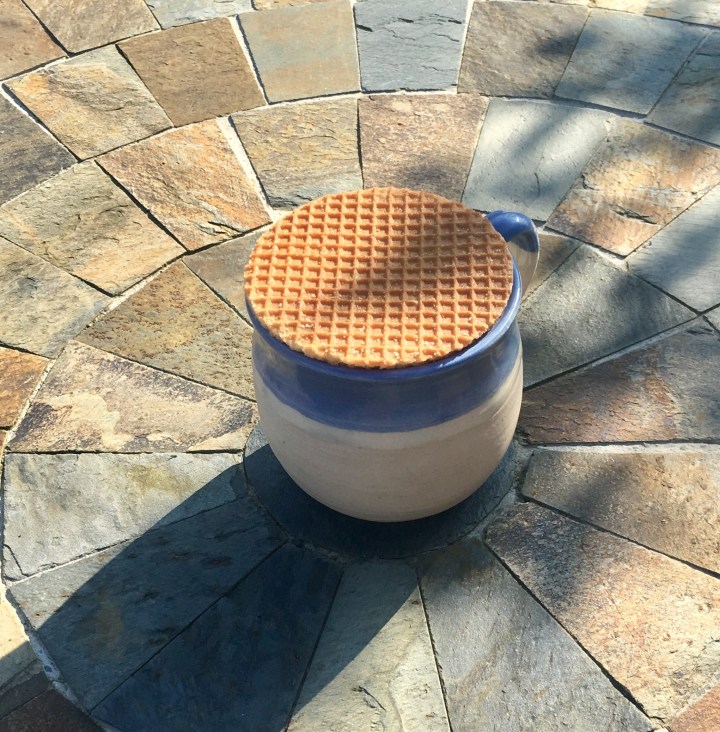 I’ve been a dedicated consumer of Stroopwafels for years now and they’re about the only food I might be tempted to stockpile in the event of a no-deal Brexit. You can find them in coffee shops, but for my money the best – and best value – ones are made by the Dutch company
  I’m afraid any honied waffles in the vicinity would almost certainly be rooting for King Carnival as it’s hard to imagine many biscuits being eaten on Ash Wednesday except charcoal ones. For medieval Christians, Carnival probably represented a welcome letting off of steam before the fast began, or, more philosophically, a counterbalance to Lent’s mood of contrition and renunciation. Both the Dutch Vastenavond and the English word Shrove carry the suggestion of preparation for Lent more than Mardi Gras, although Shrovetide in England was also a season of license. As the final day before the long fast, Shrove Tuesday combined elements of both as Christians prepared by being shriven (making confession) and celebrating with treats that were meat-less.
 But what has all this to do with Stroopwafels, you may ask? Particularly when the point of Lent – and of fasting in general – is to focus on things that are more important than material satisfactions, since people cannot live on bread (or even biscuits) alone? As a season of renunciation and reflection, Lent offers us a sober but ultimately healing space to sift our goals and priorities, to humble ourselves where we need humbling, and soften our hearts where they are stiff and cold.







 The Biscuit Bestiary